Judge Denies Bid to Halt SS United States Reefing Off Florida
The 990-foot liner is scheduled to be sunk using controlled flooding without explosives and is expected to rest upright in roughly 180 feet of water.
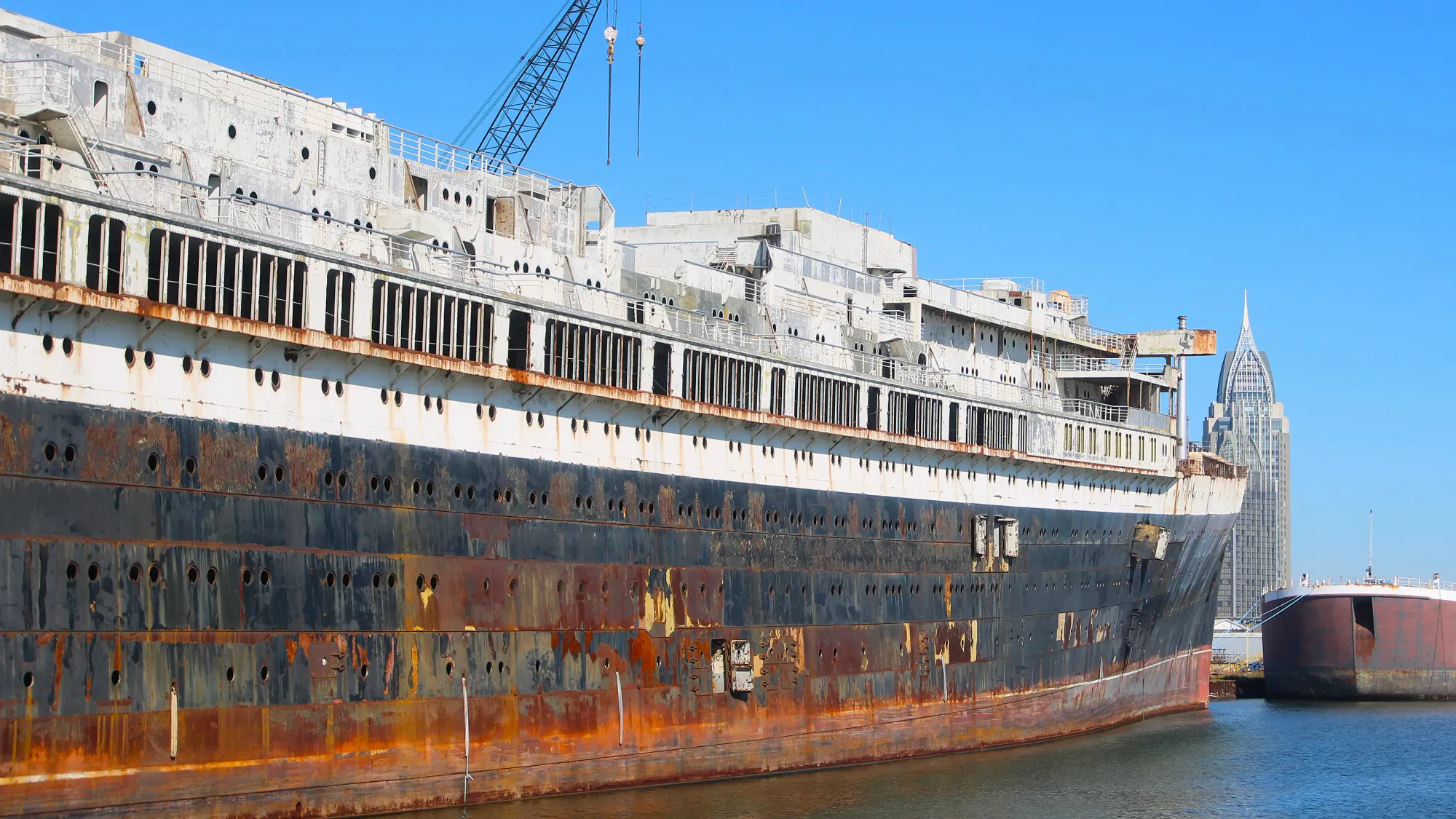
The SS United States Preservation Foundation has filed a federal lawsuit seeking to stop the planned November 12, 2026, sinking of the historic ocean liner, challenging its environmental and historic-preservation approvals. A judge denied the group’s initial request for a temporary restraining order on November 6, leaving the reefing schedule unchanged.
The emergency request sought to prevent the ship’s November 9 tow from Mobile, Alabama, to a site about 22 nautical miles southwest of Destin-Fort Walton Beach, Florida. Okaloosa County plans to turn the vessel into what it describes as the world’s largest artificial reef.
Filed November 3 in the U.S. District Court for the Northern District of Florida, Pensacola Division, the lawsuit asks the court to set aside a U.S. Army Corps of Engineers permit modification and finding of no significant impact. The Foundation wants the tow and sinking blocked until the agency complies with the National Environmental Policy Act and the National Historic Preservation Act.
U.S. District Judge M. Casey Rodgers cited deficiencies in the emergency filing when rejecting the temporary restraining order. “The docket is void of a verified complaint and/or any affidavit attesting to the truthfulness of the facts set forth in the complaint and motion,” she wrote.
The Foundation had not publicly responded to the denial or submitted another filing by close of business November 6. Okaloosa County has not commented on the lawsuit and said Thursday that it had not yet been served. The Army Corps has not commented.
Chromium coatings at center of environmental challenge
The Foundation alleges that the Army Corps approved the reefing project without adequately evaluating contaminants remaining aboard the ship. Its complaint focuses on hexavalent chromium in coatings used during construction in the early 1950s and asserts that laboratory tests detected the chemical in sampled coatings.
Drawing on historical painting specifications and modeled surface area, the complaint estimates that approximately 59,000 pounds of zinc chromate primer was applied during construction. The Foundation is seeking additional sampling and environmental assessment before the vessel is sunk.
The complaint cites Dr. Todd Osborne of the University of Florida, who warned of potential effects on marine organisms, sediments and the food web as the coatings break down underwater. Okaloosa County has previously maintained that the chromium converts to a less harmful form. The Foundation alleges that the Army Corps predicted minimal adverse effects despite uncertainty over contaminant quantities and release rates.
The lawsuit also challenges the agency’s decision not to prepare an environmental impact statement. NEPA generally requires such a statement for major federal actions significantly affecting environmental quality; the Foundation disputes the finding of no significant impact supporting this project.
Coleen Marine was hired to prepare the liner after its arrival in Mobile in early 2025. Destin-Fort Walton Beach’s published remediation information lists cleaning and inspection of all 128 fuel and lubricant tanks, removal of wiring and ventilation equipment, and disposal of exterior flooring with high PCB concentrations.
Historic-preservation review also disputed
The Foundation alleges that the Army Corps failed to complete the required Section 106 review and that work on the ship amounted to “anticipatory demolition” before reefing approval. The liner has been listed on the National Register of Historic Places since 1999.
Section 106 requires agencies to consider effects on historic properties and consult before approving an undertaking. It does not require preservation in every case, but adverse effects must be addressed through the review process.
Among the components removed during preparation were the ship’s funnels, radar mast, last propeller, portholes and windows. The SS United States Conservancy, a separate nonprofit from the Foundation bringing the lawsuit, plans a land-based museum incorporating salvaged components, artwork and other artifacts. The funnels, radar mast and a propeller are already stored for future display.
Designed by William Francis Gibbs and built at Newport News Shipbuilding, the 990-foot, approximately 53,300-gross-ton liner entered service in July 1952. It operated for United States Lines until 1969 and still holds the Blue Riband for the fastest westbound passenger-liner crossing of the Atlantic. The complaint cites National Park Service historian Patrick Andrus’s description of the vessel as “exceptionally important for engineering for its hull design and propulsion system.”
Deployment preparations continue
Okaloosa County acquired the vessel from the Conservancy in October 2024. The Conservancy says the Army Corps granted final deployment approval and that the Environmental Protection Agency did not oppose it.
The sinking is scheduled to begin at 10 a.m., weather permitting, using controlled flooding without explosives. Plans call for the ship to rest upright in roughly 180 feet of water. The Coast Guard has established a 100-yard moving safety zone for the tow out of Mobile Bay, while vessels outside the operation must remain at least one nautical mile away during the sinking.
Rodgers also identified berthing, storage and other expenses of keeping the liner docked, writing: “Any subsequent TRO motion must propose a bond amount sufficient to cover these expenses, supported by a reasonable factual basis.”