Disney Imagination to Sail Short Tokyo Cruises From 2029
Meyer Werft in Papenburg, Germany, will build the Japanese-registered vessel, based on the Disney Wish design, with roughly 1,250 staterooms.
OLC is right to keep Disney Imagination’s Tokyo cruises short
Disney Imagination will mainly sail two- to four-night cruises from Tokyo. That is a sensible opening move for a company trying to make cruising a more familiar holiday choice in Japan. Asking people to commit a few days gives them a manageable way to try it.
I like that decision more than anything in the ship’s naming announcement. But short should not be confused with inexpensive. Oriental Land Co.’s financial planning assumes fares of ¥100,000 to ¥300,000 per person for common stateroom categories. Even a brief sailing will have to deliver a complete holiday.
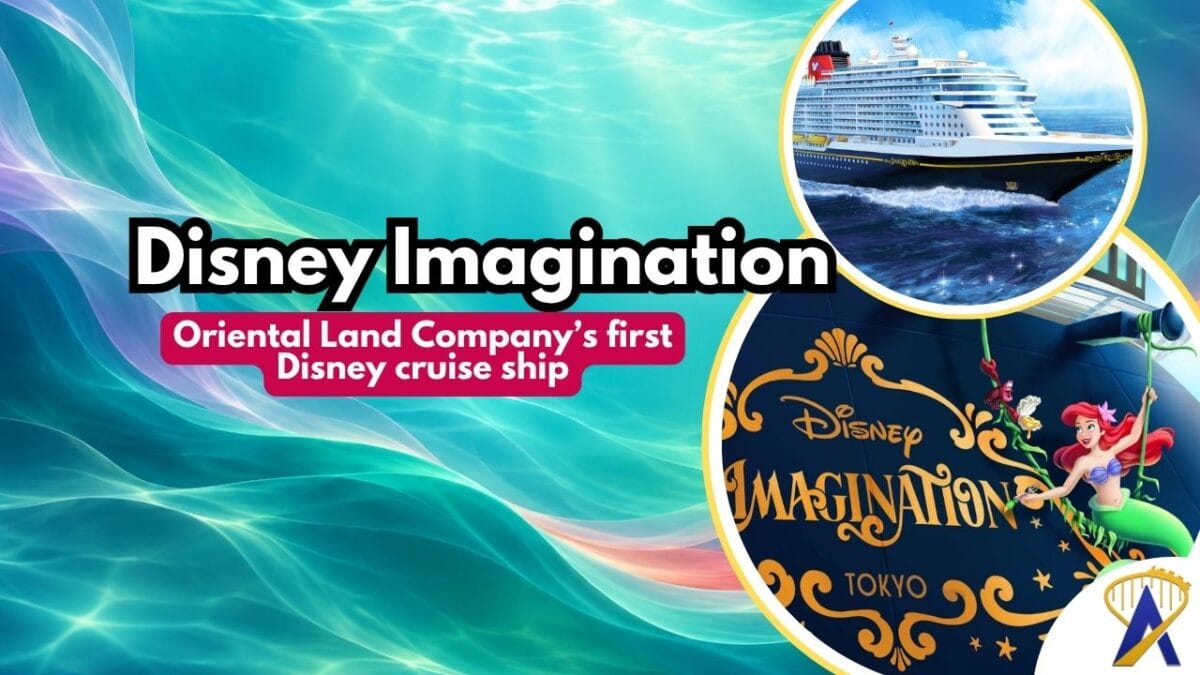
OLC unveiled the Disney Imagination name on October 13, 2026, with service from Tokyo scheduled to begin in spring 2029. Ariel and Sebastian from The Little Mermaid will appear on the stern, with Ariel using a dinglehopper to draw the ship’s name alongside other undersea characters.
The ship will launch Disney Cruise Line Japan, a Disney-branded business operated by OLC, which already owns and operates Tokyo Disney Resort under license from Disney. Subsidiary Oriental Land Cruise Co. will operate the vessel.
A full-size ship for a short break
OLC has chosen a substantial ship for these brief holidays. Disney Imagination will be based on the Disney Wish design, adapted for the Japanese market, at approximately 140,000 gross tons. Plans call for roughly 1,250 staterooms, capacity for about 4,000 passengers and around 1,500 crew.
Meyer Werft in Papenburg, Germany, will build the vessel, with hull construction beginning in October 2026. The underlying Wish-class design uses LNG-powered dual-fuel engines and electric pod propulsion.
The ship will have Japanese registry and Tokyo displayed on its stern. Tokyo International Cruise Terminal will be its primary homeport, with sailings aimed at families, younger travelers and inbound visitors. Detailed itineraries have not yet been announced.
For this particular product, I would put the onboard experience ahead of an ambitious list of ports. On a two-night sailing, there is limited time to make the ship itself feel worth the fare, especially when the entertainment and dining are such a large part of the proposition.
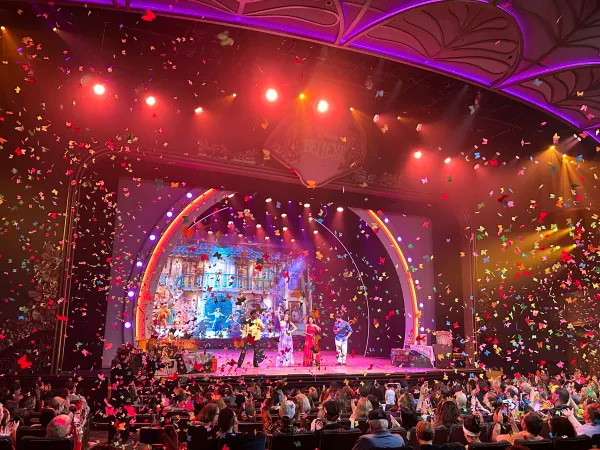
Plans include original stage productions in a theater seating more than 1,300 guests, outdoor deck shows and character greetings with cruise-exclusive costumes. Children will have dedicated spaces and programs, while adults-only areas are also planned.
Approximately 30 food and beverage venues are planned, including three main restaurants with different themes and menus, plus cafes and bars. Shops will carry merchandise exclusive to Disney Imagination.
That gives passengers plenty to do. It also makes pacing important. A short holiday should not feel like a scramble to fit in everything that helped persuade someone to book it. I would rather see the two-night experience work comfortably on its own than feel like a longer cruise squeezed into a weekend.
The ¥100,000 to ¥300,000 fare range remains a planning assumption, not a published price list. Actual prices will vary by season and cabin category. Reservations are expected to open about six months before the inaugural voyage.
OLC’s ambitions are much bigger than a trial run
The short itineraries sit behind a heavy financial commitment. OLC’s investment framework includes ¥290 billion for the ship and another ¥40 billion in contingency funding. Its cruise plans, first announced with Disney in 2024, are intended to create a third core business alongside theme parks and hotels. There is a clear attraction for OLC here: expansion beyond the land constraints affecting further development at Tokyo Disney Resort.
Within the first several years of operation, OLC aims to carry 400,000 passengers annually and generate approximately ¥100 billion in annual net sales. Its early operating-margin target is in the upper 20% range, with further improvement anticipated after the ship’s depreciation period. Annual depreciation and amortization are projected in the ¥20 billion range.
In its subsequent second-quarter results for the fiscal year ending March 2027, OLC retained its cruise-business forecasts. The project remained on schedule, with full-year operations and profitability expected in fiscal 2029. First-half capital expenditure in its Other Business segment rose to approximately ¥27.1 billion from about ¥3 billion a year earlier, an increase the company attributed to the cruise business.
OLC also has a market to build. It has cited Japan’s cruise participation rate of around 0.2%. The tourism ministry wants Japanese cruise passenger numbers to reach 1 million by 2030, compared with 224,000 in 2024. OLC’s own passenger target includes a product aimed at inbound visitors as well as the domestic market, so those figures should not be treated as directly comparable.
“We hope cruises will be considered a leisure option,” said Oriental Land Cruise Co. president Ryotaro Shiiba.
That is why the short itineraries make sense. They give OLC a straightforward proposition to put in front of prospective passengers: a few days aboard a purpose-built Disney ship, departing from Tokyo. A second vessel will be considered once the first is operating successfully.
Two nights can be enough to introduce someone to cruising. At OLC’s planned fare levels, they also have to be enough to satisfy them.