Cruise Ships Add Shore Power as Ports Lag on Electric Berths
CLIA says forty-seven retrofits and thirty-nine newbuilds would lift shore-power-equipped ships to about two hundred seventy-nine by 2039, covering eighty-two percent of capacity.
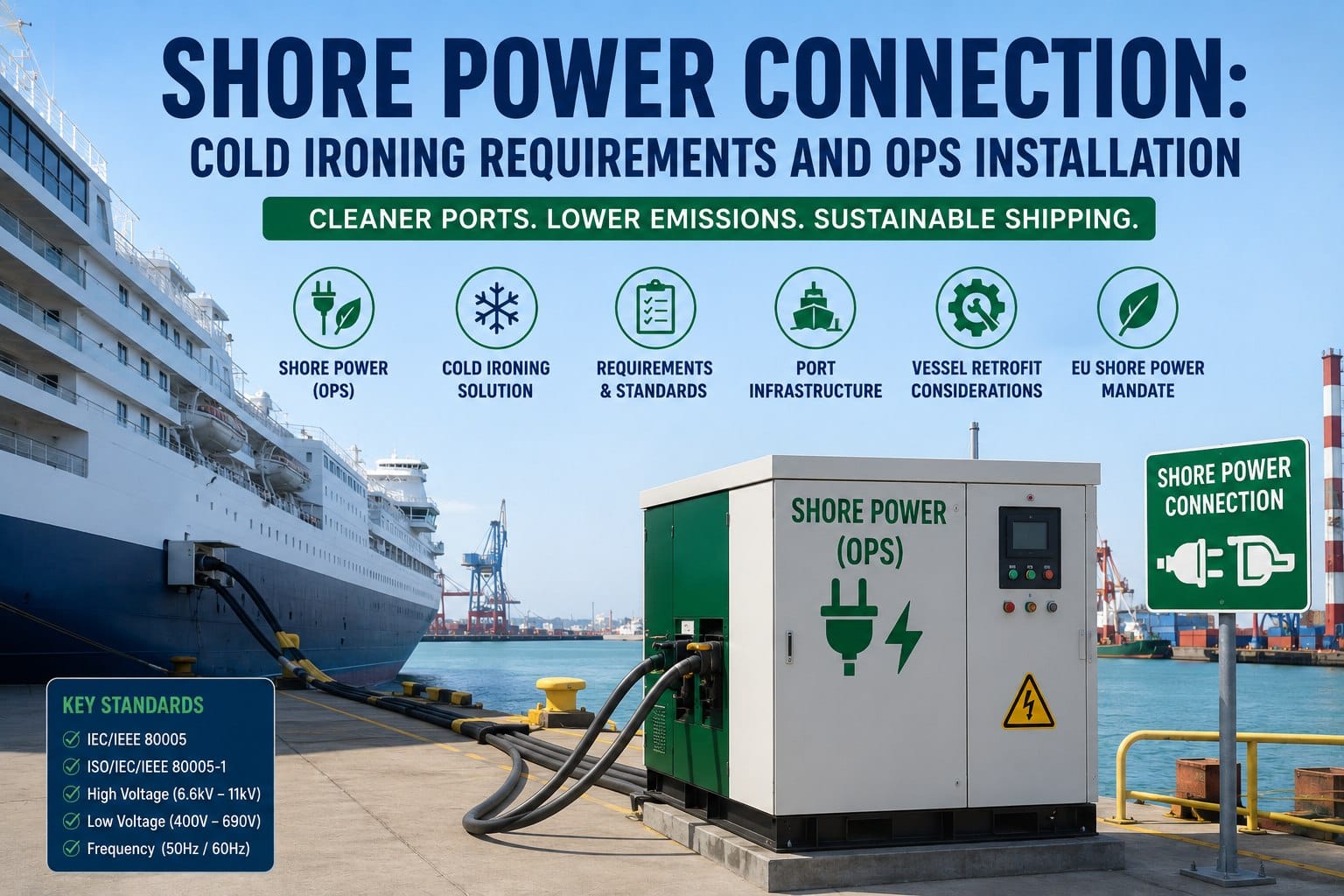
CLIA-member cruise lines increased non-heavy-fuel-oil use to 40.3% of reported consumption in 2025 and expanded shore-power connection capability to 193 ships. The Cruise Lines International Association released the figures Sept. 16 in its annual Environmental Technologies and Practices report, covering 297 oceangoing ships representing 98% of member capacity during the year.
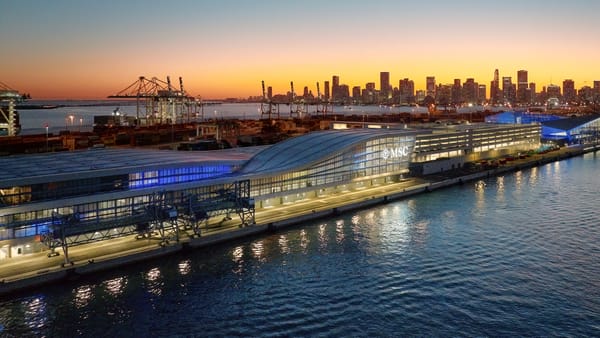
Shore-power capability now covers 65% of the reporting fleet and 72.5% of its capacity, but only 41 ports worldwide have at least one cruise berth equipped to supply electricity. CLIA identified port and energy infrastructure, along with the commercial availability of renewable and lower-emission fuels, as requirements for further emissions reductions.
Shore-power gap remains
The number of ships able to connect to onshore power has more than tripled from 55 in 2018. Cruise lines plan to retrofit another 47 ships, while 39 newbuilds are specified to enter service with the technology. Those projects would bring the total to an estimated 279 ships by 2039, representing 74% of ships and 82% of capacity.
Shore power allows ships to shut down auxiliary engines while berthed. The U.S. Environmental Protection Agency estimates that overall pollutant reductions can reach 98% under favorable conditions, depending on the electricity mix, although boilers and other onboard systems may remain in operation.
Those 41 ports are fewer than 3% of cruise ports. Under the EU Alternative Fuels Infrastructure Regulation, qualifying maritime ports on the Trans-European Transport Network must have sufficient shore-power capacity by Jan. 1, 2030, to cover at least 90% of demand from covered passenger ships and containerships above 5,000 gross tons. For cruise ports, the requirement applies when annual qualifying calls reach 25.
FuelEU Maritime will require qualifying passenger and container ships to connect while berthed at covered ports from the same date unless they use an approved zero-emission alternative. Nikos Metzanidis, CLIA’s executive director for Europe, told Seatrade Cruise Med delegates that the Fit for 55 framework is under review, including shore-power obligations, deadlines and affordability questions.
Fuel use and ship efficiency
Separate data reported through the IMO Ship Fuel Oil Consumption Database show heavy fuel oil falling from 74.2% of oceangoing cruise fuel use in 2019 to 60.6% in 2024. Over the same period, the combined share of marine diesel and gas oil, very-low- and ultra-low-sulfur fuel oil, LNG and other non-HFO pathways rose from 25.8% to 39.4%.
The IMO database collects verified annual fuel consumption, distance and operating-hour data for ships of at least 5,000 gross tons on international voyages. Ship identities are not disclosed in its public summaries.
CLIA’s analysis of verified EU THETIS-MRV data found that average fuel consumption per reporting cruise ship sailing in Europe declined about 18.5% between 2018 and 2025. Average carbon dioxide emissions per ship fell approximately 19.4% over the same period.
The number of CLIA-member ships with newer multi-fuel engines increased from one in 2018 to 30. The association’s measure covers engines designed to use fuels such as methane or methanol, including future bio-based or synthetic versions, while excluding conventional engines solely because they can consume drop-in biofuels or synthetic diesel.
Bud Darr, CLIA’s president and CEO, said further progress depends on fuel producers, governments, ports and energy providers making lower-emission fuels available at scale and competitive prices. Addressing delegates in Las Palmas, Darr said: “Without the molecules it doesn't happen — it's just a bunch of smoke and mirrors.”
Water and waste systems expand
Onboard freshwater production is available on 293 ships, representing 98.7% of the reporting fleet. Of those, 218 can produce all their freshwater requirements aboard, accounting for 73.4% of ships and 83.3% of capacity.
Advanced wastewater treatment systems are installed on 249 ships, up from 136 in 2018. That represents 83.8% of reporting ships and 86.2% of capacity. The systems can meet or exceed MARPOL Annex IV discharge standards, while 124 ships can meet the tighter requirements for the Baltic Sea Special Area, compared with 16 in 2018.
Selective catalytic reduction systems, used to control nitrogen oxide emissions under IMO Tier III standards, are fitted on 96 ships, up from seven in 2018. Microbial food-waste digesters are operating on 137 ships, compared with 103 when CLIA began tracking the technology in 2022. Waste-to-energy gasification remains limited to seven ships with a combined 12,276 lower berths.
What the orderbook adds
As of August, CLIA’s 45 oceangoing member lines operated 327 ships with approximately 692,000 lower berths. Ships carrying fewer than 3,000 lower-berth passengers account for about 72% of that fleet. Through the current orderbook to 2039, that share is projected at 68.2%. Multi-fuel-capable ships are scheduled to reach 31 by the end of 2026, 56 by 2030 and 69 by 2039.