Costa Serena Asian Games Charter Faces Transport Problems Ashore
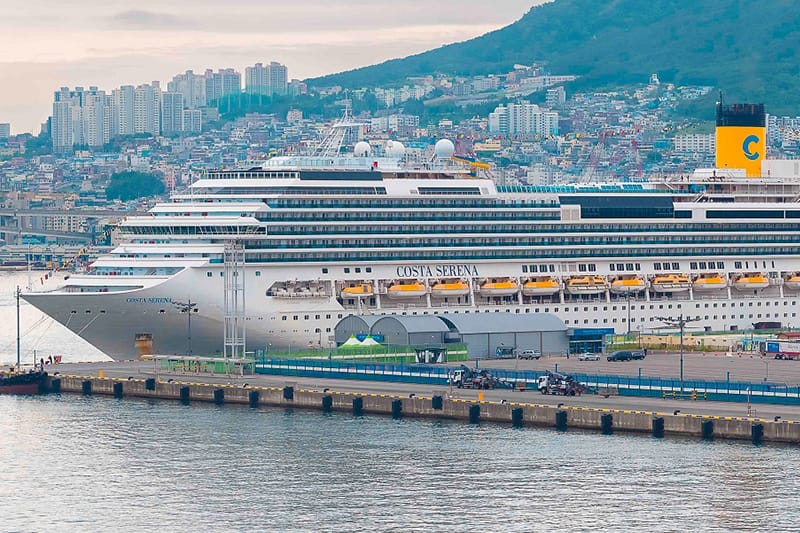
The twenty-two-day charter keeps Costa Serena at Nagoya's Kinjo Pier from September 15 through October 6, with about four thousand athletes and officials expected aboard.
Costa Serena’s Asian Games charter has a problem ashore
India’s delegation arranged cars to deal with transport difficulties at the 2026 Aichi-Nagoya Asian Games. That is an uncomfortable detail alongside Costa Serena’s reported $1.36 million-a-day floating-hotel charter. Securing thousands of beds is only part of the accommodation job.
I support the decision to avoid building an athletes’ village that could become a burden after the Games. Renting a cruise ship is a sensible option. But a delegation arranging its own transport fix suggests the wider operation has not matched the accommodation plan.
According to charter figures published by Cruise Industry News, the contract for the Costa Cruises vessel totals 4.48 billion yen, nearly $30 million. It covers a 22-day stay at Nagoya’s Kinjo Pier from September 15 through October 6. With around 4,000 athletes and officials expected aboard, that works out to approximately $340 per person per night.
The most useful assessment of the ship itself is rather less dramatic than the bill. “It’s perfectly fine. The food is plentiful,” Tom Stevens, a Canadian rowing coach working with Lebanon’s team, told AFP. He attributed difficulties during his stay to unreliable transport and lengthy journeys on land. That distinction matters.
Avoiding the risk of a post-Games white elephant
Cost drove Japan’s decision to drop a purpose-built athletes’ village. More than 17,000 athletes and officials are being accommodated across Costa Serena, existing hotels and temporary wooden units in Nagoya and Aichi Prefecture.
“We don’t want to leave a white elephant after the games here,” Tayyab Ikram, deputy chairman of the Olympic Council of Asia athletes commission, said at a pre-opening news conference.
That is a credible reason to rent rather than build. A large charter bill does not, by itself, make permanent construction the better choice.
Taranto’s Mediterranean Games organisers made a similar argument. Aroya recently completed a 20-night assignment accommodating more than 4,000 athletes from 26 nations. Cruise Industry News put that contract’s reported value at nearly €17 million, roughly €850,000 a night or €210 per athlete per night.
Taranto also spent approximately €6 million chartering Tallink’s Romantika for another 1,200 guests, bringing its combined floating-village bill to around €23 million. The organising committee said a residential complex ashore would have cost considerably more.
Those figures explain the appeal of a temporary solution. They do not settle whether each host has made that solution work well for the people using it.
The difficulties extend beyond the cabins
In Nagoya, boarding has also been a problem. In a September 22 statement, the Aichi-Nagoya Asian Games Organising Committee attributed delays during September 16 boarding to incomplete documentation from some delegations. It rejected claims that its own failure to enter accommodation information into the booking system had caused the delays.
The committee said it was working with Costa Cruises and its outsourced operations provider to address the problems.
Before the Games opened, India’s chef de mission, Sahdev Yadav, said accreditation aboard the vessel was taking considerable time. His delegation arranged additional hotel accommodation after learning on arrival that its allocation had been reduced, as well as organising the cars to address transport difficulties. Learning on arrival that its accommodation allocation has been reduced is a substantial problem for a delegation, whatever the quality of the ship.
The Olympic Council of Asia defended the wider programme, saying everyone registered by the July entry deadline had received suitable lodging. Some delegations nevertheless complained about room shortages and bed dimensions in the temporary accommodation ashore. Those bed complaints should not be pinned on Costa Serena.
The ship has been adapted for its unusual guests. Additional exercise equipment was brought aboard to create another gym, while the luxury watch shop is closed during the charter. Organisers have also prepared contingency arrangements to move the vessel to safer waters if a typhoon or other severe weather threatens the berth. Japanese customs and quarantine requirements for foreign vessels apply to the operation.
This is a more involved assignment than parking a hotel beside a pier. The gym provision is a useful adjustment. The arrival process and journeys ashore need to be just as dependable.
Costa Serena’s next assignment takes it out of Asia
After the charter, Costa Serena will conclude a decade of operations in Asia. It is scheduled to offer one final cruise from Japan before leaving Tokyo on October 18 for a 65-night voyage to Buenos Aires. Calls include Taiwan, Hong Kong and destinations in Southeast Asia, Australia and the South Pacific.
The ship will subsequently operate cruises visiting Brazil, Argentina and Uruguay, then move to the Mediterranean in early 2027. Its summer itineraries will cover Italy, Greece and Malta. A first Caribbean season is scheduled for 2027–28, with departures from the Dominican Republic, Martinique and Guadeloupe.
For the Games organisers, though, the immediate standard is simpler. Avoiding an unwanted building is a sound decision. Athletes should not have to pay for that decision in lost time, and delegations should not have to finish the accommodation plan after they arrive.
See current Costa Serena fares and itineraries on Cruise Lookup.