CLIA Report Details Cruise Lines’ Net-Zero Technology Push
At Ocean Cay in The Bahamas, MSC converted a former sand-dredging site into a sixty-four-square-mile marine reserve after investing more than four hundred million dollars.
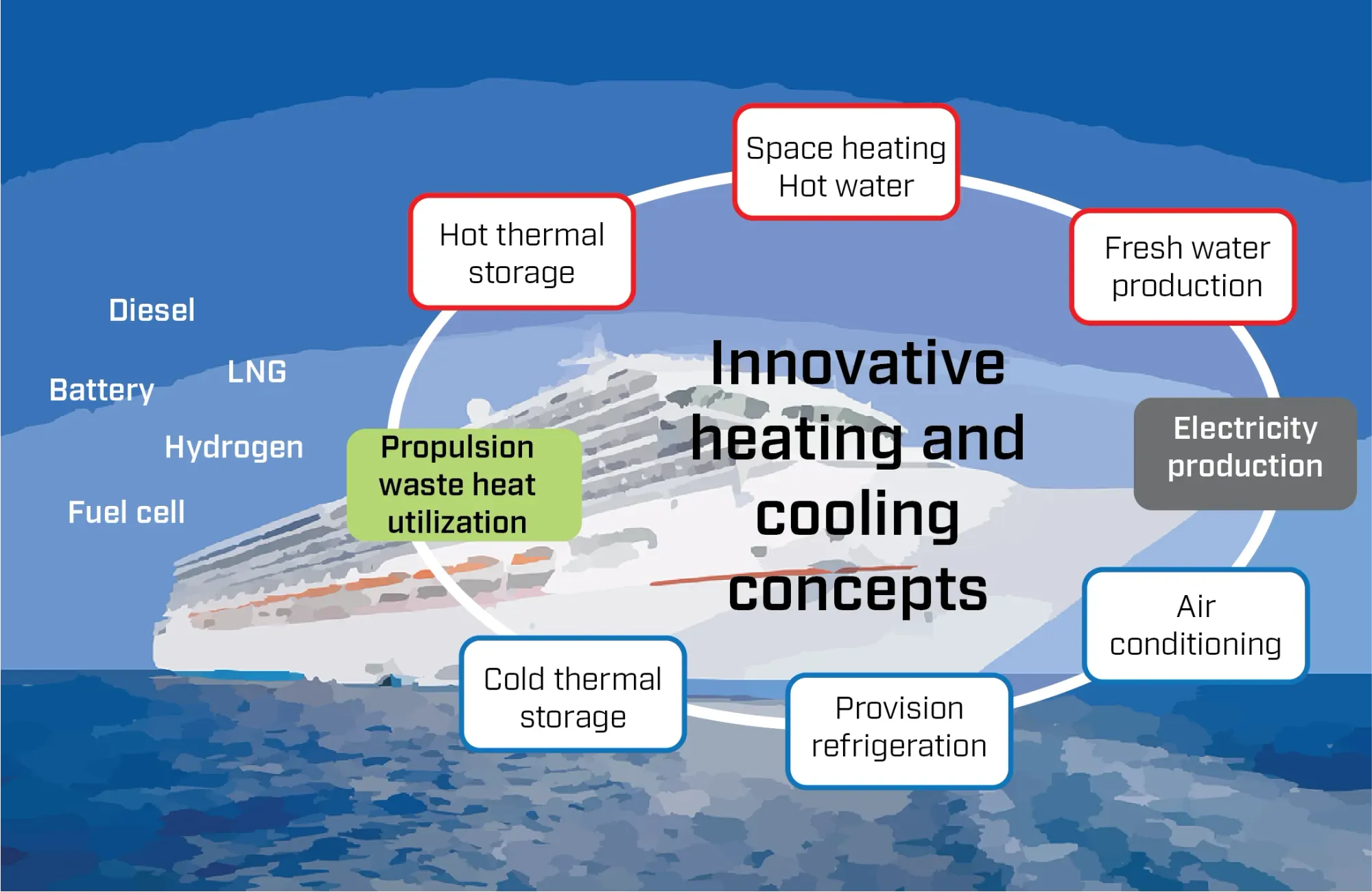
Cruise Lines International Association's 2025 Environmental Technologies and Practices Report places shore power, advanced wastewater treatment, onboard water production, waste-management technology, lower-emission fuels and fuel-flexible engines at the center of cruise lines' emissions work. Released Sept. 10, the report tracks measures member lines are using under their late-2021 pledge to pursue net-zero emissions by 2050.
CLIA has 59 member cruise lines representing more than 95% of global cruise capacity, including ocean, river and specialty operators. The report also places shipboard systems and port readiness alongside fuel strategy.
Budd Darr, president and CEO of CLIA, cited "advanced wastewater systems, onshore power supply, air lubrication systems, and the newest generation of dual-fuel engines" as examples of maritime technology cruise lines are using. "Cruise lines are investing tens of billions of dollars to build the fleet of the future," Darr said.
Fuels, shore power and onboard systems lead the technology list
On fuels, the CLIA report points to alternatives to heavy fuel oil, biofuel testing and pilots, greater use of lower-emission fuels, energy-efficiency measures and investment in engines that can use more than one fuel. LNG remains part of that mix, alongside dual-fuel engine investment named by CLIA as part of fleet planning.
Onshore power supply is treated as a port-side emissions tool because ships with the required equipment can turn off engines while docked and connect to landside electricity. Port availability remains the constraint: fewer than 3% of cruise ports worldwide offer shore power, while about 120 cruise ships are currently equipped to connect and 239 ships, nearly 80% of the fleet, are expected to be ready by 2028.
The report also covers shipboard water production, waste management and wastewater treatment. CLIA says member lines are producing the majority of onboard water needs at sea, beginning to use systems that recycle or repurpose nearly all waste generated onboard, and operating advanced wastewater treatment systems; member lines are committed not to release untreated sewage during normal operations anywhere in the world.
MSC gives company-level metrics
MSC Group's Cruise Division, which includes MSC Cruises and Explora Journeys, has reported progress across several of the same areas. Pierfrancesco Vago, executive chairman of MSC Group's Cruise Division, said the company is "advancing our energy transition" while strengthening community relationships and taking "a more structured approach to biodiversity."
In its 2025 Sustainability Report, the division said it achieved the International Maritime Organization's 2030 carbon-intensity reduction target five years early. The IMO target requires international shipping to reduce CO2 emissions per transport work by at least 40% from 2008 levels, making it an efficiency measure rather than a total-emissions measure.
MSC reported using more than 9,800 tons of renewable fuels in 2025, resulting in a 48,714-ton CO2e emissions reduction, and completing 217 shore-power connections. It also said it mapped GHG emissions across its full value chain for the first time, covering shipbuilding, drydock operations, employee travel, food and beverage procurement, logistics and waste generated.
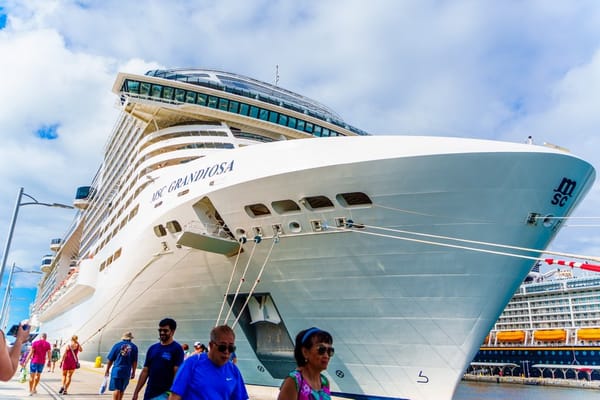
MSC World America entered service in 2025 as MSC Group's Cruise Division's third LNG-powered vessel with dual-fuel engine technology, and the company said all future newbuilds across MSC Cruises and Explora Journeys will have that capability. MSC also reported producing 84.4% of freshwater onboard and refreshing its biodiversity strategy with whale-strike mitigation measures and route adjustments in sensitive areas.
Conservation work at Ocean Cay
At Ocean Cay MSC Marine Reserve in The Bahamas, the MSC Foundation operates the Marine Conservation Center opened during MSC World America's April 2025 christening sailing. The project traces back to MSC Cruises' 100-year lease signed with the Bahamian government in December 2015 and a 2021 groundbreaking held during MSC Seashore's naming at the island.
Ocean Cay is about 65 miles east of Miami and 20 miles south of Bimini. MSC converted the former industrial sand-dredging site into a cruise destination and marine reserve after investing more than $400 million to remove scrap, replant more than 75,000 trees and plants, and restore coral reefs. The protected marine area covers 64 square miles.
The center includes a Bio Lab, a land-based coral nursery with 22 tanks, a 50-seat lecture hall and visitor areas. Since opening, the foundation has trained more than 20 marine science students and engaged more than 17,000 visitors in ocean education; more than 600 corals have been grown in the underwater nursery and more than 250 planted on the surrounding reef.
In February 2026, the MSC Foundation and Perry Institute for Marine Science carried out a coral species exchange at Ocean Cay to increase nursery diversity and reef resilience. The foundation has also expanded collaboration with the University of The Bahamas to support a dedicated marine science laboratory for national research and teaching.
What's ahead on IMO rules
Mandatory CII and EEXI requirements under MARPOL Annex VI have applied to ships since Jan. 1, 2023. From 2027, the IMO's Net-Zero Framework is set to introduce well-to-wake GHG fuel-intensity limits.