CDC Reports Alaska Illness Outbreak on National Geographic Sea Bird
After the May 28 report to the Vessel Sanitation Program, National Geographic Sea Bird isolated ill passengers and crew and increased disinfection under its response plan.
Updated July 2, 2026
The U.S. Centers for Disease Control and Prevention expanded its response aboard Lindblad Expeditions' National Geographic Sea Bird after gastrointestinal illness persisted across multiple Alaska voyages, including a June 25-30 sailing in which 19 of 68 passengers and one of 27 crew members reported symptoms.
The June outbreak was reported to the CDC's Vessel Sanitation Program on June 28. It followed a May 26-31 voyage aboard the same ship in which nine of 66 passengers and three of 24 crew members became ill with confirmed norovirus.
CDC sent investigators aboard Sea Bird
The continued illnesses led VSP to conduct a field response aboard National Geographic Sea Bird rather than only monitoring the situation remotely, as it had during the May sailing.
“Due to continued cases, VSP conducted a field response for an environmental assessment and outbreak investigation to assist the ship in controlling the outbreak on subsequent voyages,” the CDC said.
The field response also covered two additional Alaska voyages, from May 31 through June 5 and from June 5 through June 10. The CDC has not released illness counts for those sailings, so it is unclear how many additional passengers or crew members became ill. VSP is working closely with National Geographic Sea Bird and with the Alaska Departments of Health and Environmental Conservation, the agency said.
May outbreak is now tied to norovirus
The first CDC-posted outbreak aboard National Geographic Sea Bird this season occurred during a May 26-31 Southeast Alaska sailing that departed Juneau and ended in Sitka. The outbreak was reported to VSP on May 28, two days after the voyage began.
During that sailing, the CDC counted nine illnesses among 66 passengers and three among 24 crew members. Vomiting and diarrhea were listed as the main symptoms. The illness is now described as confirmed norovirus.
In response, the ship increased cleaning and disinfection procedures under its outbreak prevention and response plan, isolated ill passengers and crew, and consulted with VSP on sanitation procedures and case reporting. Lindblad Expeditions continues working with federal and Alaska health officials to help prevent additional cases, the CDC said.
VSP-covered cruise ships are required to report gastrointestinal illness quickly so the agency can track potential outbreaks and advise operators on response measures. The CDC's reporting threshold is reached when at least 3 percent of passengers or crew develop gastrointestinal illness during a voyage. The agency also cautions that outbreak totals reflect cumulative cases over the full voyage, not necessarily the number of people ill at the same time.
Alaska voyages remained in service
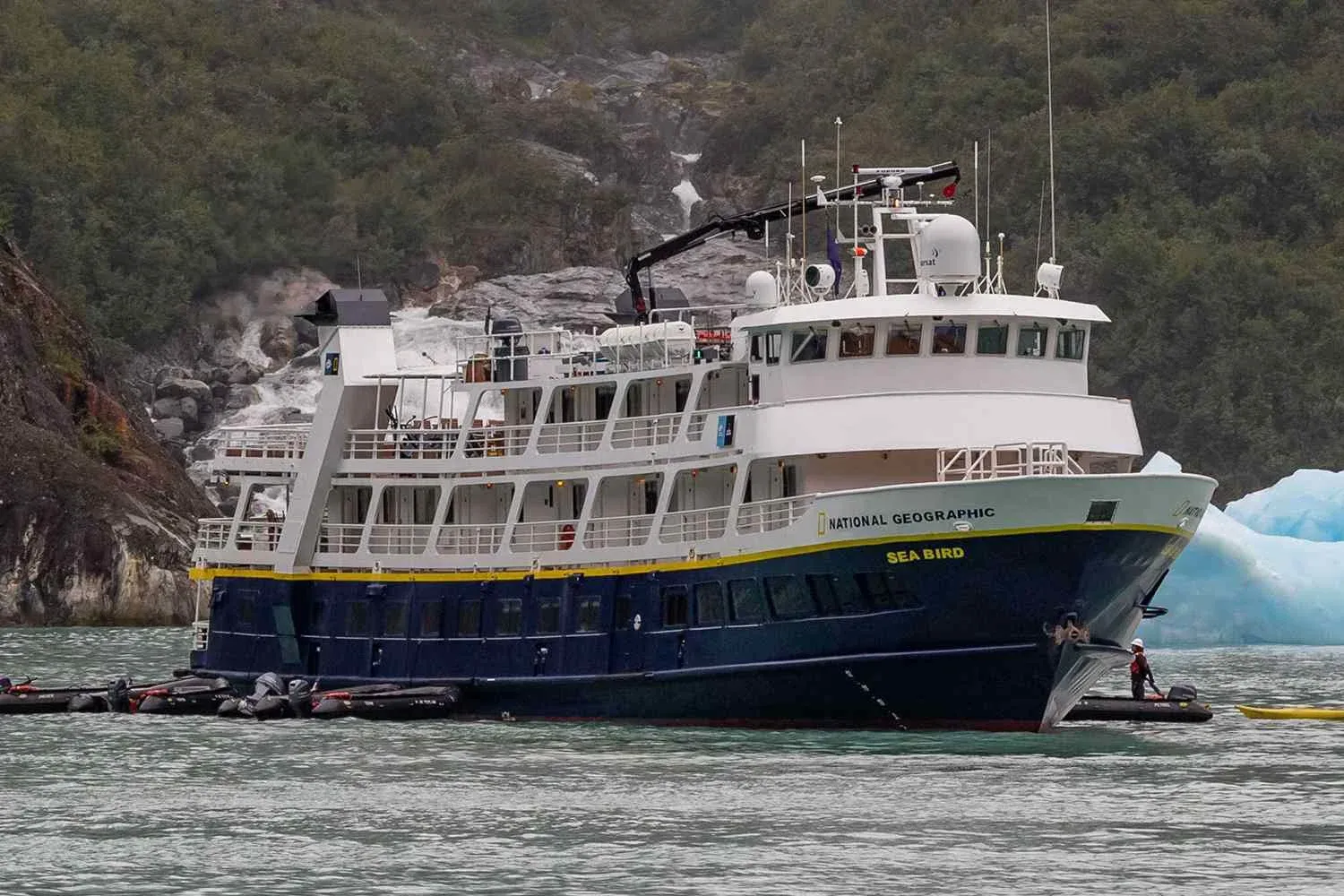
National Geographic Sea Bird is one of Lindblad Expeditions' small expedition ships operating in Alaska, with a guest capacity commonly listed at 62. The CDC counted 66 passengers aboard the May voyage and 68 passengers aboard the June 25-30 voyage.
The U.S.-flagged ship operates Alaska itineraries without the Canada call required for many foreign-flagged cruise ships sailing in the region. After arriving in Sitka on May 31, National Geographic Sea Bird departed on its next scheduled Alaska sailing, one of the voyages included in the CDC field response.
Norovirus remains a major cruise concern
The June Sea Bird report adds another CDC-posted gastrointestinal illness outbreak to a year in which the first five cruise notices included two E. coli outbreaks and three tied to norovirus. In 2025, the CDC publicly notified 23 cruise-ship gastrointestinal outbreaks, 18 of them linked to norovirus. In 2024, norovirus accounted for 15 of 18 such outbreaks.
Norovirus is the most common cause of gastrointestinal illness, according to the CDC. Symptoms usually develop 12 to 48 hours after exposure and can include vomiting, diarrhea, nausea and stomach cramps. Most people recover within one to three days, but the virus can spread through contaminated food or water, contaminated surfaces, or close contact with someone who is sick.
Sarah R. Michaels, an assistant professor at Tulane University's Celia Scott Weatherhead School of Public Health and Tropical Medicine, previously told USA TODAY that outbreaks are “often taking place within the community” without being detected. Close-contact settings such as day care facilities, nursing homes and cruise ships are more likely to have outbreaks diagnosed and reported, she said.