Carnival Tests Cleaner Cruise Operations in Alaska
Alaska is becoming a proving ground for cruise decarbonization, where port communities and operators are testing whether cleaner fuel and grid power can scale.
Carnival Corporation & plc is tying much of its emissions-reduction work to Alaska operations, combining biofuel pilots, shore power, fuel-saving ship technology and lower-emission land transportation across five brands that sail the state. The company said its 2024 alternative-fuel work included biofuel pilots on four ships, while Holland America Line and Princess Cruises vessels are slated to connect to shore power in Whittier next year through a $12 million project.
The program links Carnival's 2050 net-zero emissions target with a destination served by Carnival Cruise Line, Cunard, Holland America Line, Princess Cruises and Seabourn. Carnival also has about 300 employees living in Alaska, giving the company a year-round operating presence beyond the summer cruise season.
Biofuel testing moves into broader Alaska planning
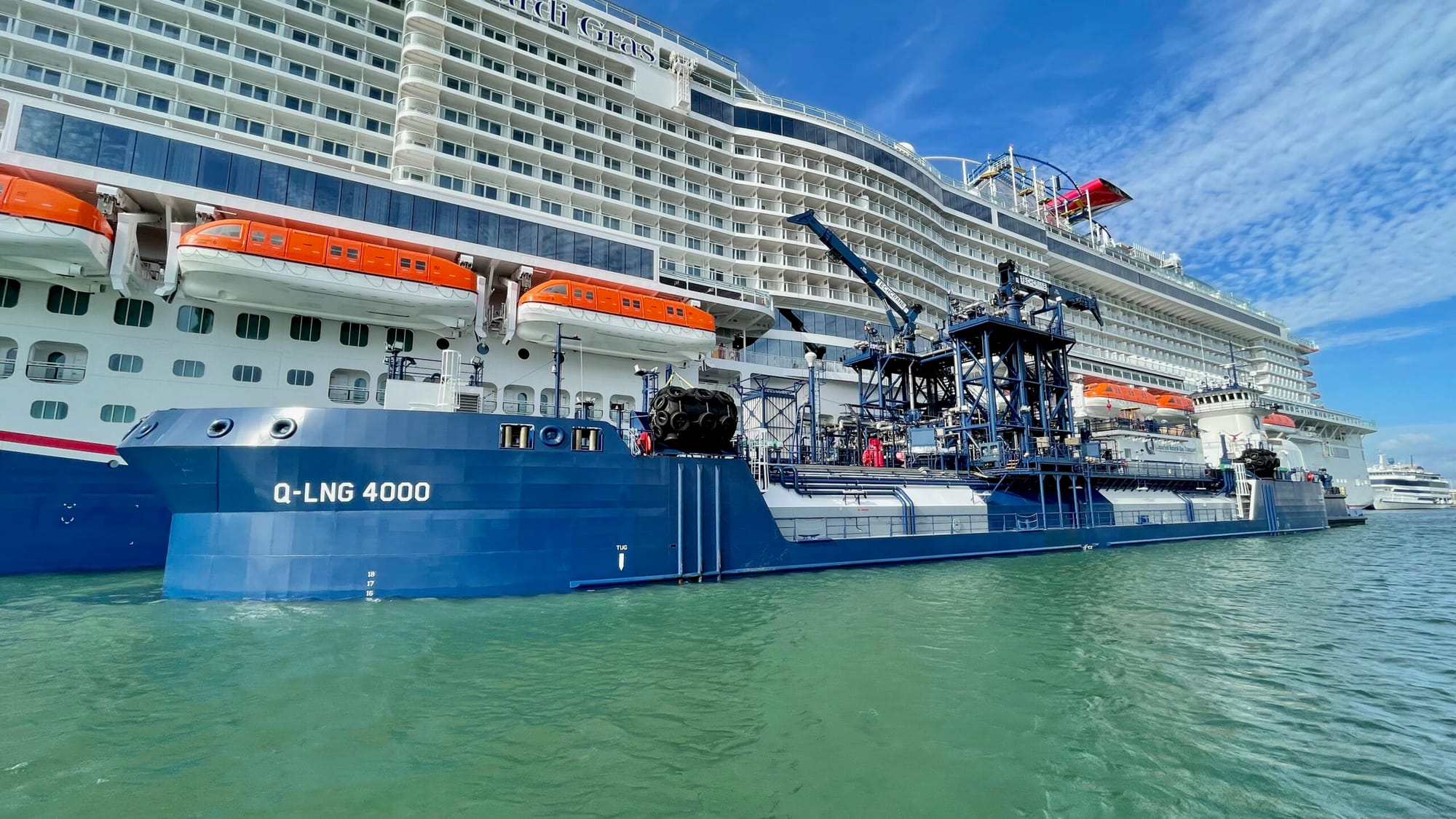
Carnival has been testing biofuels as a near-term option after introducing liquefied natural gas in 2018. The company frames biofuels as usable in existing ship engines without major infrastructure changes, and cites lifecycle emissions reductions of up to 86% compared with marine gas oil.
Those lifecycle figures depend on the feedstock and production pathway, including how the fuel is produced, transported and burned onboard. Waste-derived pathways generally produce stronger emissions results than crop-based fuels when full well-to-wake accounting is applied.
Holland America Line's Volendam became the first large-scale cruise ship powered fully by biofuel in 2022 after tests using both biofuel blends and 100% biofuel. In 2024, Holland America Line tested low-carbon oil made from organic waste on one engine aboard Rotterdam, with the fuel certified under the European Union Renewable Energy Directive. Gus Antorcha, then president of Holland America Line, said the results of the next-generation biofuel tests were encouraging.
Carnival is also participating in the Pacific Northwest to Alaska Green Corridor project with port communities including Haines, Juneau, Sitka and Skagway. The corridor, launched in 2022, examines how lower- and zero-GHG maritime fuels could support cruise routes between Washington, British Columbia and Alaska, including questions around fuel supply, bunkering, regulation, ship readiness and cost.
Fuel savings extend beyond alternative fuels
Between 2020 and 2025, the company retired 29 older ships, and it expects seven new ships joining the fleet by 2033 to be at least 20% more efficient.
The company's efficiency work includes hull designs intended to reduce drag, 360-degree steerable propulsion units that can cut fuel use by up to 7%, air lubrication systems that reduce hull friction by about 5%, and Power Saver Packs that reduce onboard system energy demand by another 5%. Carnival is also testing battery energy storage and examining ways to reuse engine-generated heat for steam energy.
Separately, Princess Cruises has signed shipbuilding agreements with Fincantieri for three 183,000-gross-ton Voyager-class ships, each designed for about 4,700 guests and scheduled for delivery in 2035, 2038 and 2039. The LNG-capable ships will be built at Monfalcone and, upon completion, would bring Carnival Corporation's LNG-powered fleet to 21 vessels.
Carnival has also deployed Inatech's Shiptech platform for fuel planning and procurement across its global fleet. "Modern cruise operations demand precision at scale," said Michael McNamara, vice president of strategic fuel sourcing for Carnival Corporation, adding that Shiptech gives the company "increased visibility and control across our eight global cruise lines and 94 ships."
Shore power and land operations in Alaska
In Alaska ports, Carnival's shore-power strategy centers on replacing onboard generation at berth with electricity from the local grid. The U.S. Environmental Protection Agency says shore power can reduce emissions by up to 98%, depending on the grid mix, while also cutting pollutants and noise near the pier.
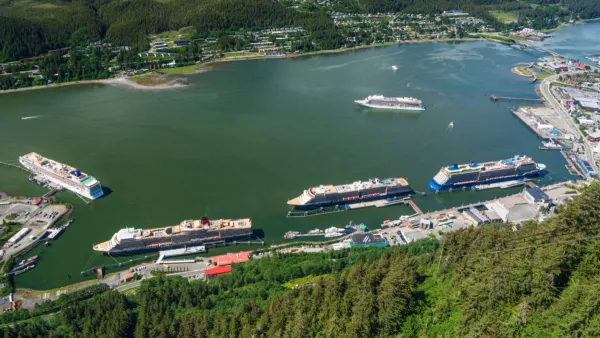
Princess Cruises began using shore power in Juneau more than 20 years ago, drawing on surplus hydroelectric power and becoming the first cruise line to use the technology there. Carnival said Princess has contributed $8.5 million to Juneau since 2001 through the shore-power program, and Alaska Electric Light and Power's Connie Hulbert has described the isolated grid's passenger-vessel shore-power work as both an economic and environmental benefit.
Carnival's Alaska fuel work also extends ashore. Since 2018, the company has tested biodiesel made from discarded cooking oil from Juneau restaurants to power tour buses. During the pandemic shutdown, the program shifted to used cooking oil from Discovery Princess, and in 2023 Holland America/Princess Alaska-Yukon Land Operations partnered with a Juneau biofuel refiner to convert the oil into bus fuel.
Discovery Princess now separates used cooking oil onboard for offloading and conversion. Bill Hagevig, a Juneau native and Holland America Princess division manager who initiated the program, described the effort as "doing right by Alaska" and said he hopes to expand biodiesel use across the fleet.
Carnival said Holland America Princess also operates Alaska's largest private fleet of electric and hybrid vehicles. In Juneau, six double-decker buses are being used to carry twice as many passengers with only a minimal increase in fuel use.
Whittier is the next scheduled Alaska shore-power milestone for the company. If completed as planned, the project with the State of Alaska and Chugach Electric Association will add another Alaska port where Holland America Line and Princess Cruises ships can draw shoreside electricity instead of generating power onboard while docked.