Carnival Sets 2029 Goal to Cut Emissions Intensity by 25%
Around eighty percent of Carnival's fleet has Power Saver Packs, which have reduced shipboard energy demand by more than five hundred thirty-five thousand megawatt hours since 2019.
Carnival Corporation has set a 2029 target to cut greenhouse gas emissions intensity by 25% from its 2019 level after reaching its previous 20% reduction goal in 2025, five years ahead of schedule. The fleetwide measure is based on available lower berth days, while fuel-efficiency gains are projected to save about $650 million in 2026 compared with 2019.
The revised goal adds five percentage points to the required reduction and moves the deadline one year ahead of the original 2030 timetable. Carnival’s fleet is more than 10% larger than it was in 2019 but uses over 12% less fuel, according to CEO Josh Weinstein.
Carnival’s newly published 2025 Sustainability Report puts its emissions-intensity reduction since 2008 at 44%. “We’re not treating it as a finish line,” Weinstein said. “Our new 2029 target ensures we’re continuing to improve every part of the equation.”
Efficiency measures across the fleet
Around 80% of the fleet has Power Saver Packs combining LED lighting with advanced heating, ventilation, air-conditioning and energy-management controls. The equipment has reduced shipboard energy demand by more than 535,000 megawatt hours since 2019.
More than 40 ships use Azipod propulsion systems, which Carnival says can reduce fuel consumption by up to 10%. Air lubrication systems are installed on 13 vessels and reduce propulsion energy requirements by approximately 5% by creating a layer of air beneath the hull. Actual air-lubrication performance varies with vessel design, speed, draft and operating conditions.
The company is also using weather routing, voyage-optimization software and itinerary planning to reduce fuel consumption. Its agreement with Jotun made Carnival the first cruise operator to adopt the supplier’s Hull Skating Solution, which combines hull-fouling forecasts and a specialized coating with an onboard magnetic robot for inspection and proactive cleaning.
The company retired 27 older vessels and introduced more efficient ships, while seven LNG-powered newbuilds due through 2033 are expected to use over 20% less energy per passenger than current vessels.
How the fleet is powered
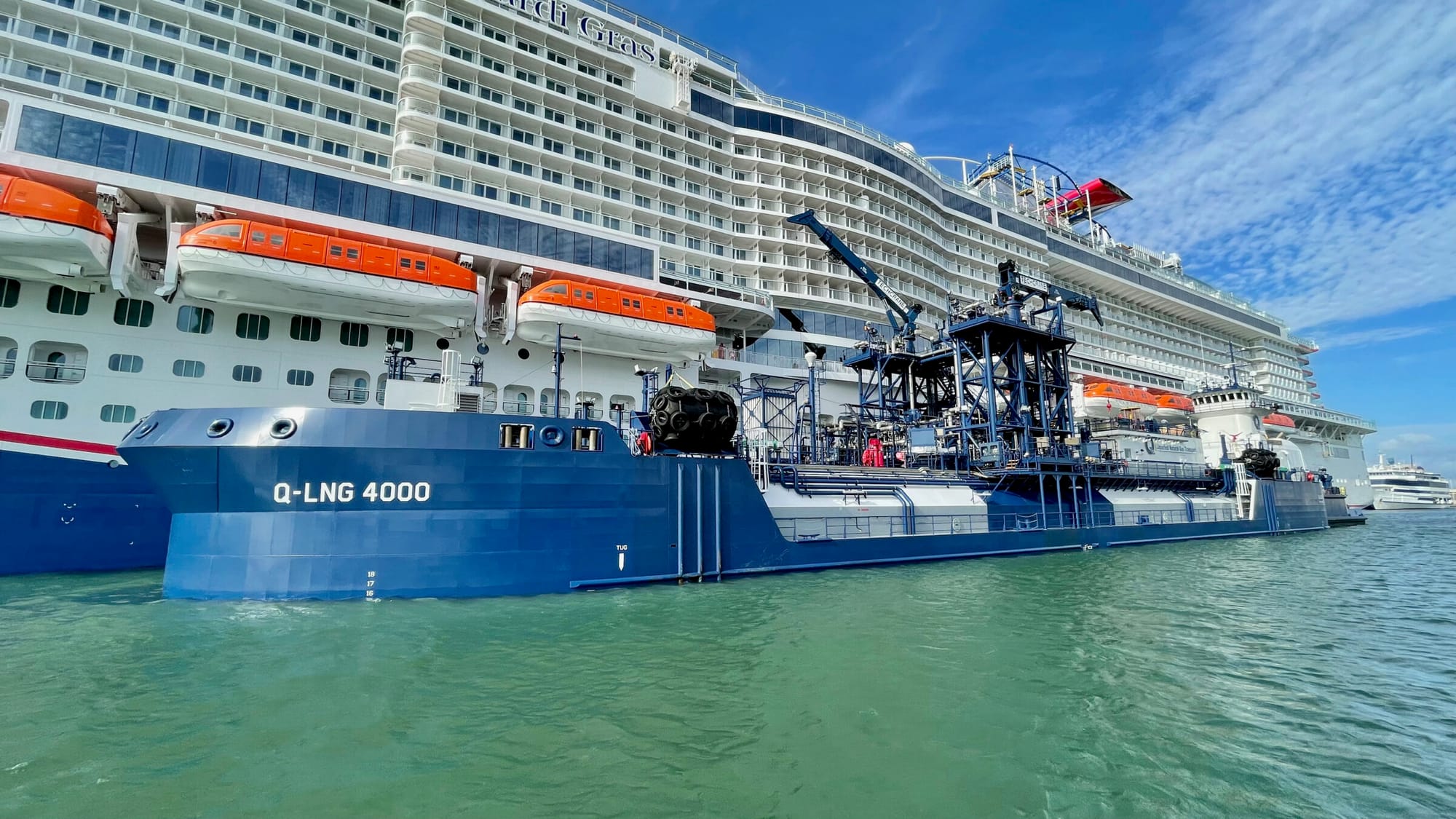
Eleven of Carnival’s 96 ships operate on LNG, or nearly 21% of fleet capacity. LNG can reduce some emissions compared with conventional marine fuels, although methane slip from engines and emissions across the fuel supply chain can reduce its greenhouse gas benefit. Performance depends partly on engine design and operating load.
Carnival is trialing biofuels aboard ships operated by AIDA Cruises, Holland America Line and Costa Cruises, with plans to consider bio-LNG and e-LNG as supplies become more widely available. AIDA is also testing hydrogen fuel cells and battery technology, while Carnival uses battery storage to limit peak energy demand elsewhere in the fleet.
“I don’t think we’ll ever have one solution that can be used on every cruise ship,” Weinstein said. “We’ll likely use a combination of technologies to help us to reach net zero.”
Shore-power connections are now installed on 74% of Carnival’s fleet, and equipped ships plugged into local grids during approximately 1,460 port calls in 2025. Shore power reduces local air pollutants while vessels are berthed, although its carbon benefit depends on the electricity mix supplying each port. Carnival plans to increase shore-power capability to 80% of the fleet by 2030.