Border Clearance Takes Focus at Seatrade Cruise Asia Debut
Luminara completed 10 Asia-Pacific voyages from December 2025 to May 2026; its next regional programme includes 32 new voyages running October 2026 through April 2027.
Border clearance deserves top billing at Seatrade Cruise Asia
“Some countries are still relying on manual processes, like stamping passports and requiring officials travelling on board,” said Michael Mihajlov, Carnival Group’s senior director of destination management.
That is the conversation I’d prioritise at Seatrade Cruise Asia’s Malaysian debut. The conference theme is “A New Era of Opportunity,” but inconsistent clearance requirements are a concrete problem the industry can work on. Making a regional itinerary easier to operate would give cruise lines something more useful than another confident assessment of Asia’s potential.
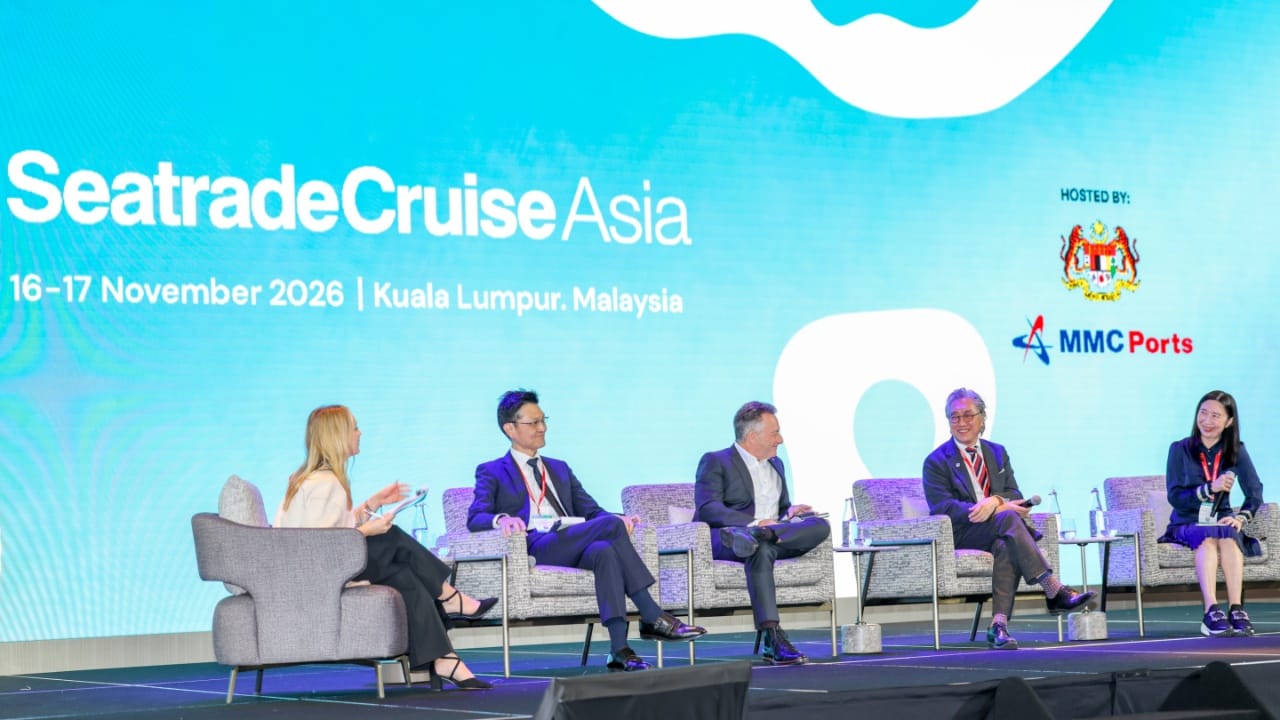
The event takes place on November 16–17, 2026, at the Waldorf Astoria Kuala Lumpur, with more than 18 cruise brands and representatives from over 30 countries expected. Informa Markets is organising it, hosted by MMC Ports with support from Malaysia’s Ministry of Transport.
There is already a substantial business behind the growth discussion. Singapore Tourism Board data puts Southeast Asian cruise tourism’s economic output at US$10 billion, supporting more than 530,000 jobs. The task is to address the uneven operating conditions within that market.
The inconsistencies that deserve attention
Royal Caribbean International’s Ben Bouldin, president, Greater China, and managing director, Asia, put the regional challenge plainly ahead of the conference.
“Asia is not a single, uniform cruise market,” he said. “Infrastructure, port readiness, regulations and traveller awareness vary significantly across the region.” He called for continued cooperation among governments, ports and cruise operators to improve connectivity.
Mihajlov also identified inconsistent passenger facilities and clearance requirements between countries, saying these can reduce efficiency and affect the guest experience. Dedicated conference sessions will examine customs, immigration and quarantine procedures, alongside international deployment and fly-cruise demand.
I’d welcome specifics here. Identifying uneven procedures is a useful start, but the discussion becomes much more valuable when governments, ports and operators can identify which requirements they can simplify or coordinate. A larger terminal alone will not fix an awkward clearance process.
Chitra Rajesh Kumar, director of cruise at Singapore Tourism Board, made a related point: destination readiness requires more than larger port facilities. Shore experiences, passenger connections and supporting services also need attention.
The programme will also consider what Australian, European, US and other long-haul travellers require from an Asian cruise holiday. Mihajlov identified Western fly-cruise markets as a major growth opportunity. He said Princess had doubled its Japan capacity and established a three-year partnership with Singapore Tourism Board.
Across Carnival Group brands, northern-summer operations feature round-trip itineraries, while open-jaw voyages between Singapore and Hong Kong are growing during the northern winter. Those are useful specifics for a discussion that could otherwise remain rather broad.
What the deployment discussions can add
The itinerary-planning session on November 17 looks particularly relevant to the operational debate. From 12:30 to 1 p.m., Rob Kritzman, director of voyage design at The Ritz-Carlton Yacht Collection, will speak with Dickson Chin, managing director of Wallem Ship Agency.
They will examine how sailing distances, berth availability, operating costs, guest preferences and destination reliability influence routes, including how disruption can force changes. This is where an attractive destination has to work as an actual port call, with a berth, a workable schedule and costs that fit the voyage.
The Ritz-Carlton Yacht Collection’s Luminara completed 10 Asia-Pacific voyages between December 2025 and May 2026. Its October 2026–April 2027 regional programme comprises 32 new voyages.
Who else takes the stage
The wider executive programme begins with Charles “Bud” Darr, president and CEO of Cruise Lines International Association, delivering the opening keynote at 1:30 p.m. on November 16. He will introduce the conference theme and examine prospects for sustained regional growth.
Bouldin will then join StarDream Cruises president Michael Goh and Oliviero Morelli, MSC Group’s president for Japan, South Korea and Southeast Asia Cruise Division, for an opening discussion on company outlooks and strategic priorities. Mary Bond, group portfolio director at Seatrade Cruise, will moderate.
Luxury and expedition cruising get separate CEO conversations. Aman at Sea president and CEO Jonathan Wilson will discuss the brand’s first yacht, the 94-guest Amangati, scheduled to debut in May 2027, and opportunities for luxury cruising in Asia. Andrew Williams, president, maritime, at Informa Markets, will moderate.
Swan Hellenic CEO Andrea Zito will discuss the company’s first Asia-Pacific season, which it completes this year, and prospects for cultural expedition cruising. Jason Gelineau, director of JAG Hospitality, will moderate that conversation.
A November 16 source-market session will compare demand across Asia. Participants include Antony Kaufman, head of commercial strategies at Mitsui Ocean Cruises, and representatives from Apple Vacations, Chan Brothers Travel and Central Consultant Inc. Holly Payne, editor of Seatrade Cruise Review and deputy editor of Seatrade Cruise News, will moderate.
Malaysia has a specific case to make
For the host country, the most consequential discussion is likely to be the dedicated Malaysia session. It will assess the country as a source market, a destination and part of Southeast Asia’s cruise infrastructure, including what is needed to secure long-term cruise-line commitments.
That is a sensible focus. Hosting an industry gathering creates an opportunity to make the case. It does not settle the deployment decisions that Kritzman’s session will explore.
Participating cruise brands include Disney Cruise Line, MSC Cruises, Royal Caribbean International and StarDream Cruises. More than 22 suppliers, including Paywatch and ATPI Marine Travel, will attend alongside destination representatives from Nagasaki, Brunei, Visit Indochina–Viet Nam and the Subic Bay Metropolitan Authority.
Other sessions will cover shipbuilding and repair, ship-to-shore experience design and local economic benefits. Pre-registered delegates can use the event’s matchmaking app to arrange meetings before arrival.
After the Kuala Lumpur programme, a limited number of attendees can join destination visits in Penang and Langkawi from November 18–20, organised with the Penang Tourism Board and Langkawi Development Authority.
Those visits can show delegates what passengers might enjoy ashore. Malaysia’s stronger argument for long-term deployment, though, will be the detail behind the visit: how reliably a ship can call and how smoothly its passengers can get out to experience the destination. That deserves more attention than the size of the opportunity.