Bar Harbor Cites Golden Anchor Over Scenic Eclipse Landing
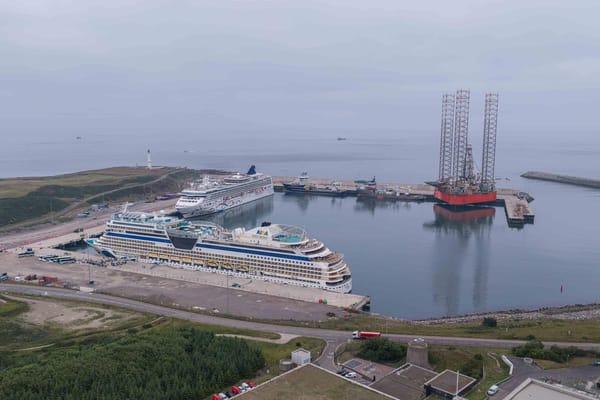
Because Scenic Eclipse is registered in Malta, town-owned Ells Pier is not an option: it lacks Customs and Border Protection facilities and accepts only United States-flagged cruise ships.
Bar Harbor's permit fight reaches beyond its summer cruise cap
Scenic Eclipse called at Bar Harbor on October 1, outside the July and August window when the town can enforce its 1,000-passenger daily landing cap. The ship has a lower-berth capacity of just 228. Yet its passenger landing still drew a violation notice, because the dispute is over permission to use the waterfront property.
I see that as the harder operational problem for a call like this. A seasonal passenger limit gives an operator something to plan around. A town saying there is no lawful landing location for your passengers leaves much less room to work.
Bar Harbor issued the notice to Golden Anchor after the ship's passengers landed at its 55 West Street property. The town says the property lacked a valid cruise ship disembarkation facility permit. Golden Anchor has received the notice and disputes the legal basis for requiring that permit.
Before the call, town staff told Scenic Eclipse that no privately owned property in Bar Harbor held a valid disembarkation permit and that no lawful landing location was available for its passengers, according to the town's statement. Code Enforcement Officer Michael Gurtler documented the landing and issued the notice.
The town had advised the vessel that Anchorage B was available. But it distinguished the harbormaster's coordination of anchoring under federal regulations from authorization to land passengers.
The permit dispute remains unresolved
Bar Harbor adopted its Chapter 52 cruise ship disembarkation ordinance on June 18, 2024. It took effect a month later, replacing the previous landing-facility licensing mechanism with a permit system.
A federal court ruling restricted enforcement of the passenger cap to July and August while leaving facility-permit requirements in effect. Golden Anchor, however, argues that the permit requirement cannot be separated from the restrictions addressed by U.S. District Court Judge Lance Walker's ruling.
Golden Anchor has not applied for a permit. Its lawyers maintain that its longstanding license remains valid and that its history of receiving cruise passengers means it should not have to apply. The company is involved in litigation over the broader cruise ordinance and an earlier violation notice, and it has continued handling passengers from previously approved calls.
“There currently isn’t a permit that Golden Anchor could apply for that is constitutional,” Operations Manager Eben Salvatore said. He also criticized the prospect of further litigation and its cost to taxpayers.
That is a substantive legal challenge, but it is not an agreed basis for continuing operations. The town maintains that its permitting requirements apply and expressed disappointment that the vessel and Golden Anchor proceeded despite the advance warning. Since Walker's ruling, Bar Harbor has made no public or official changes to its handling of cruise calls.
Foreign-flagged ships have little room to switch landing sites
Scenic Eclipse is registered in Malta, which makes the shortage of alternatives especially important. Town-owned Ells Pier lacks CBP facilities and accepts only U.S.-flagged cruise ships, including vessels operated by American Cruise Lines. Foreign-flagged ships require those facilities.
Harborside/Golden Anchor previously invested in CBP facilities at its waterfront property. Bay Ferries' The Cat also uses a town-leased site with CBP facilities, but that location has not been identified as an alternative cruise landing site.
For a foreign-flagged operator, then, “use another pier” is not a real answer.
How the West Street landing works
A week before the Scenic Eclipse call, Norwegian Cruise Line executives and Cruise Lines International Association representatives visited Bar Harbor while Norwegian Breakaway was in port to observe passenger transfers. That ship's reservation predated the ordinance changes.
The operation combined ship tenders with local whale-watch and tour boats to carry passengers from the anchorage beyond Bar Island to West Street. Passenger queues stayed on the waterfront property, off the street. Salvatore said he had also invited town officials and staff to observe the process, which he described as smooth.
Keeping queues off the street is useful. It does not resolve whether the property is authorized to receive them.
A replacement framework failed at the ballot box
Bar Harbor received 176 ships and 254,546 passengers in 2019. Its 2024 schedule comprised about 101 calls with combined vessel capacity of roughly 182,000 passengers. Scheduled capacity is not the same as the number of passengers who actually land, which is the measure governed by the daily cap.
In 2024, voters rejected a Town Council alternative by 1,779 votes to 1,714. Contingent on repeal of the existing limit, it would have allowed 55,000 passengers per month in September and October and 20,000 per month from May through August. It also proposed a daily ceiling of 3,200 based on lower-berth capacity and required 10 cruise-free days in each autumn month.
The tendering facility and cruise lines had agreed to that framework. With the vote lost, it cannot serve as the operating compromise now.
Salvatore said Golden Anchor “stands ready to work with the town to develop disembarkation standards consistent with the federal court decision.” That is where a workable arrangement has to start. An agreement on passenger numbers cannot substitute for an agreement on where those passengers can legally land.