Aurora Expeditions Deploys AI Route Forecasting Across Fleet
All three ships now carry Mark 3 Triton sensors with improved solar generation for high-latitude operations and eight times the battery capacity of the previous generation.
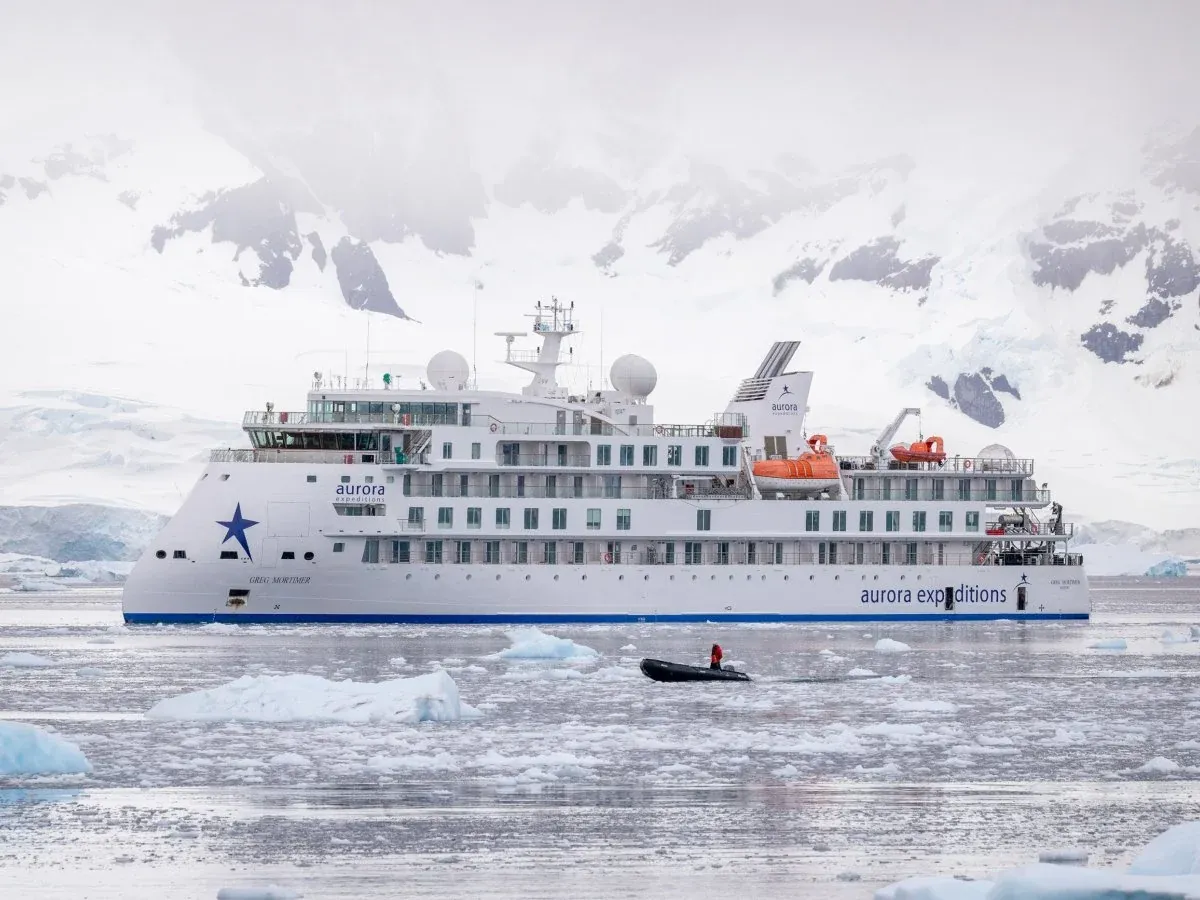
Aurora Expeditions has deployed CounterCurrent’s AI-powered ocean forecasting and route-recommendation technology across its three-ship fleet following an Antarctic trial during the 2025–26 season. The expansion, announced October 31, 2026, adds Sylvia Earle and Greg Mortimer to the partnership alongside trial vessel Douglas Mawson.
The Antarctic trial generated 39 route recommendations from more than 5,600 environmental observations collected over 126 operating days.
Aurora described early sea-trial fuel savings as “more than 2-5 percent” over 24 hours. Preliminary modeling suggests potential savings of 5–15 percent under suitable conditions, depending on vessel type, operating speed and route. The company cautioned that the findings remain preliminary and require further testing.
“Partnerships like CounterCurrent allow us to explore ways to make our operations more efficient,” said Sasha Buch, Aurora Expeditions’ head of sustainability and passenger experience, “while contributing real-world insights that can help advance technology for the wider maritime industry.”
Vessel-specific forecasts
CounterCurrent combines AI-generated forecasts with satellite observations, ocean and weather models, and live measurements from ship-mounted sensors. Its forecasting evaluates hundreds of possible ocean and weather outcomes centered on an individual vessel, rather than relying on a single forecast.
Crew receive environmental information, route recommendations and warnings about potentially unfavorable conditions. The system identifies routes that take advantage of favorable currents and avoid adverse conditions, seeking to reduce transit fuel consumption and exposure to hazards without necessarily extending journey times.
Upgraded Triton sensors
All three Aurora ships now carry CounterCurrent’s upgraded Mark 3 Triton sensors. The units have improved solar generation for high-latitude operations and eight times the battery capacity of the previous generation, plus additional onboard processing and storage. Those changes are intended to support data collection during periods without sunlight or satellite connectivity.
The rail-mounted sensors have their own power and communications systems and do not require access to a ship’s existing systems. They record vessel position, heading and motion alongside environmental measurements, including wind, waves and ocean currents. Sensor data is encrypted before transmission and remains encrypted in storage; CounterCurrent describes the platform as air-gapped from ship and fleet IT networks.
Triton sensors have operated in Antarctica at temperatures as low as minus 30 degrees Celsius and in winds of approximately 120 kilometers per hour. The upgraded units’ battery runtime has not been disclosed.
Shared observations and onboard forecasting
The partnership’s next phase will examine fleet-wide forecasting, with measurements from one vessel used to improve forecasts and route recommendations for others operating in the same region. Aurora and CounterCurrent are also supporting the development of onboard forecasting that could reduce dependence on cloud-based processing.