Antarctica21’s Magellan Discoverer Lacks Emissions Benchmarks
On fly-cruise itineraries, up to 88 passengers will fly two hours from Punta Arenas to Frei Station on King George Island, bypassing the Drake Passage before boarding.
Magellan Discoverer’s hybrid system needs a benchmark, not just a “first”
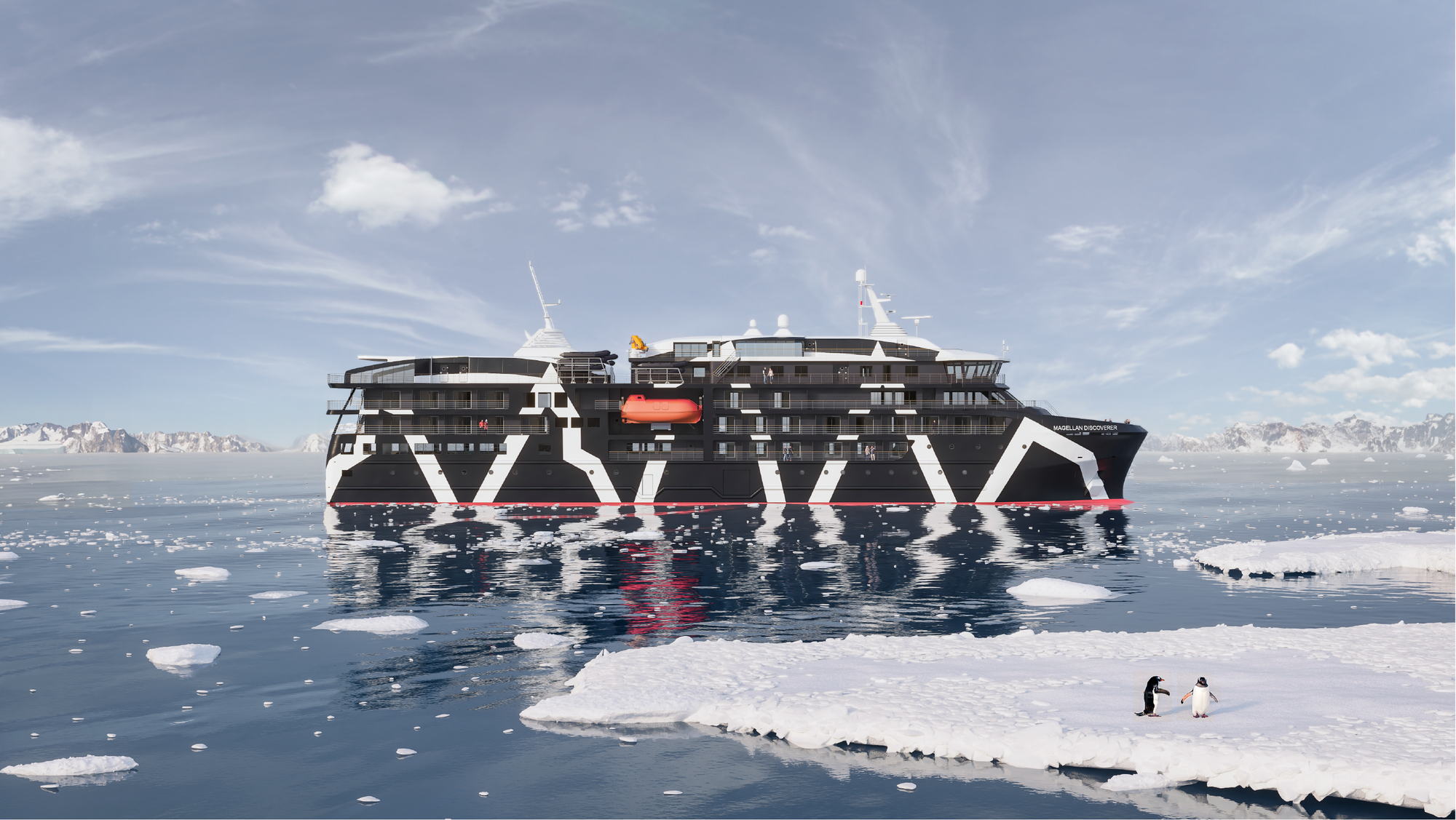
Magellan Discoverer will combine two 1,800 kW diesel engines with battery storage. Antarctica21 says it will be capable of battery-powered operation for limited periods. That is a more useful starting point than the company’s claim that this is the first hybrid-electric polar expedition cruise ship built in the Americas.
I’d put a published fuel-use benchmark ahead of a regional first. The newbuild has equipment intended to improve efficiency and reduce underwater noise, but Antarctica21 has not published independently verified fuel-consumption data or comparative emissions figures per passenger-night. The design deserves attention. Its environmental benefit still needs measuring.
The 94-metre, 5,900-gross-ton vessel is nearing completion at ASENAV’s shipyard in Valdivia, Chile, and is scheduled to arrive in Punta Arenas on October 25, 2026, ahead of its maiden Antarctic season.
ASENAV said in an October 6 update that the ship had completed sea trials covering navigation, safety and technical systems. A previously announced September 30 delivery date has not been publicly confirmed. Antarctica21 expects a November naming ceremony, with the first revenue passengers scheduled to board on December 15.
A bigger role in the fly-cruise fleet
Magellan Discoverer will replace the seasonally chartered Ocean Nova, which completed its final Antarctica21 voyage during the 2025-26 season after more than 15 seasons with the operator.
The replacement increases capacity for Antarctica21’s fly-cruise programme. Magellan Discoverer will carry up to 88 passengers on Antarctic fly-cruises and up to 96 on conventional sea voyages, with 67 crew members and expedition staff. Passenger accommodation will have private balconies.
The fly-cruise format lets passengers bypass the Drake Passage sea crossing. They begin in Punta Arenas, take a two-hour flight to Frei Station on King George Island and board the ship there. Weather-dependent itineraries explore the South Shetland Islands and western Antarctic Peninsula before returning to the island for the flight back to Chile.
Co-founder Jaime Vasquez said Antarctica21’s 2026-27 programme was planned to include 46 voyages and 300 nights in polar waters. The published breakdown lists 36 air-cruises and eight sea voyages, however, which totals 44 departures. That difference remains unexplained.
Sister ship Magellan Explorer, launched in 2019, is already operating the company’s current season. It began Patagonia and Chilean fjords sailings from Puerto Montt in mid-September and is scheduled to run Antarctic fly-cruises from November through late March 2027.
The equipment is specific. The efficiency claim should be too.
Magellan Discoverer has a PC6 ice-strengthened hull, an ABB DC electrical grid and Azipod propulsion. ASENAV has identified Corvus as the battery-package supplier. The ship also incorporates heat-recovery equipment and Tier III emissions controls, with a reported open-water cruising speed of 14 knots.
Those are concrete systems to evaluate. But the “first built in the Americas” designation establishes a construction location and propulsion configuration. It does not establish emissions-free operation or tell passengers how much fuel the ship will save.
The ship’s science plans are just as specific. Wet and dry laboratories are planned to operate through agreements with Chilean scientific institutions, while sensors will continuously collect water-temperature, salinity and air-quality data during Antarctic seasons.
I’d like Antarctica21 to bring that same measurement-minded approach to reporting the ship’s own performance once it enters service. Publishing comparable fuel use per passenger-night would give passengers a way to judge the hybrid investment. Being first in the Americas cannot do that.