American Heritage Evacuation Draws Scrutiny After New Orleans Crash
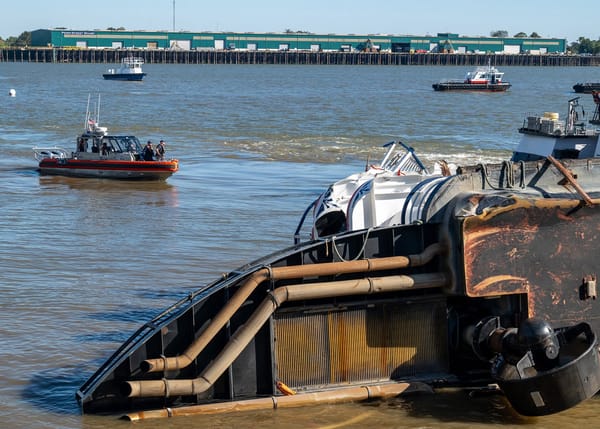
Two New Orleans firefighters boarded the damaged American Heritage before it capsized and continued rescue work after passengers entered the Mississippi River.
American Heritage’s evacuation deserves its own hard look
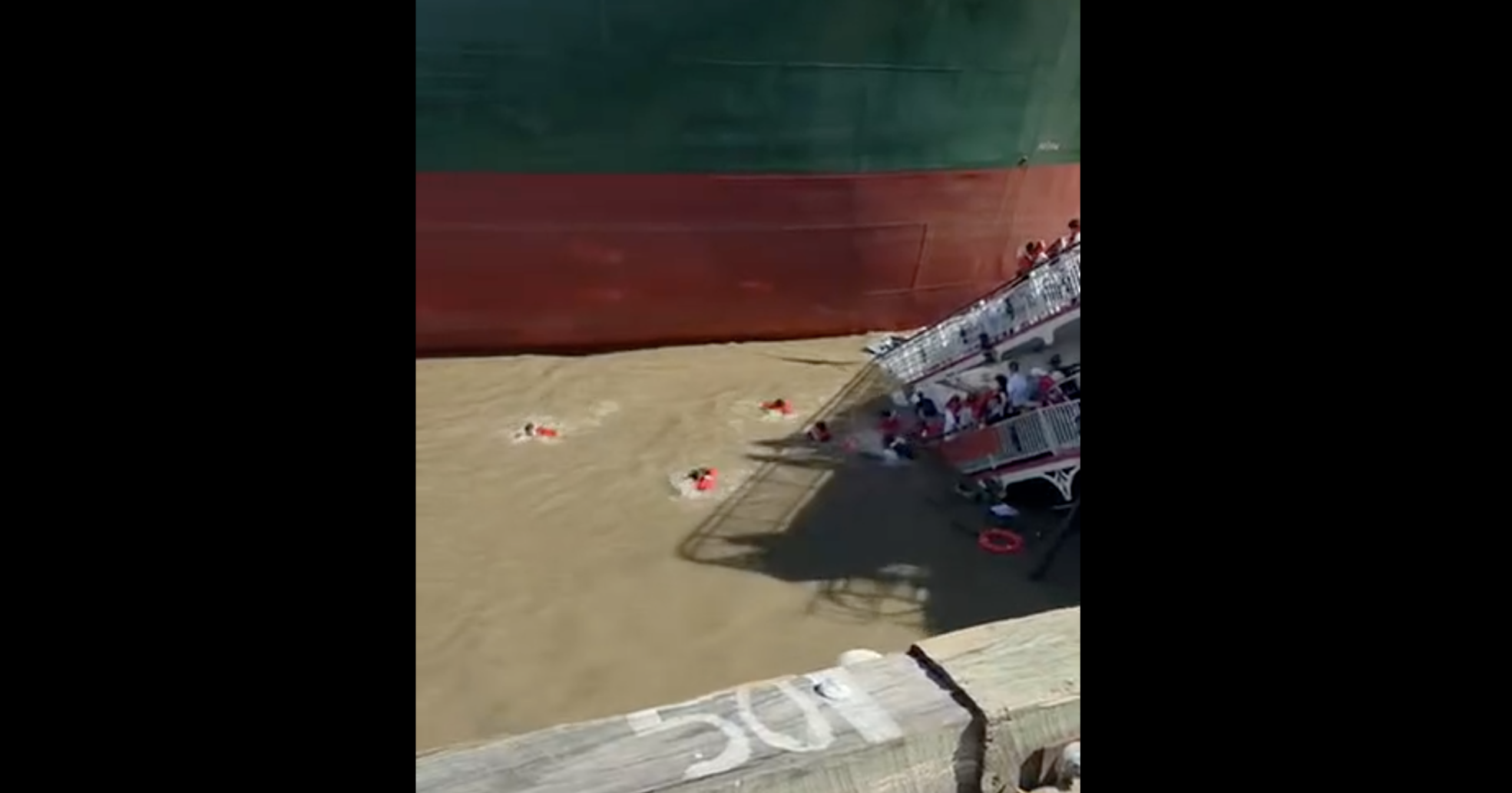
About 87 of the 140 passengers aboard American Heritage reached shore before the docked riverboat rolled onto its side in New Orleans. Video showed others climbing across railings or entering the Mississippi in life jackets as the vessel listed and became partly submerged.
Everyone survived. That is an extraordinary rescue outcome. But I want the evacuation examined as closely as the tanker’s steering failure. The approximately 22 minutes between impact and capsize, and the rescues that continued afterward, contain lessons the cruise industry needs.
The tanker Atlantic Asphalt struck American Cruise Lines’ American Heritage on Friday, Nov. 13, while the riverboat was docked near the Crescent City Connection bridge. Investigators established that 140 passengers and 50 crew members were aboard. Thirty-two people were taken to hospitals following the collision and rescue operation.
Four patients remained hospitalized Monday, including one in serious condition, according to New Orleans officials. Authorities had initially described the injuries as non-critical. Two Harbor Police officers were among those hospitalized during the rescue, while no injuries were reported aboard the tanker.
A dockside arrival became a rescue in the river
American Heritage had arrived about two hours before the approximately 12:30 p.m. collision near 1350 Port of New Orleans Place. It was completing an eight-day Mississippi River voyage through Louisiana and Mississippi and had docked for passenger disembarkation.
Crew members distributed life jackets and helped people evacuate. According to the National Transportation Safety Board, the vessel rolled onto its side approximately 22 minutes after impact. New Orleans Harbor Police Chief Melanie Montroll said about 87 passengers had reached shore before it overturned.
That sequence deserves a careful reconstruction, from how people moved off the ship as it listed to how rescuers reached those who entered the water. It should capture the decisions that saved lives as well as the difficulties people encountered.
Harbor Police, New Orleans firefighters, city police, emergency medical personnel and the U.S. Coast Guard responded alongside tugboat crews, nearby workers and private vessels. Fire Department Superintendent Roman Nelson said two firefighters boarded the damaged riverboat before it capsized and continued rescuing people after they entered the water.
Mayor Helena Moreno called the outcome “a miracle on the Mississippi.” Survivors were taken into the Port of New Orleans Administration Building for medical assessment and assistance. Cruise personnel conducted a roll call to account for everyone.
Louisiana Lieutenant Governor Billy Nungesser secured 85 hotel rooms. American Cruise Lines said it was arranging accommodations and necessities, while city officials helped replace lost medications and restore access to phones. Louisiana State Police assisted passengers needing replacement identification.
The 295-foot American Heritage was built in 2015 by Chesapeake Shipbuilding in Salisbury, Maryland. It accommodates up to 150 guests across five passenger decks.
Two minutes from steering failure to collision
The NTSB has identified a steering failure aboard Atlantic Asphalt before impact, but investigators have not determined what caused the malfunction.
Investigator-in-Charge Bart Barnum said the tanker was traveling upriver toward an oil facility in Reserve when its rudder became stuck to starboard. It veered toward the river’s east bank and struck American Heritage approximately two minutes after the steering casualty.
Investigators recovered the tanker’s voyage data recorder. Barnum said its audio captured the ship’s whistle, radio warnings and calls for assistance, along with “commands to deploy the vessel’s anchors; and emergency ship-handling orders.”
NTSB Member John DeLeew said video showed anchors had been lowered. Investigators were still determining which anchors were deployed, how far they descended and whether there was enough time for them to affect the tanker’s movement.
Those details matter more than treating the tanker’s inspection history as a ready-made explanation. The Coast Guard identified no problems during its most recent inspection in October. Earlier records documented an autopilot malfunction in July 2024 and a bridge-to-main-engine communications failure the following month, along with other deficiencies that were subsequently corrected. A June inspection found faulty wiring serving pump-room lighting.
Canadian inspections recorded four fire-safety deficiencies in 2024 and an emergency electrical generator problem the following year. Maritime historian Salvatore Mercogliano of Campbell University described the earlier Coast Guard deficiencies as relatively common and not particularly concerning.
Atlantic Asphalt is a 160-meter, 14,485-gross-ton tanker built in 2017 and registered in the Marshall Islands. Its registered owner, Liberia-based Nave Shipping SA, is a subsidiary of China State Shipbuilding Corporation. Manager OSM Thome expressed regret over the collision and said it was cooperating with authorities. It did not immediately answer an Associated Press request for further comment Monday.
Restricted traffic and a lengthy recovery
The collision damaged port infrastructure and temporarily halted nearby vessel traffic. The Coast Guard initially stopped movements between Mississippi River mile markers 93 and 96.
By Saturday morning, traffic had resumed under restrictions. A 500-foot safety zone remained in force, with one-way movements between mile markers 95.5 and 96.5 and the bridge’s alternate navigation span closed. Regional Transit Authority ferry service also resumed after a precautionary suspension.
Port of New Orleans officials filed a federal lawsuit alleging that the tanker caused at least $1 million in terminal damage. A judge issued a warrant placing the tanker under federal control, and it was towed away from the collision site.
Four American Heritage crew members separately sued the tanker’s owners over the weekend, alleging negligence and significant injuries. Court records did not list attorneys representing the owners.
Removing American Heritage will take longer. The Coast Guard said crews must first remove 16,000 gallons of fuel and that getting the riverboat out of the Mississippi could take weeks.
The NTSB expects investigators to spend about a week in New Orleans and issue a preliminary report within 30 days. It has requested photographs and video from witnesses to help reconstruct the collision.
The steering investigation must explain how the tanker reached a docked passenger vessel. The evacuation record has a different, equally practical purpose. Another riverboat crew may someday need to know exactly what worked before and after American Heritage rolled over.