American Heritage Crew Credited After New Orleans Capsizing
American Cruise Lines said Capt. Leonard Stewart remained on the bridge, requesting assistance and keeping American Heritage beside the dock as it capsized.
American Heritage’s Crew and Rescuers Deserve Credit After New Orleans Capsizing
American Heritage overturned before everyone could be evacuated. All 197 passengers and crew survived. I give the crew and rescuers considerable credit for that outcome.
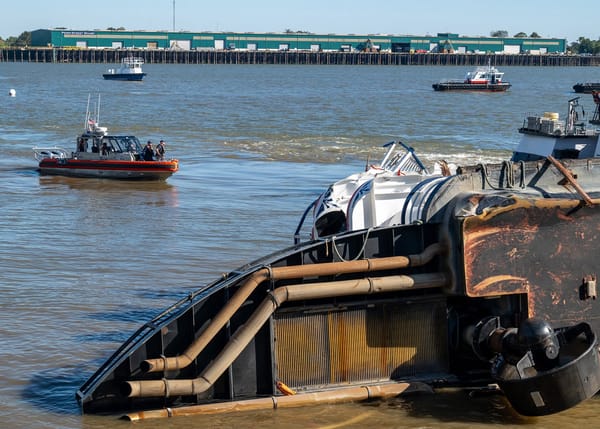
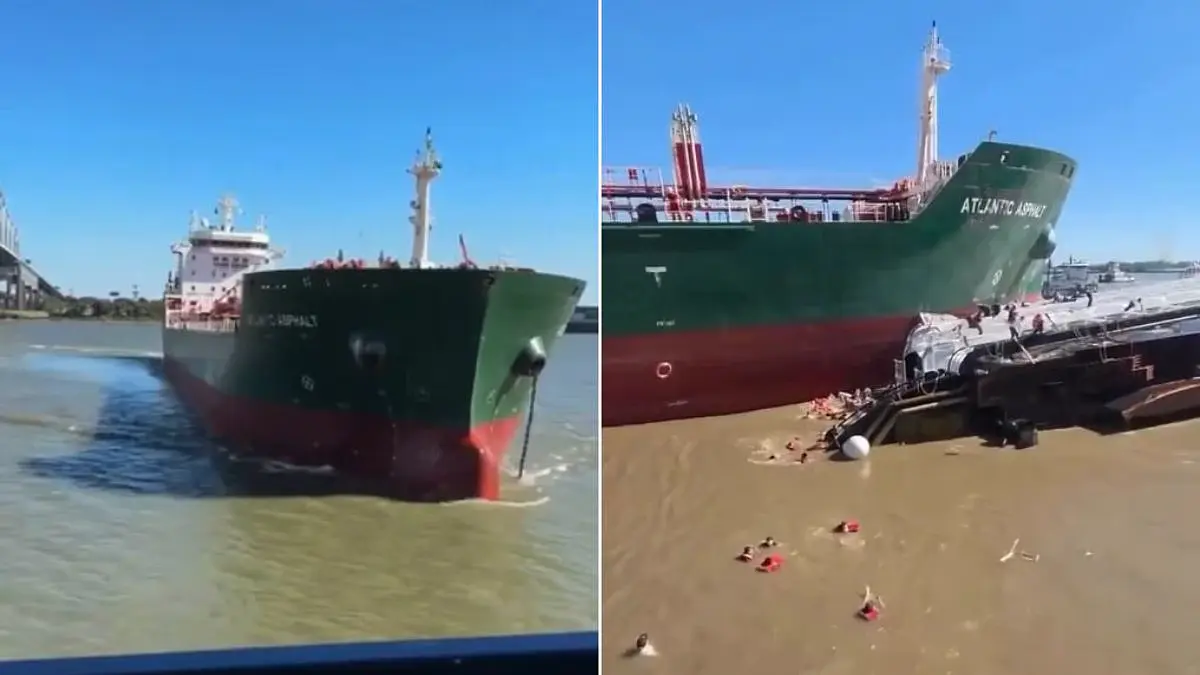
The American Cruise Lines riverboat was docked at the Port of New Orleans when the tanker Atlantic Asphalt struck it around 12:30 p.m. Friday, Nov. 13, 2026. The riverboat began listing within minutes and capsized against a terminal.
Thirty-two people were taken to hospitals, with local officials reporting no critical injuries. Eight remained hospitalized Saturday. Everyone aboard the tanker also survived.
Those numbers describe a rescue with a remarkable outcome. They should not make the account sound tidy. Dozens of people, including at least two police officers, had to be pulled from the water and transferred to nearby vessels.
Very little time to respond
American Cruise Lines credited Capt. Leonard Stewart and the crew with carrying out a rapid evacuation. In its Saturday statement, the company said Stewart remained on the bridge while American Heritage capsized, requesting assistance and keeping the vessel beside the dock as long as he could.
That is the operator’s account, but the praise did not come only from the company.
“The captain and crew did remarkably well. Plus, the shore-side responders were there very quickly as well,” said Martin Davies, professor of maritime law at Tulane University and director of the Tulane Maritime Law Center.
Davies said photographs showed passengers wearing life jackets and leaving in an orderly manner. He also said the crew would not have had enough time to move the docked riverboat out of the tanker’s path.
That last point matters. The crew had to respond where the ship was, as it rapidly became unstable.
Passenger Joe Knab of Wichita, Kansas, estimated that he spent 15 to 20 minutes in the water.
“It was a little scary there at the time, when I think I was drowning, because I kept bobbing underneath,” he told WDSU-TV.
His account belongs alongside the photographs of an orderly evacuation. Both can be accurate. People can follow instructions, responders can act quickly, and passengers can still struggle to stay above water.
American Cruise Lines, based in Guilford, Connecticut, said it was arranging hotel accommodations for everyone who had been aboard and helping with immediate needs. The operator said it was coordinating with the Coast Guard, New Orleans Police and other agencies, and would continue cooperating with the investigation and salvage work.
The cause remains unresolved
Coast Guard Capt. Melanie Burnham said Atlantic Asphalt appeared to have experienced “some type of loss of steering.” The cause of the collision had not been established. The Coast Guard is investigating, and the National Transportation Safety Board was sending investigators to New Orleans.
The Marshall Islands-flagged tanker was built in 2017. It measures 160 meters in length, has a gross tonnage of 14,485 and carries asphalt and bitumen.
A lawsuit filed by the Board of Commissioners of the Port of New Orleans alleges that Atlantic Asphalt caused at least $1 million in damage. A federal judge issued a warrant Friday placing the tanker under federal control. It was subsequently towed away.
American Heritage was built in 2015 by Chesapeake Shipbuilding in Salisbury, Maryland. The approximately 295-foot paddlewheel riverboat has five guest decks and capacity for 150 guests. Its assignments include American Cruise Lines’ Highlights of the Mississippi itinerary through Louisiana and Mississippi, and the Great Smoky Mountains Cruise between Knoxville, Tennessee, and Huntsville, Alabama.
Traffic remained restricted on the Mississippi River after the collision. Burnham said vessels were expected to resume movements upstream and downstream soon.
Removing American Heritage could take weeks, she said. The salvage operation will require safely removing the riverboat’s 16,000 gallons of fuel.
The absence of fatalities is a reason to recognize the rescue effort, not to lower the stakes of finding out why a tanker struck a docked passenger ship.