Alaska Gives Preliminary Approval to $500M Juneau Cruise Port
State fish and game officials warned the project could significantly affect crab fisheries, prompting seasonal construction limits and recommendations on bears, waste and fuel.
The Passenger Count Is the Test for Goldbelt’s $500 Million Juneau Port
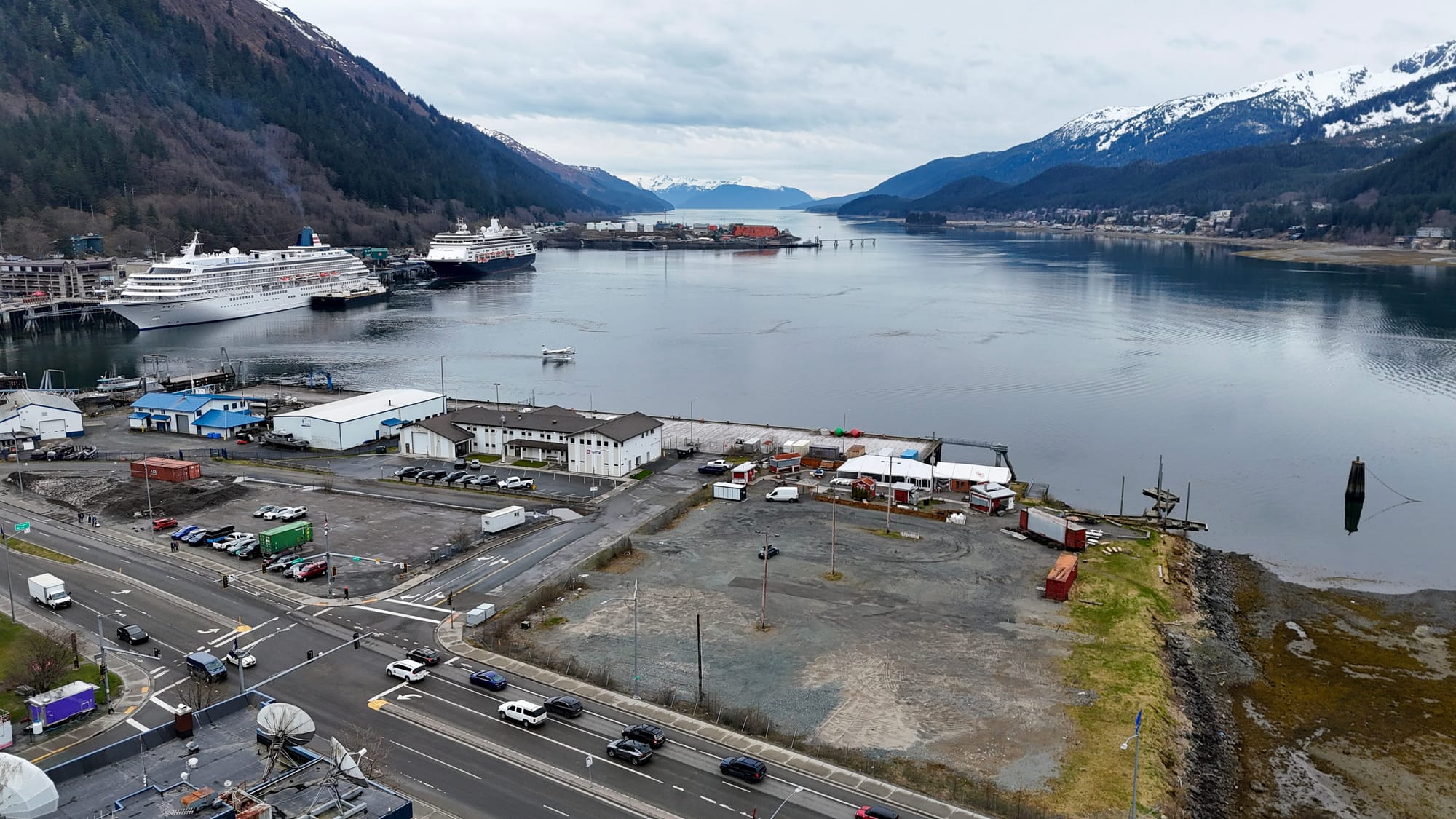
Goldbelt’s proposed Douglas Island cruise port could accommodate as many as 10,000 passengers at once, about 15 miles from downtown Juneau. That is substantial new capacity for a project whose developer says the aim is to redistribute existing cruise traffic, rather than increase it. I’d hold that distinction at the center of the approvals still to come.
Alaska’s Department of Natural Resources gave preliminary approval Friday to a 25-year tideland lease for Goldbelt Aaní, the estimated $500 million development Goldbelt Inc. is pursuing with Royal Caribbean Group. Public comments are due by 11:59 p.m. Nov. 23.
The lease would cover construction, operation and maintenance of the berths and associated facilities. It is one of several approvals needed before the port can open, not permission to proceed with the entire development.
Spreading visitors around has consequences
Juneau already receives about 1.7 million cruise passengers annually. Some local leaders and residents have questioned whether the new port would divert a substantial share of those visitors from downtown businesses or bring approximately 500,000 additional passengers to Juneau.
Those are different concerns, and neither disappears because the ships would dock somewhere else. Redistributing existing visitors could change where their spending goes. Adding visitors would increase the total number Juneau has to accommodate.
Goldbelt CEO McHugh Pierre has previously said the company intends to distribute existing traffic more widely, not increase the total. I favor that objective. But the ability to berth two large ships establishes capacity, not what will happen to Juneau’s overall passenger count.
The Juneau-based urban Alaska Native corporation announced the project in 2024. Its application anticipates between 2,000 and 3,000 ship workers at the site when both berths are occupied, in addition to the passengers.
The approximately 250-acre site is on Goldbelt-owned land on Douglas Island’s northwest coast, beyond the end of North Douglas Highway between False Outer Point and Point Hilda. Plans call for two floating berths, connected to shore by transfer spans, capable of handling the largest cruise ships currently visiting Juneau.
This would also be a place for passengers to spend time and money. Later phases envision dining, retail, Tlingit cultural attractions and excursion facilities. That makes the concern about impacts on downtown businesses reasonable, even if the project adds no passengers at all.
The conditions deserve as much attention as the berths
Initial shoreside construction would include roads, utilities, a welcome center and wastewater treatment. A dedicated water and wastewater system is intended to reduce reliance on existing municipal infrastructure, a sensible feature for a development of this scale.
Concept plans also include a small-boat harbor, floatplane docks and a marine and aviation fuel terminal. Those specifications remain preliminary and subject to engineering changes, environmental review, cultural consultation and regulatory approvals.
DNR’s Division of Mining, Land and Water received no objections to the tideland application from the state agencies and the City and Borough of Juneau that reviewed it. Their requests for protective measures, however, show why “no objection” should not be read as “no impact.”
The Alaska Department of Fish and Game warned of significant effects on commercial and personal-use crab fisheries. The preliminary decision restricts certain construction activities during specified parts of the year to reduce those effects. Fish and Game also recommended protections involving bears, waste handling and fuel storage.
Public access would be affected, too. Because the development involves navigable waters in Stephens Passage, DNR considered heavy-equipment noise and increased marine traffic as safety concerns. It would allow temporary, seasonal closures of the public access easement when necessary, with Goldbelt required to post signs near the easement notifying people of a closure.
2028 remains a target, not a confirmed opening
Goldbelt has targeted the 2028 cruise season, but its application describes a four-year construction period.
“We have permits to secure and construction to line up before I can give you a firm answer on a projected opening date,” Pierre told the Juneau Independent in an email Friday.
The project still needs approvals involving the U.S. Army Corps of Engineers and the Juneau Planning Commission. Pierre said upland permitting would happen in stages, with the first conditional use permit covering only part of the eventual development.
Goldbelt also has two studies left to complete to address outside-agency questions through that process. Pierre expects the final report to reach Juneau’s planning department in December, starting a Planning Commission public process in 2027.
For the tideland lease, DNR must consider public comments before issuing a final finding and decision. That decision is subject to a 20-day appeal period followed by a 10-day commissioner reconsideration period. Required conditions and documentation must be completed before the lease is issued. The proposed 25-year term would extend beyond construction to cover operations while allowing reassessment of the area’s use and effects on state resources.
Comments may be faxed to 907-269-8904 or mailed to DNR Division of Mining, Land and Water, Southeastern Regional Office, P.O. Box 111020, Juneau, AK 99811-1020.
Those remaining reviews should keep the passenger question in view alongside the engineering and environmental conditions. A port that redistributes existing visitors and one that accommodates another half-million arrivals have very different consequences. Juneau should not mistake a new place to put cruise passengers for evidence that its crowding problem is being solved.