UQ Study Finds Cruise Waivers Often Void Under Australian Law
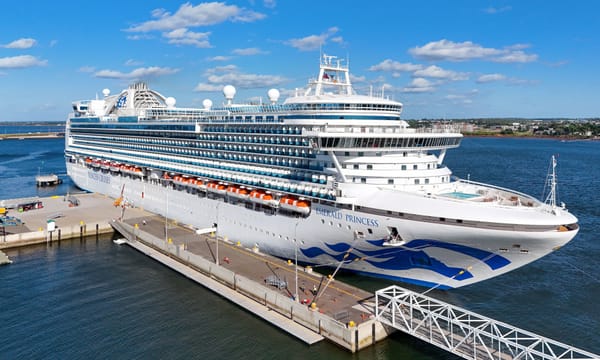
In December 2023, Australia's High Court held Carnival's waiver in the Ruby Princess case unfair and void, allowing United States passengers to remain.

Australians booking cruises overseas may retain the right to join class actions even when their passenger contracts contain waivers or nominate foreign law, according to a University of Queensland study. UQ Law School researcher Dr Rosemary Gibson found that clauses preventing passengers from pursuing collective claims are generally void under Australian consumer law.
The study found Australia provides stronger protection against class action waivers than the United Kingdom or the United States.
Australian law puts the burden on cruise operators
Class action waiver clauses prevent passengers from initiating or joining group proceedings against an operator. Gibson said cruise claims frequently arise from extreme weather disruption, disease outbreaks and safety failures, while the value of an individual passenger’s case may not justify the cost of separate litigation.
“Joining a class action can be the only practical way for passengers to seek compensation and accountability,” Gibson said.
Under the Australian Consumer Law, unfair terms in standard-form consumer and small-business contracts are prohibited. A term found unfair by a court is void and does not bind the affected party.
Gibson found that cruise class action waivers are typically unfair because they give operators greater control over dispute resolution and restrict passengers’ ability to pursue compensation collectively. The cruise provider must show that the term is reasonably necessary.
Since Nov. 9, 2023, businesses have also faced penalties for proposing, using or relying on unfair contract terms. The maximum penalty for a business is the greatest of A$50 million, three times the benefit obtained, or 30% of adjusted turnover during the breach period when that benefit cannot be calculated. Individuals can face penalties of up to A$2.5 million.
UK and US courts apply different tests
In the UK, the Consumer Rights Act 2015 makes an unfair contract term nonbinding when it causes a significant imbalance against the consumer and is contrary to good faith. Gibson said the consumer bears the burden of establishing that a disputed clause fails the good-faith requirement.
US courts routinely enforce cruise contract waivers when they pass the “reasonable communicativeness” test. That analysis considers whether the physical presentation of the ticket or clause made the term sufficiently clear and whether the passenger had a fair opportunity to become informed of it. Terms including class action waivers and litigation time limits can be enforced on that basis.
“This focuses on whether passengers had a fair chance to know the clause existed, not whether they actually read it,” Gibson said.
Ruby Princess ruling established the Australian precedent
The Australian precedent arose from the Ruby Princess COVID-19 outbreak in early 2020, after which passengers brought a class action alleging negligence and breaches of consumer law against Carnival and Princess Cruises. Twenty-eight people died following the outbreak.
Carnival relied on a waiver in its US passenger terms to prevent a group of passengers from participating. In Karpik v Carnival plc, decided Dec. 6, 2023, the High Court of Australia unanimously held that the waiver was unfair and void under the Australian Consumer Law.
The court also upheld the refusal to stay the US passengers’ claims in favor of litigation in the United States, allowing them to remain part of the Australian proceeding.
“The judgment affirmed that companies operating in Australia can’t sidestep local consumer protections,” Gibson said.
The study has been published in Lloyd’s Maritime and Commercial Law Quarterly. Gibson advised passengers not to assume every provision in a cruise contract is enforceable and to seek legal advice when a dispute arises.