Swan Hellenic Initiative Becomes First Ship-Based GlobalCoast Pilot
SH Minerva, SH Vega and SH Diana gather salinity, conductivity and ocean current measurements, with validated observations shared through EMODnet.
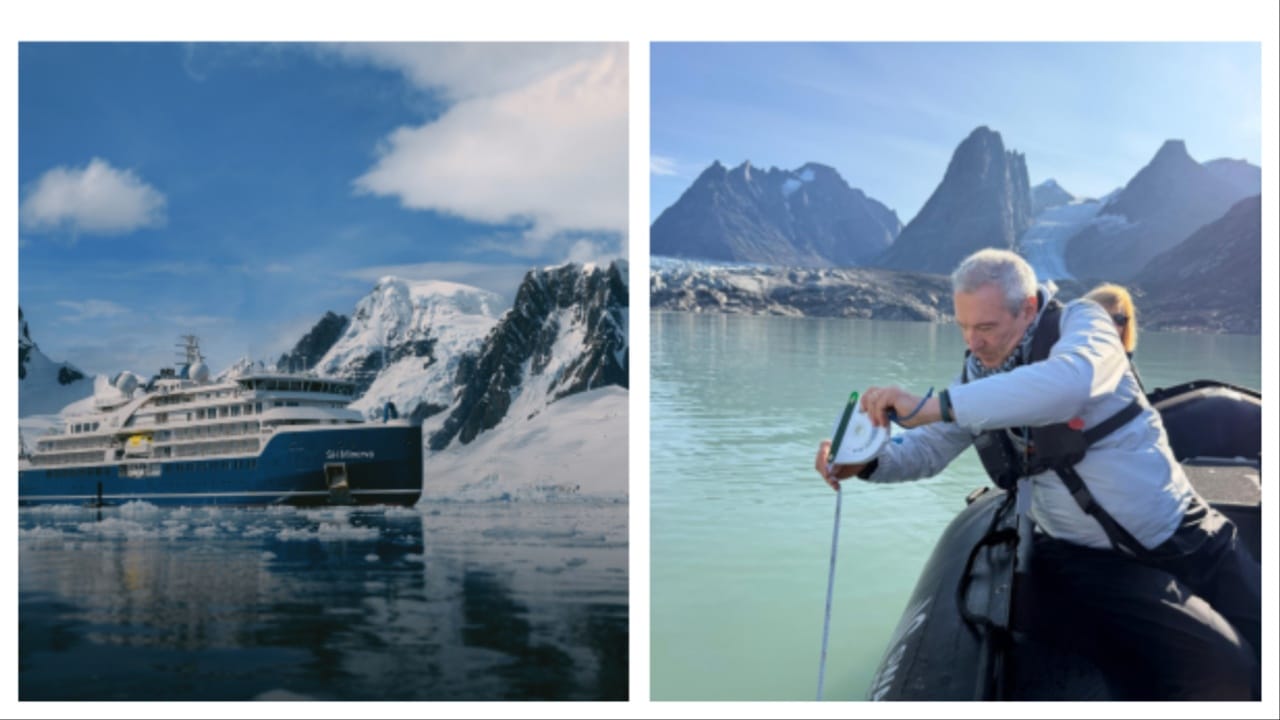
Swan Hellenic’s Cruising4Oceans initiative has been recognized as a pilot site within the GlobalCoast Network, an ocean-science effort supported by the United Nations Decade of Ocean Science for Sustainable Development. Centered on Deception Island in Antarctica, it is the network’s first ship-based site and its southernmost, according to the cruise line.
The initiative collects environmental observations during passenger expeditions, using vessels already operating in remote waters. GlobalCoast’s pilot sites test coastal observation and prediction methods under CoastPredict, a UN Ocean Decade-endorsed program, with the aim of making those methods transferable between regions.
Swan Hellenic’s SH Minerva, SH Vega and SH Diana operate around Deception Island during the Antarctic summer and contribute measurements for use by the international scientific community.
“We want our ships not simply to visit these places but to contribute to their understanding and protection,” said Andrea Zito, CEO of Swan Hellenic.
Daily measurements and open data
Cruising4Oceans has gathered measurements of water temperature, salinity, conductivity and ocean currents. The data support ocean-health monitoring and climate models.
Validated observations are made freely available through the European Marine Observation and Data Network, or EMODnet, the European Union’s in situ marine data service.
“We are not creating a new scientific approach; we are simply making scientific use of ships that are already there,” said Mario Dogliani, coordinator of Cruising4Oceans and president of SDG4MED, a foundation promoting maritime sustainability and ocean health restoration.
He said daily collection and open access to validated measurements could provide information from locations where obtaining repeated observations would otherwise be extremely difficult.
Guest participation and additional research
Passengers take part in citizen-science and ocean-awareness activities, including biodiversity imaging. The initiative is also exploring environmental DNA methods to detect marine species and track changes in biodiversity associated with climate change.
Cruising4Oceans is helping develop AquaBioSens, a portable water-safety biosensor, by contributing water samples and calibration work. The program also includes marine litter and plastic removal when conditions permit.
Swan Hellenic says the ship-based model can be replicated wherever commercial vessels travel through marine areas with limited scientific data. Beyond the Antarctic pilot, similar data-collection work is already underway on its voyages in Svalbard and Greenland.