PortMiami Invests $125M to Add Shore Power at Five Cruise Berths
PortMiami’s shore power buildout signals a wider shift as cruise lines electrify fleets and ports race to keep up, exposing how grid limits can slow clean-dock promises.
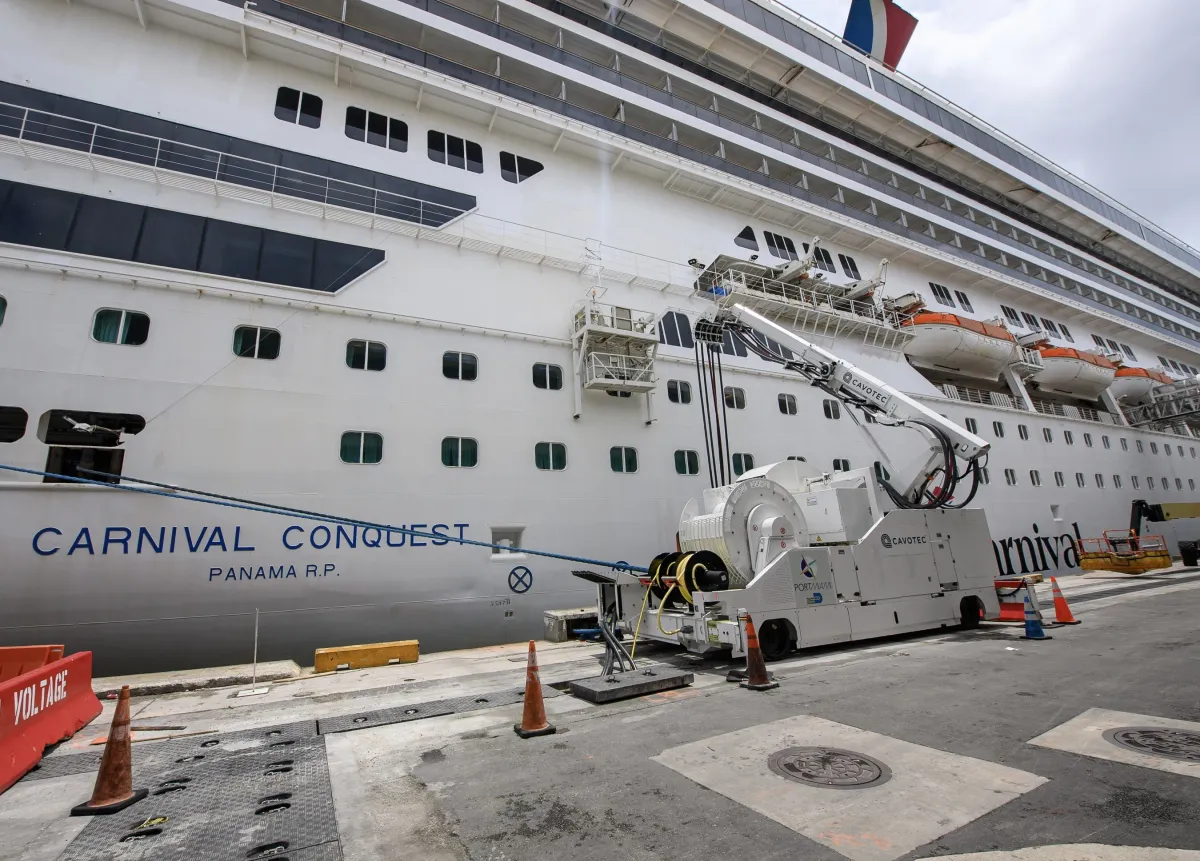
PortMiami has expanded shore power from a long-discussed concept into large-scale operations, wiring five of its nine cruise berths so ships can plug into the local electric grid while alongside instead of running engines at the dock.
The buildout is intended to cut emissions during port calls at what port officials describe as the world’s busiest passenger terminal, and it comes as the cruise industry faces growing scrutiny over pollution near dense urban waterfronts even while investing in new technologies and infrastructure.
From pilot idea to five equipped berths
Shore power, also known as cold ironing, allows a ship to shut down its onboard generators in port and draw electricity from land-based systems. Hydi Webb, a director at PortMiami, said the speed and scale of Miami’s rollout were notable for a port that had not offered the service at this level.
“It was a big feat to go from never doing this before to doing five berths at once,” Webb said.
Webb said PortMiami has logged 175 days of ships plugging in. The port estimates those connections have reduced greenhouse gas emissions by about 6,000 tons, which the U.S. Environmental Protection Agency equates to roughly the annual electricity-related emissions from about 1,250 homes.
Costs, grants, and how shore power is priced for cruise lines
PortMiami’s shore power program required major capital investment, with the total project cost reported as just over $125 million, including about $28 million in federal grants. Webb compared the scale of the spend to a major piece of port infrastructure.
“We’re very grateful for the funding. It adds up to about one terminal,” she said.
PortMiami charges cruise ships $4,115 per day to connect, plus additional fees to initially hook up. Those charges are separate from whatever a cruise line pays Florida Power & Light for the electricity used during a call.
Virgin Voyages’ senior director of social impact and sustainability, Jill Stoneberg, said the economics can be challenging compared with running fuel already onboard, but she said the company still backed the effort.
“We were really supportive and thrilled that PortMiami was making such a big effort to adopt shore power,” Stoneberg said.
Why shore power is a priority at busy homeports
Cruise ships typically complete embarkation and debarkation within a limited window, moving large volumes of passengers through terminals while the vessel is close to residential areas and downtown districts. When ships remain on engines at the pier, emissions are concentrated near waterfront communities.
PortMiami’s rollout follows earlier adoption in parts of the U.S. West Coast and Alaska, where shore power has been used for years, and it was implemented after years of local discussion about bringing the technology to Miami.
More ships can plug in, but the port cannot power five simultaneous connections yet
PortMiami expects utilization to rise as more compatible ships arrive. Webb said 13 ships that regularly call at the port can currently connect to shore power, and another 10 are expected to come online in the next few months.
Stoneberg said Virgin Voyages planned for shore power early. “Shore power’s been on our radar before we even launched a ship,” she said. She added that three of Virgin’s four ships are shore power capable, and the fourth is scheduled for a multi-million-dollar retrofit over the next year or two to enable plug-in capability.
Even with five berths wired, PortMiami cannot currently support five ships plugging in at the same time. Only three vessels can connect simultaneously under existing capacity, and Webb said reaching five at once would depend on Florida Power & Light expanding the power plant it operates within PortMiami.
“The capacity is not there right now,” Webb said.
A global mismatch: ship readiness is outpacing port readiness
Industry executives describe a persistent gap between how quickly cruise lines can equip ships and how slowly ports can install compatible systems. Stoneberg summed up the problem this way: “More ships can plug in than there are ports available.”
Marcel Goncalves, vice president of decarbonization at Carnival Corporation, said only about 4% of the roughly 800 ports Carnival calls on worldwide are shore-power ready, while more than 70% of Carnival’s fleet is equipped to plug in. He said all new Carnival ships will be built with shore power capability.
“Shore power is one of the critical pieces of our decarbonization strategy,” Goncalves said.
- MSC Cruises: The company has been retrofitting ships since 2017. Linden Coppell, MSC’s vice president of sustainability, said 18 of MSC’s 23 ships are shore power capable and that every scheduled MSC call in Miami over the next three years can connect.
- Royal Caribbean Group: Nick Rose, vice president of corporate responsibility at Royal Caribbean Group, said 37 of the company’s 68 ships are equipped and that the number is increasing. “That’s where it started for us,” Rose said, referring to earlier shore power use on the U.S. West Coast.
Compatibility, mandates, and the way ports are pushing adoption
As more ports install shore power, differences in equipment and design have become more visible, with cruise operators comparing the issue to electric vehicle charging, where not every vehicle can use every connector type. Rose said later adopters may have an advantage because they can design systems to serve a wider range of ships, and he noted that some ports are now retrofitting earlier installations to accommodate more vessels.
Approaches to adoption also vary. In some ports, shore power use is required when a compatible berth is available. In Miami, the approach has relied on voluntary agreements under which cruise lines agree to plug in when a ship is capable and a connection is available. Rose argued that mandates can help shift behavior, but coordination between ports and operators remains critical as systems scale across ship classes and pier layouts.
Separately, Story A noted that shore power is more frequently mandated in Europe, with the European Union targeting significant adoption by 2030, though many ports are struggling to meet that goal.
South Florida momentum and the next wave of investment
PortMiami’s buildout is also shaping planning elsewhere in the region. Joseph Morris, CEO and Port Director at Port Everglades, said the port has been discussing adding shore power to several cruise berths as soon as 2028.
Electrifying Port Everglades’ eight cruise berths is projected to cost about $172 million, based on a 2023 study.
Luxury vessels and the limits of local infrastructure
While ports invest in shore power for commercial cruise operations, Story A described how high-end private vessels can also test port infrastructure. In Málaga, Spain, the 123-meter yacht Al Lusail, owned by Sheikh Tamim bin Hamad Al Thani, the Emir of Qatar, drew attention when it docked alongside a Windstar cruise ship, dwarfing other vessels in the marina.
According to a report from LuxuryLaunches cited in Story A, Al Lusail features swimming pools, air conditioning, and a beach club, and it uses about 34.5 megawatt-hours of electricity daily, a figure the report compared to the energy use of 3,700 households. Story A reported that Al Lusail’s power needs exceeded the infrastructure available at Málaga’s marina, contributing to the decision to dock near larger vessels.
Goncalves emphasized that shore power is meaningful at berth but does not address the larger energy demands of ships at sea. “Today [shore power] is a small piece of the pie,” he said. At the same time, he described plug-in capability as the best available option for eliminating exhaust while docked: “When the ship is in port, shore power is the best solution that we have.”
With 13 regularly visiting ships already able to connect and 10 more expected to become compatible in the coming months, PortMiami officials say shore power use should continue to rise, with the next major milestone tied to electrical capacity upgrades that would allow five ships to plug in simultaneously across the port’s shore-power-equipped berths.
Frequently Asked Questions (FAQs)
What is shore power, and why is it significant?
Shore power, also known as cold ironing, allows ships to turn off their engines and onboard generators while docked by connecting to a port’s electrical grid. The aim is to reduce local air pollution and greenhouse gas emissions during a ship’s time at berth.
How much did PortMiami invest in shore power infrastructure?
PortMiami’s shore power project cost just over $125 million, including about $28 million in federal grants.
How does Al Lusail’s power consumption compare to cruise ships?
Story A reported that Al Lusail uses about 34.5 megawatt-hours of electricity per day, which the cited report compared to the energy consumption of 3,700 households. Story A also noted that many cruise ships can connect to shore power while docked to reduce emissions, even though ships require more energy while sailing than while alongside.
Why are more ports not adopting shore power?
Story A and Story B described several barriers, including lack of funding, inconsistent technology standards and connector compatibility, and limits in local electricity infrastructure. Goncalves said only about 4% of the roughly 800 ports Carnival calls on worldwide are shore-power ready, despite more than 70% of Carnival’s fleet being equipped to plug in.
Will more luxury megayachts like Al Lusail impact port sustainability efforts?
Story A said luxury megayachts can pose distinct challenges because their energy demands may exceed existing marina infrastructure. The Málaga call involving Al Lusail was cited as an example of how such vessels can strain local systems even as ports expand shore power for cruise ships.