Portland Weighs Ban on Cruise Ship Scrubber Discharges at Piers
A prior proposal to give ships a two-dollar-per-passenger discount for low-sulfur fuel was removed during Portland’s budget deliberations after objections.
Portland Should Set a Scrubber Rule, Not Offer a Fuel Discount
Portland, Maine, dropped a proposal to give cruise ships a $2-per-passenger discount for burning low-sulfur fuel. Now councilors are pursuing a prohibition on scrubber use and wash-water discharge at city-owned piers. I prefer that approach. If the city wants to keep those discharges out of Casco Bay, a berth requirement is more direct than a financial incentive ships can decline.
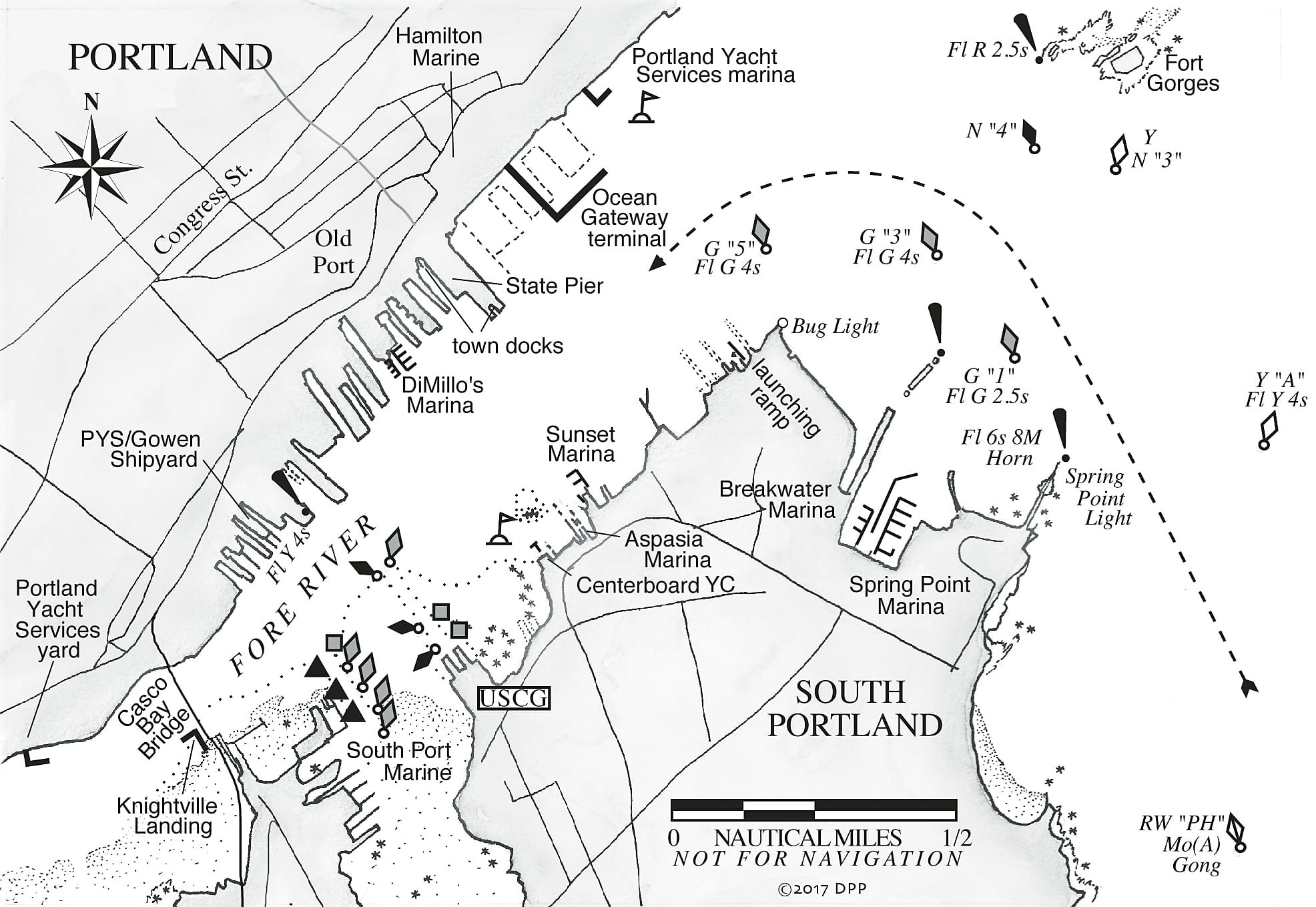
The City Council will consider a resolution Monday forwarded by Councilors Regina Phillips and Pious Ali. It would ask city staff to amend the cruise-ship tariff to prohibit ships from operating exhaust scrubbers or discharging their wash water while docked at city-owned piers.
This is a proposed restriction, not an adopted ban. If implemented, it would make Portland the first Maine port to impose such a prohibition.
Why the discount was the wrong tool
City staff’s spring proposal would have rewarded ships using low-sulfur fuels, including marine gas oil. It was removed during budget deliberations after objections from Portland Cruise Control and city councilors.
Councilor Wes Pelletier, who moved to remove the discount, favored a prohibition instead. “It's something that's doable and keeps Casco Bay cleaner,” he said, adding that he supported putting the restriction into the tariff.
A discount leaves the environmental choice with the ship operator. A tariff restriction establishes what the port will accept at its berths. For a proposal aimed at preventing a particular discharge, the second approach makes more sense to me.
JoAnn Locktov, co-founder of Portland Cruise Control, estimated that the measure would prevent 32 million gallons of wash water she described as toxic from entering Casco Bay each cruise season. Environmental advocates have raised concerns about acidic pollutants in that discharge harming marine wildlife and coastal waters.
“Cruise ships shouldn't be allowed to turn their air pollution into our water pollution,” Locktov said. “This is about protecting the bay, not reducing cruise visits.”
Legal equipment can still face local limits
Scrubbers are an approved way to comply with sulfur-emission requirements under MARPOL Annex VI. They remove sulfur oxides from engine and boiler exhaust, allowing ships to burn fuel above the otherwise applicable sulfur limits of 0.50% globally and 0.10% in designated Emission Control Areas.
That approval matters. Portland is not responding to equipment that is inherently outside the rules. It is considering a tighter local condition on where that equipment can operate and discharge.
Open-loop scrubbers draw in seawater to clean exhaust, then release the resulting wash water where permitted. Closed-loop systems recirculate treated freshwater and retain residues for disposal ashore. Hybrid systems can operate in either mode.
The IMO’s 2021 guidelines set wash-water monitoring and quality requirements, including controls on acidity, polycyclic aromatic hydrocarbons and nitrates. Residues must go to suitable reception facilities. Ports and coastal states can impose additional discharge restrictions.
Portland’s resolution identifies low-sulfur marine gas oil as an alternative to open-loop scrubbers. It also points to closed-loop or hybrid equipment that retains wash water aboard. That creates a drafting issue worth getting right: prohibiting all scrubber operation is broader than prohibiting discharge. The final tariff needs to be clear about how those retained-water alternatives would be treated.
A restriction at the berth, not a ceiling on visits
The resolution argues that comparable restrictions elsewhere have not impaired maritime commerce or port competitiveness. Locktov cited Seattle’s prohibition on scrubber discharge at berths and said the port had just completed its largest cruise season. That example shows a discharge restriction can coexist with substantial cruise business. It does not establish what Portland’s outcome would be.
Portland handled about 202,300 cruise passengers in 2024, overtaking Bar Harbor in cruise visitation for the first time. Its 2025 schedule projected approximately 205,782 passenger visits, a measure that can count the same traveler more than once. Traffic is concentrated in September and October during the New England and Canada fall-foliage season.
The proposal comes ahead of a 2026 schedule listing roughly 85 cruise ships, some with repeat visits. Portland can welcome those ships while setting conditions on what they release alongside. International approval of an exhaust-cleaning system should not amount to a standing invitation to discharge into Casco Bay.