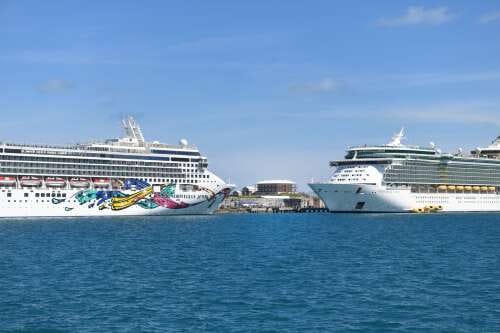
Norwegian Leads Cruise Stock Rebound as Oil Prices Ease
Norwegian also named Lee D. Applbaum chief marketing officer after cutting its 2026 adjusted earnings-per-share guidance in May.
Norwegian Cruise Line Holdings led a broad rebound in cruise equities at midday Thursday, rising 8% to $20 after an 11% five-session slide. Carnival gained 5% to $27 and Royal Caribbean Group advanced 3% to $289. Softer crude prices and incremental analyst actions helped the group recover from recent selling.
The session had no single identified company catalyst. Carnival and Royal Caribbean entered trading after recent declines of roughly 10% and 8%, respectively, while NCLH was the most-shorted name in the group.
Fuel prices and analyst calls support the move
WTI crude fell 2% over 24 hours to $72.05 a barrel, continuing its pullback from a $99.76 peak on June 3. Fuel is among the largest variable costs for cruise operators, so lower oil prices feed directly into margin assumptions for Norwegian, Carnival and Royal Caribbean.
Morgan Stanley raised its price target on NCLH to $22 from $20 and kept an Equal Weight rating, saying it expects Norwegian and Viking to post modest second-quarter beats. BMO Capital Markets also put Norwegian in a neutral stance after initiating sector coverage that made Royal Caribbean its preferred cruise stock, with an Outperform rating and a $370 price target.
BMO analyst Tristan Thomas-Martin said industry conditions remain favorable but that company-specific factors are likely to determine which cruise operators outperform. He assigned NCLH a $21 target and wrote that Norwegian “raises the most questions in the cruise space,” citing lagging financial and operating performance, activist investor involvement and a difficult business backdrop. BMO set Carnival at Market Perform with a $30 target.
Norwegian remains the most debated name
Norwegian also announced a management change Thursday, naming Lee D. Applbaum chief marketing officer.
The bullish case around NCLH combines lower fuel, improved analyst targets, valuation support and insider purchases on May 27 by John Chidsey and board member Jonathan Z. Cohen. The risks remain substantial: NCLH carries $15.2 billion in total debt and 5.3 times net leverage, and management in May cut full-year 2026 adjusted EPS guidance to $1.45 to $1.79 while projecting a 3% to 5% constant-currency net-yield decline.
The company cited Middle East disruption, higher fuel and softer European summer demand in that guidance revision. University of Michigan Consumer Sentiment stood at 44.8 in May, well below the 80 level described as neutral.
Valuation work on Norwegian remains widely split. One Simply Wall St valuation scenario put fair value at $24.61, 17.4% above the last close cited in its analysis, while its discounted-cash-flow model estimated future cash-flow value at $3.49 a share.
How the three operators stack up
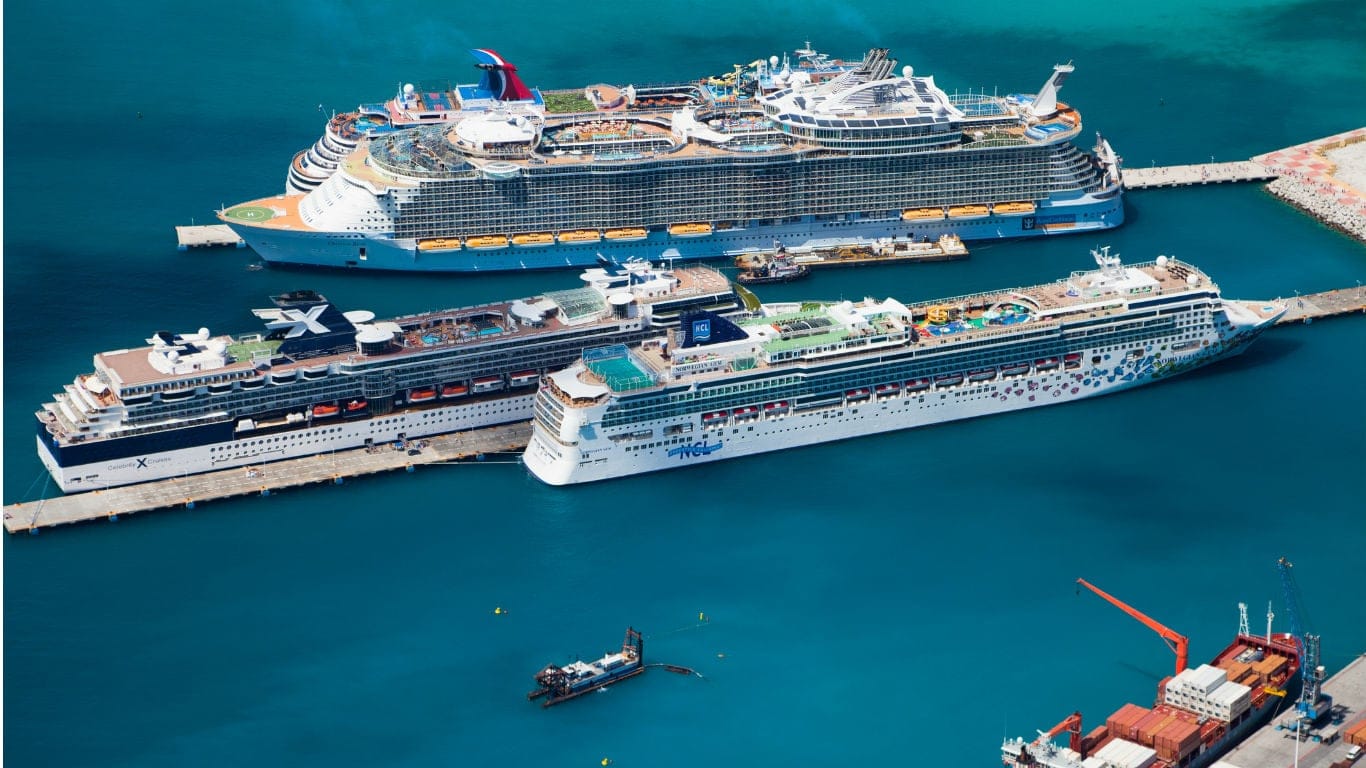
The rebound touched three multi-brand cruise operators. NCLH operates Norwegian Cruise Line, Oceania Cruises and Regent Seven Seas Cruises across 34 ships; Carnival operates 94 ships across 11 brands; and Royal Caribbean Group’s 70-ship fleet includes Royal Caribbean International, Celebrity Cruises, Silversea Cruises and its TUI Cruises joint venture stake.
Trailing price-to-earnings multiples stood at 16 times for NCLH, 12 times for Carnival and 18 times for Royal Caribbean. Royal Caribbean also carried a 1.77% dividend yield and the strongest operating margin of the three.
Carnival’s raised fiscal 2026 outlook calls for adjusted EPS near $2.22 and adjusted EBITDA near $7.11 billion. Near-term trading will depend on crude prices, fresh commentary on European booking trends and Royal Caribbean’s July earnings update.