MSC Foundation Convenes Experts on Bahamas Coral Disease Response
First identified in Florida in 2014, Stony Coral Tissue Loss Disease had reached 33 countries by mid-2025 and affected more than 175 square miles of Bahamian reef.
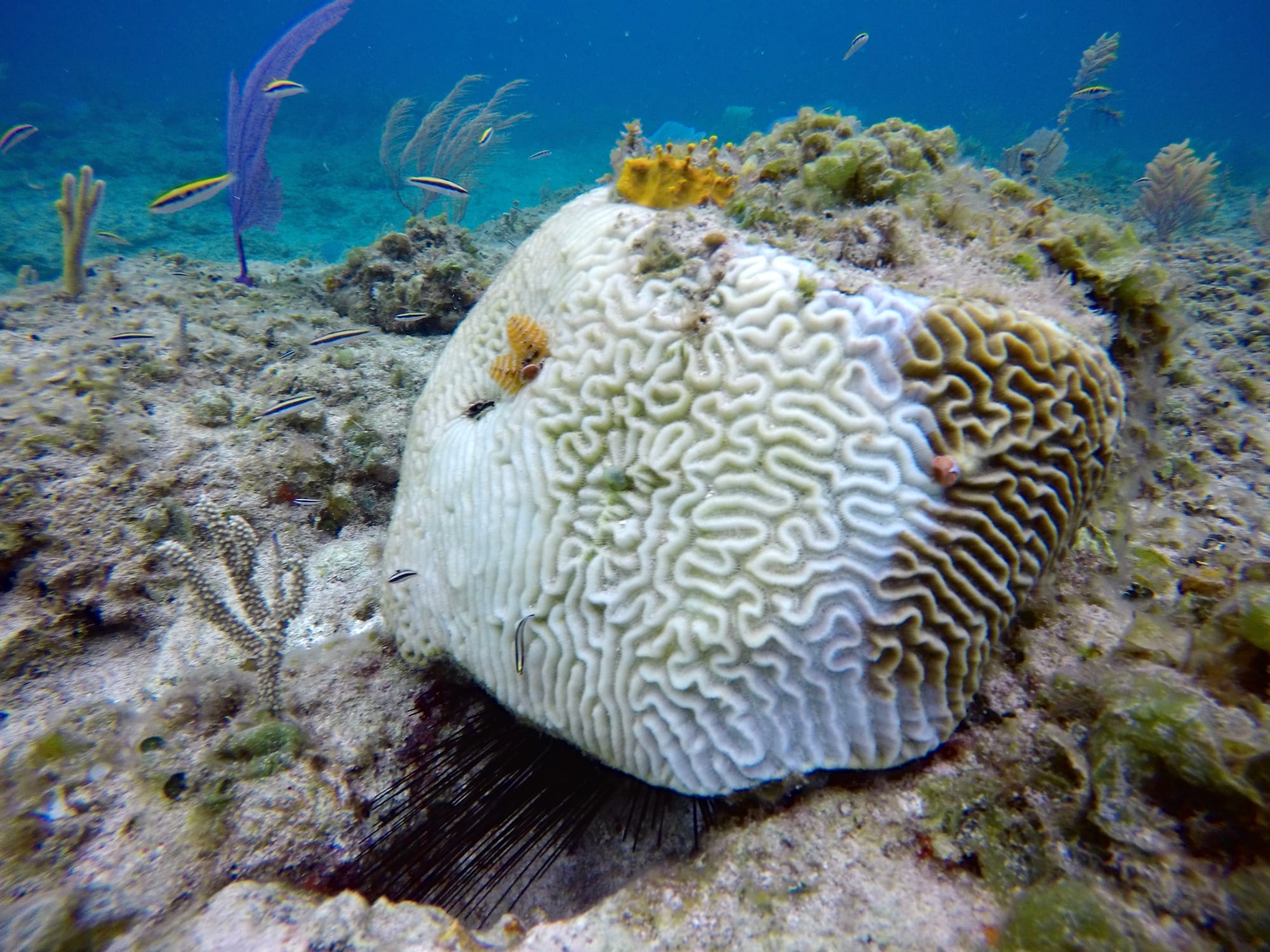
MSC Foundation, the philanthropic arm of MSC Group, convened more than 45 scientists, government representatives and conservation partners in Miami this week to coordinate action against Stony Coral Tissue Loss Disease (SCTLD) in Caribbean reefs. Participants set five priorities for The Bahamas: building local conservation capacity, filling data gaps, improving national research coordination, determining how reefs are connected and using integrated management across reef threats.
The meeting followed 2025 environmental assessments near Ocean Cay that found disease prevalence above 10 percent at one site and lower levels of 3 percent and 1.5 percent at two others, compared with no disease impact in a similar 2019 survey. Ocean Cay is MSC Cruises’ Bahamian private-island destination about 65 miles east of Miami, within a 64-square-mile protected marine reserve where the foundation bases its Bahamas coral conservation work.
“SCTLD remains a serious challenge for us, but it is also an opportunity to strengthen our stewardship,” said Dr. Rhianna Neely-Murphy, director of The Bahamas Department of Environmental Planning and Protection, in a keynote address. “Since its emergence, SCTLD has caused an unprecedented threat to our reef building corals across the Bahamas.”
Ocean Cay surveys prompted the workshop
The expert workshop, “Stony Coral Tissue Loss Disease: Partnering for Resilient Reefs,” was organized after the Ocean Cay assessments carried out with Perry Institute for Marine Science (PIMS) in 2025. Under permits issued by The Bahamas Department of Environmental Planning and Protection (DEPP) and with PIMS, MSC Foundation has supported treatment work intended to slow disease progression and protect vulnerable coral colonies.
The foundation’s Super Coral Reefs Programme at Ocean Cay began in 2019, and its Marine Conservation Center opened on the island in April 2025 with a bio lab, coral nurseries, educational lecture space and visitor pavilions.
PIMS has been diagnosing and treating SCTLD in The Bahamas since 2019. “What this workshop does is bring that on-the-ground experience together across borders, because coral disease does not stop at national boundaries and neither can our response,” said Dr. Aaron Hartmann, PIMS senior scientist and head of The Bahamas Coral Program.
Disease has reached 33 countries
First identified in Florida in 2014, SCTLD had been identified in 33 countries by mid-2025 and had affected more than 175 square miles of reef in The Bahamas. The disease attacks hard corals, threatens marine biodiversity, fisheries, tourism and coastal protection, and can kill entire colonies within months in some cases; affected reefs in Florida have recorded coral-cover losses of up to 60 percent.
The precise cause and transmission agent remain unidentified. The disease is thought to be waterborne and suspected to involve bacterial agents. Experimental treatments have been tested on tens of thousands of corals, with antibiotic treatments showing as much as 84 percent survival after three years.
Participants move toward shared framework
Participants represented government agencies, research institutions, conservation organizations and restoration practitioners from The Bahamas, the United States, Mexico, the Dominican Republic, Curaçao, Saudi Arabia and other countries. Organizations included DEPP, PIMS, the University of The Bahamas, Bahamas Agriculture and Marine Science Institute, Bahamas National Trust, NOAA, Nova Southeastern University, University of Miami, Mote Marine Laboratory & Aquarium, The Nature Conservancy, Healthy Reefs for Healthy People Initiative, FUNDEMAR, KAUST, MIT Self-Assembly Lab and MSC Foundation.
The agenda covered field detection, reef-health monitoring, disease ecology, possible pathogens, treatment development, intervention effectiveness, national-scale implementation strategies and restoration science. NOAA, one of the participating organizations, launched a five-year SCTLD response strategy for U.S. waters in 2024.
“The scale and complexity of Stony Coral Tissue Loss Disease means that no single organisation or country can address it alone,” said David Smith, MSC Foundation chief scientific adviser. “Bringing together experts from different regions and disciplines creates a real opportunity to learn from one another.”
Participating organizations committed to develop a shared framework to guide coordinated conservation priorities. MSC Foundation did not announce a completion date for the framework.