Ketchikan Set to Overtake Juneau in 2026 Cruise Passengers
Juneau’s experiment with negotiated cruise limits is rewriting Southeast Alaska itineraries, shifting economic gains and crowding pressures to ports ready to absorb them.
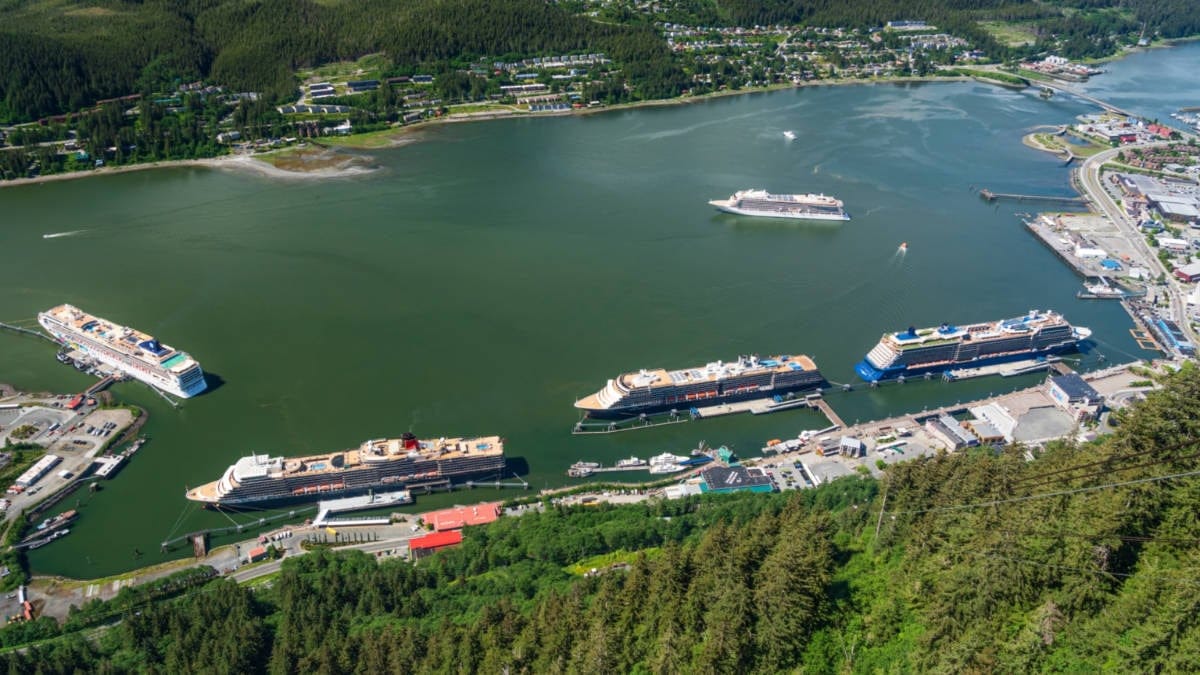
Ketchikan is projected to host more cruise passengers than Juneau in 2026, a shift Juneau officials are tying directly to the capital city’s voluntary daily limits on cruise ships and visitors.
Alexandra Pierce, tourism manager for the City and Borough of Juneau, told Juneau’s Visitor Industry Task Force that the change is expected to be modest, with Juneau’s overall passenger volume still projected to remain close to its 2025 record of 1.69 million.
Juneau’s caps and what they are changing across Southeast Alaska
Juneau began operating under a five-ship-per-day limit in 2024, alongside a daily passenger ceiling of 16,000. On Saturdays, the passenger cap is lower, set at 12,000. The limits were introduced in coordination with the cruise industry and, according to Pierce, have constrained additional growth in Juneau while altering how cruise lines distribute port calls regionwide.
“Ketchikan will have more passengers than Juneau for the first time in 2026,” Pierce said. “That’s a direct result of our limits.” She also told the task force the caps “have changed things in the region.”
Itinerary reshuffles, including Royal Caribbean’s deployment, drive the forecast
Pierce pointed to Royal Caribbean Group’s Southeast Alaska scheduling changes as a key driver of Ketchikan’s projected lead. Royal Caribbean International is reducing the number of ships calling downtown Juneau from four in 2025 to three in 2026.
At the same time, Royal Caribbean is maintaining four ships in Alaska overall, increasing calls at other ports in Southeast Alaska. Those ports include Ketchikan and Icy Strait Point near Hoonah, according to the itinerary shifts discussed during and after the task force meeting.
Ward Cove’s role as Ketchikan absorbs more calls
In Ketchikan, local officials and industry representatives have pointed to the Mill at Ward Cove as one reason the community has been able to manage shifting visitor flows. The privately developed cruise port, about eight miles north of downtown Ketchikan, opened in 2021 and has helped distribute passengers beyond the downtown core, with development planned in multiple phases.
Kara Tetley, executive director of the Ketchikan Visitors Bureau, said Ward Cove helps relieve pressure by spreading visitors across a larger area. “The port spreads out the folks a little bit,” Tetley said, adding that a second location of Ketchikan’s lumberjack show and other businesses are being developed near the facility.
Transportation remains central to connecting Ward Cove with the rest of the community. Tetley said tour buses and city buses are available for passengers who want to go into town.
New docking capacity in Juneau raises questions about how limits would be applied
While Juneau’s current caps are in place, long-term planning includes a proposed private cruise facility on Douglas Island that is scheduled to open in 2028. The project is planned by Goldbelt Inc. on land it owns along the northwest coast of Douglas Island and is designed as a two-berth port that could accommodate up to two ships per day.
Juneau officials have not resolved how calls at the Douglas Island facility would be handled under the existing limits. Pierce said one option is shifting ships from other downtown berths so the city stays within the current five-ship-per-day cap. Another option under discussion is whether the additional capacity could lead Juneau to allow more than five ships per day overall, a change that would potentially move the city toward seven ships per day.
The Douglas Island facility is expected to host up to 500,000 passengers per season once it begins operations, based on figures discussed in connection with the project’s planned capacity.
Resident sentiment and the regional ripple effect
Juneau’s approach to cruise management has drawn both support and criticism in Southeast Alaska. Supporters say the limits help address infrastructure strain and quality-of-life concerns, while some in neighboring ports have raised concerns that redirected traffic can increase pressure elsewhere as itineraries shift.
Surveys presented to the task force show differing views of cruise tourism across communities, reflecting varying local circumstances and economic reliance:
- Juneau (2025 survey): 43% of respondents said benefits outweighed drawbacks, 31% said drawbacks outweighed benefits, and 22% were neutral.
- Wrangell: 52% said benefits outweighed drawbacks, 20% said drawbacks outweighed benefits, and 27% were neutral.
- Haines: 61% said benefits outweighed drawbacks, 19% said drawbacks outweighed benefits, and 16% were neutral.
In Sitka, where cruise limits have been debated, a 2024 task force report found strong interest in a negotiated approach, including findings that 80% wanted the community to find common ground on achieving balance in cruise tourism and 60% favored the city taking an active role in determining what a balanced passenger level should be.
Juneau’s task force returns as ports weigh next steps
Juneau’s Visitor Industry Task Force has been reactivated after a pause in operations and is set to review results from the most recent community survey tied to last year’s cruise season at its next meeting.
As Southeast Alaska communities compare notes on negotiated caps and visitor management, Pierce emphasized that choices made in one port can alter outcomes for others. “The things that we do have impact,” she said. With 2026 bookings pointing to Ketchikan moving ahead of Juneau in total cruise passengers, upcoming decisions about how to apply Juneau’s limits, including how the planned Douglas Island facility would be counted, are expected to remain central to regional planning discussions.
Frequently Asked Questions (FAQs)
What are Juneau’s current cruise ship and passenger limits?
Juneau has a voluntary five-ship-per-day limit that began in 2024, along with a daily passenger cap of 16,000 and a reduced cap of 12,000 on Saturdays.
Why is Ketchikan projected to surpass Juneau in cruise passengers in 2026?
Juneau officials attribute the shift to Juneau’s daily limits and related itinerary adjustments. Pierce told the Visitor Industry Task Force, “Ketchikan will have more passengers than Juneau for the first time in 2026,” calling it “a direct result of our limits.” She also pointed to Royal Caribbean International reducing downtown Juneau calls from four ships in 2025 to three in 2026 while increasing stops at other Southeast Alaska ports, including Ketchikan and Icy Strait Point.
What role does the Mill at Ward Cove play in Ketchikan’s growth?
The Mill at Ward Cove, a privately developed cruise port that opened in 2021 about eight miles north of downtown Ketchikan, has been used to help distribute visitor traffic. Kara Tetley of the Ketchikan Visitors Bureau said it “spreads out the folks a little bit,” with phased development adding attractions such as a second location of Ketchikan’s lumberjack show and additional businesses, while tour buses and city buses connect Ward Cove with downtown.
When is the proposed Douglas Island cruise port expected to open, and what is its planned capacity?
The proposed private facility on Douglas Island is scheduled to open in 2028. Planned by Goldbelt Inc., it is designed as a two-berth port that could accommodate up to two ships per day and is expected to host up to 500,000 passengers per season once operating.
Will Juneau change its five-ship daily cap when the Douglas Island facility opens?
Juneau officials have not decided how calls at the Douglas Island facility would be treated under the city’s current limits. Pierce said one possibility is shifting ships from downtown berths to remain within the five-ship-per-day cap, while another option under discussion is whether added capacity could lead Juneau to allow more ships per day overall.