Judge Limits Bar Harbor Cruise Passenger Cap to July and August
The town's 2026 cruise schedule lists sixty-seven ship visits and just under fifty thousand possible passengers, with estimated revenue of 255,231 dollars.
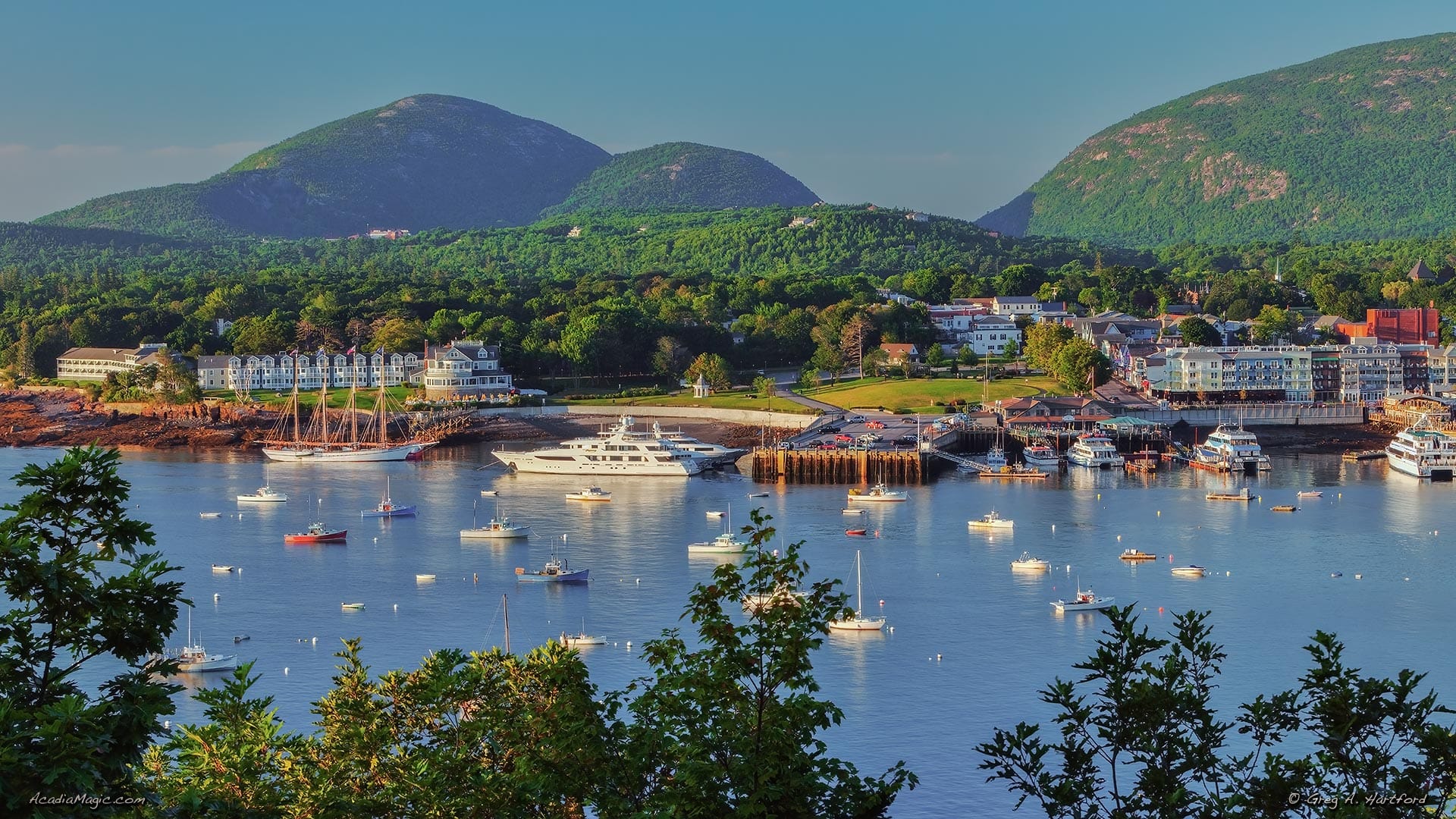
Updated June 7, 2026
U.S. District Judge Lance Walker has declared Bar Harbor's 1,000-passenger daily cruise disembarkation cap unconstitutional outside July and August, limiting enforcement of the voter-approved ordinance to the Maine town's peak summer tourism months. The 32-page order, released May 15, 2026, leaves the cap in place for July and August but bars the town from applying it during the rest of the cruise season.
The decision changes the legal status of Bar Harbor's shoulder-season cruise controls after nearly four years of litigation involving local businesses, harbor interests and ordinance supporters. The town has since said it will not accept new advance cruise ship reservations while it develops a new regulatory approach and while related litigation remains unresolved.
Court draws a seasonal line on the cap
Walker wrote that the 1,000-passenger limit was not "clearly excessive" during the peak summer period but became "clearly excessive" when applied to shoulder-season months. He declared the ordinance "unconstitutional and unenforceable in all months other than July and August."
The ruling turns on the Pike balancing test under the Dormant Commerce Clause, a framework courts use when an evenhanded state or local regulation affects interstate commerce. Under that test, a regulation can stand unless its burden on commerce is clearly excessive compared with the local benefits it is meant to produce.
Downtown congestion near Bar Harbor's municipal pier and surrounding streets was central to the case. Walker cited differences between summer and shoulder-season conditions, writing that "what may be fair and balanced for the peak season may not be fair and balanced for the shoulder season." He called the 1,000-passenger limit "parsimonious" for the shoulder season and wrote that "The initiative authors' failure to recognize and account for the significant intensity fluctuation between the shoulder seasons and the summer season appears more an act of indifference than a fair-minded effort to balance competing interests."
Walker's order also traced Bar Harbor's cruise-management history. In 2008, the town set daily cruise passenger caps of 3,500 for July and August and 5,500 for the shoulder-season months of May, June, September, October and November. More than 60% of Bar Harbor's annual cruise passenger visits occur in September and October, the order noted.
The lawsuit was filed in December 2022 by the Association to Preserve and Protect Local Livelihoods, the Penobscot Bay and River Pilots Association and other local businesses connected to cruise ship tendering. The plaintiffs also included Delray Explorer Hulls and Acadia Explorer, tender vessels that carry passengers between ship and shore; pier owners B.H. Piers and Golden Anchor; and whale watch company B.H.W.W. LLC, which coordinates tours for passengers. APPLL President Kristi Bond said the plaintiffs were pleased with the decision.
"The citizens' initiative limiting cruise ships to 1,000 passengers or less will only be enforced in July and August," Bond said. "We look forward to welcoming all cruise visitors to Bar Harbor once again."
Town keeps reservation pause in place
Bar Harbor Town Manager James Smith said after the ruling that the Town Council would meet with legal counsel to review next steps. After the May 19 executive session, Smith said there were no motions other than adjournment.
The Town Council later said it would begin work on a new approach to cruise tourism management. "It is a misreading of this decision to think the Town must return to prior cruise ship levels," the council said, adding that Walker affirmed the town's authority to regulate disembarkations if the rules account for seasonal differences.
The council said the existing cruise ordinance and Chapter 52 remain in effect except that the 1,000-passenger cap can be enforced only in July and August. It also said it will not take new advance cruise reservations until a new regulatory tool is enacted and the pending litigation is resolved.
Charles Sidman, the defendant-intervenor who led the 2022 citizen initiative, and attorney Robert Papazian said they plan to appeal. "Bar Harbor citizens have voted twice now that we don't just want more limited cruise disembarkations two months of the year; we want it year-round," they said in a joint statement.
The town's current schedule still includes cruise activity. American Cruise Lines is scheduled to make 55 visits between May and October with ships carrying fewer than 150 passengers. Large-ship reservations made under prior rules were grandfathered: Norwegian Breakaway, with a 3,963-passenger capacity, is slated for eight visits, and Norwegian Jewel, with a capacity of 3,000, is slated for four.
Traffic decline frames the next rule
Bar Harbor's cruise traffic has dropped sharply since voters approved the ordinance in November 2022 by a vote of 1,780 to 1,273. A 2024 attempt to repeal the cap failed by 65 votes, preserving the citizen initiative before the latest federal ruling narrowed its enforceability.
The post-cap traffic mix has shifted toward smaller ships. In 2025, American Cruise Lines' smaller ships visited 38 times from June through October, while another 16 larger ships carrying 2,000 to 4,000 passengers were grandfathered for calls from Aug. 27 to Oct. 23. A 2025 Cruise Maine report recorded 56 ship calls and 49,576 passenger days in Bar Harbor, an 80% reduction from earlier peak seasons.
Local businesses reported mixed effects by late 2025. A couple of restaurant owners said the absence of cruise passengers was noticeable during the lunch period and led to fewer employee hours during the shoulder season, along with reduced purchasing from local vendors such as lobster harvesters. One hotel owner said guests reported a better experience with less congestion in town and no hour-long lunch waits on large-ship days.
The town's 2026 cruise schedule lists 67 ship visits and a possible passenger count just under 50,000, with schedule-based revenue estimated at $255,231. In 2016, the port had 117 scheduled cruise visits, capacity for about 163,000 passengers and an economic-impact estimate of 138,285 passengers coming ashore.
Bar Harbor is a principal gateway for Acadia National Park, which recorded 4,079,318 visits in 2025. A consultant working for the town estimated that the waterfront can host about 15,000 people a day in July but fewer than 500 in winter.
Walker initially upheld most of the ordinance in February 2024. The 1st U.S. Circuit Court of Appeals then partially upheld and partially remanded the case on Aug. 11, 2025, requiring further review of the commerce-burden issue. That remand led to the revised ruling narrowing enforcement to July and August.
Next comes rulemaking. The Town Council said its process will draw on work from the Sustainable Tourism Task Force and include public input.