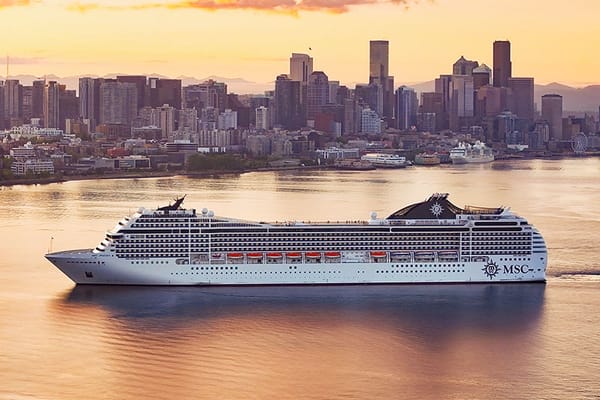
Iran Reopens Strait of Hormuz, Clearing Way for Stranded Cruise Ships
A temporary easing at a critical chokepoint shows how regional conflict can upend cruise fleet planning, with ripple effects on summer capacity and pricing beyond the Gulf.
Updated May 6, 2026
All six cruise ships stranded in the Persian Gulf since late February have cleared the Strait of Hormuz after a brief reopening. Iran has since reversed course and declared the waterway closed again under renewed conditions.
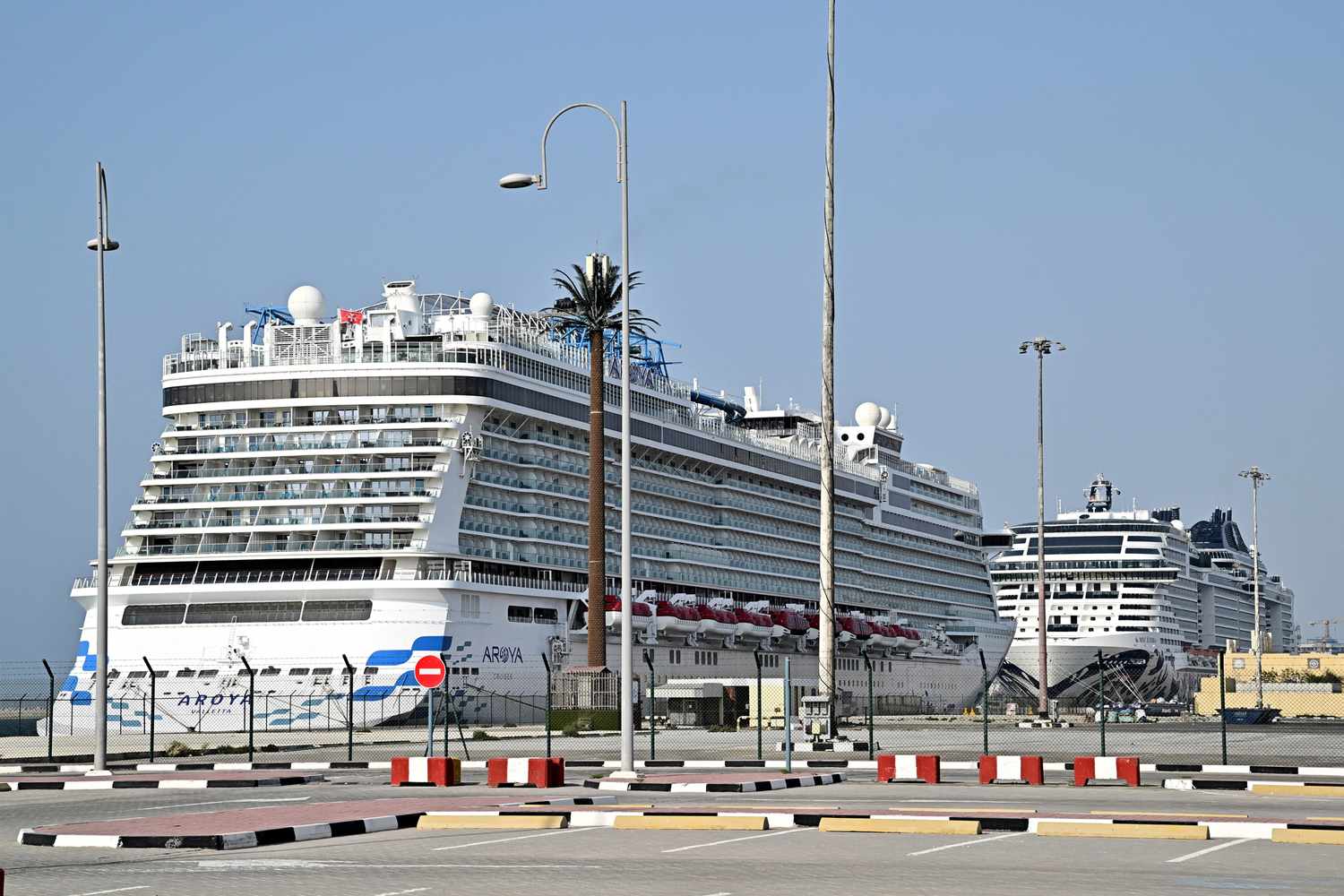
The short window allowed MSC Cruises' MSC Euribia, TUI Cruises' Mein Schiff 4 and Mein Schiff 5, Celestyal Journey, Celestyal Discovery, and Aroya to leave the Gulf. Passengers had already disembarked, and the transits took place with reduced crews onboard following weeks of cancellations, repatriation work, and uncertainty over when the vessels could reposition for their next programs.
A brief opening closes again
Iranian Foreign Minister Seyed Abbas Araghchi announced Friday that commercial vessels could pass through the Strait of Hormuz during the ceasefire period. "In line with the ceasefire in Lebanon, the passage for all commercial vessels through Strait of Hormuz is declared completely open for the remaining period of the ceasefire," Araghchi said.
The window did not last. Less than 24 hours later, Iranian officials reversed that position and again declared the strait closed, citing the United States' refusal to lift its blockade of Iranian vessels and ports. Reports from the region said Iran's Islamic Revolutionary Guard Corps would require permission for transits, assert inspection rights, and charge tolls for ships using the strait.
The Strait of Hormuz, the narrow waterway between Iran and Oman, is a critical route for global shipping. It handles roughly one-fifth of the world's oil and a significant share of liquefied natural gas shipments, making its status closely watched by energy, travel, and financial markets.
Six cruise ships clear the strait
The six cruise ships, representing about 17,000 berths, had been unable to leave the Persian Gulf because any repositioning required a transit through the strait. They had remained in or near Gulf ports including Dubai, Doha, Abu Dhabi, and Dammam as operators waited for safe passage and official coordination.
- Celestyal Discovery was the first cruise ship to exit, departing Port Rashid in Dubai on Friday and clearing the strait during the opening window.
- Celestyal Journey also cleared the strait after departing Doha, with Celestyal's two-ship fleet both able to leave the Gulf.
- TUI Cruises' Mein Schiff 4 transited with reduced crew. Reports cited a splash near the ship during the passage. No injuries or damage were reported.
- TUI Cruises' Mein Schiff 5 transited alongside Mein Schiff 4 and is heading toward the Mediterranean.
- MSC Cruises' MSC Euribia departed Dubai, safely transited the strait, and is en route to Northern Europe.
- Aroya cleared the strait after departing Dammam and is sailing toward Jeddah, Saudi Arabia.
TUI Cruises said the passages by Mein Schiff 4 and Mein Schiff 5 were conducted "based on the relevant coordination and approvals from the authorities, in a controlled manner and with careful consideration of the security situation." The ships had reduced crews onboard after passengers disembarked in early March.
Gunfire reports add risk to the passage
The transits took place as maritime security reports described renewed danger in and near the strait. The UK Maritime Trade Operations office received reports of several incidents, including a containership struck by a projectile about 25 nautical miles northeast of Oman and a tanker approached by two IRGC gunboats that opened fire without VHF contact or challenge. No crew injuries were reported in those incidents.
A cruise ship also reported a splash nearby while transiting the strait. Reports later identified the incident as near Mein Schiff 4. None of the six cruise ships that left the Gulf reported injuries or damage.
Security intelligence firm Vanguard Tech, as cited in regional reporting, said the IRGC radioed one cruise ship: "we are carrying out operation, we will fire and destroy you." The report did not confirm what caused the splash near Mein Schiff 4.
Passengers were repatriated before the ships moved
The departures ended the vessel-stranding portion of a disruption that had already affected passengers across several cruise lines. Cruise industry reporter Diane Tierney said the episode created complex passenger repatriation challenges, including restrictive movement protocols and limited air capacity as cruise lines coordinated with airlines and authorities. "Roughly 15,000 passengers were affected, with some onboard restrictions limiting their ability to even occupy balconies," Tierney said.
Tierney also described periods when passengers were required to remain onboard and, at times, stay inside cabins rather than using balconies until it was deemed safe to begin repatriation. Some guests were later allowed into cruise terminals, though movement remained controlled while onward travel was arranged.
MSC Cruises secured onward travel through charter and commercial flights for more than 1,500 guests, Tierney said. TUI Group later said guests from Mein Schiff 4 and Mein Schiff 5 had returned home safely, with most transported through TUI Airlines flights and organized charter flights.
Return-to-service plans begin to firm up
MSC Cruises said MSC Euribia's repositioning is now back on track. "MSC Euribia has departed Dubai, has safely transited the Strait of Hormuz, and is now en route to Northern Europe. The passage was completed in close coordination with the relevant authorities," the company said.
The ship is set to operate its May 16 departure from Kiel, Germany, and May 17 departure from Copenhagen, Denmark, as originally planned, MSC said, with subsequent Northern Europe sailings also scheduled to operate as planned.
MSC Group Cruise Division Executive Chairman Pierfrancesco Vago had previously said MSC Cruises brought MSC Euribia down to minimum manning and cancelled May itineraries in Northern Europe that had been planned for the ship while its redeployment remained uncertain. The latest transit clears the main geographic barrier that had delayed the ship's return to Europe.
Mein Schiff 4 and Mein Schiff 5 are heading toward the Mediterranean for their summer deployment. Celestyal Journey and Celestyal Discovery have also left the Gulf. Aroya is moving toward Jeddah rather than Europe.
The Gulf disruption hit at a time when ships typically reposition toward Europe for the Mediterranean summer season on tight timelines.