HX Records 26,491 Citizen-Science Submissions in Arctic
HX extended its Greenland Promise through the 2028 season, allowing eligible guests to switch expeditions for an additional 20% Future Cruise Credit or receive a full refund.
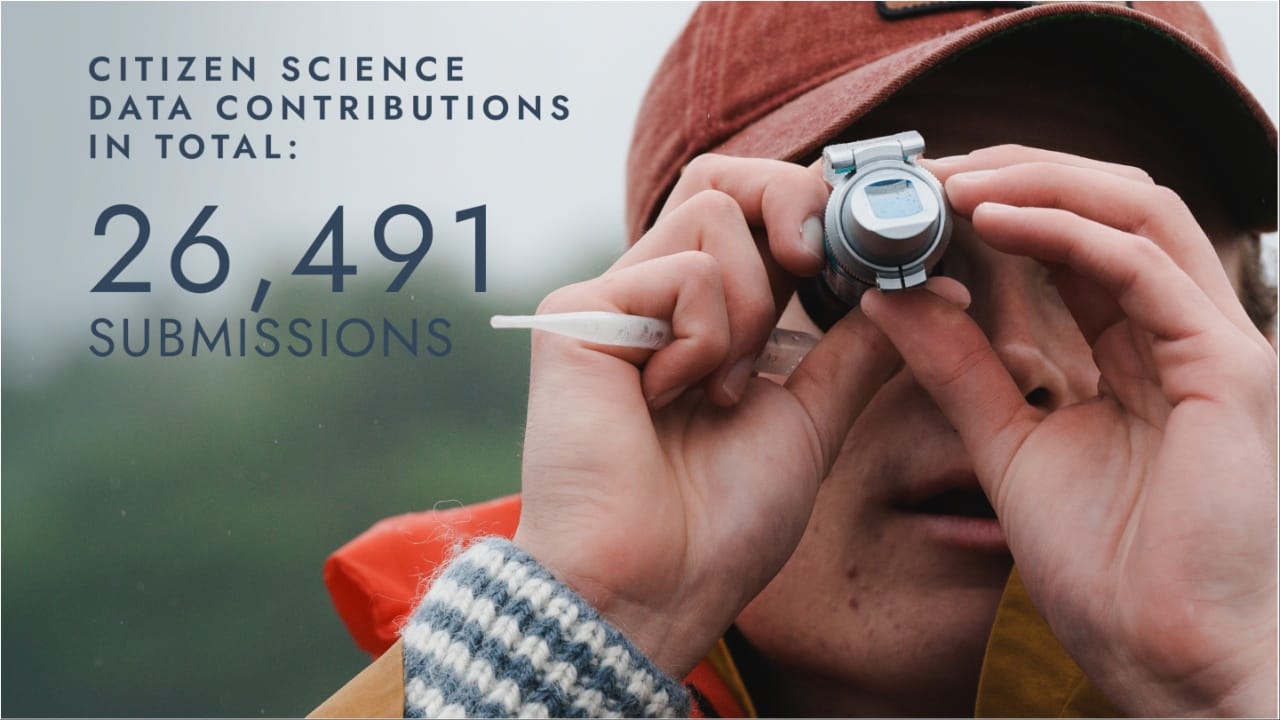
HX Expeditions completed 31 Arctic sailings in 2026 and recorded 26,491 citizen-science submissions across nine research programs, which it described as its largest Arctic science collection. The season also included an AI-assisted whale-detection trial aboard Fram.
The operator conducted 363 science-boat sessions during the season. HX offers passengers at least two citizen-science projects on every voyage, helping researchers collect observations from remote destinations.
The company’s wider science program supports more than 20 research initiatives. HX’s 2025 sustainability reporting recorded 45,466 guest submissions to citizen-science projects for the full year, not the Arctic season alone.
Activities across the broader program include whale, dolphin and seabird surveys, phytoplankton sampling, and Secchi Disk measurements of water clarity. Guests do not need scientific training: onboard Science & Education teams explain collection methods and help participants submit their observations.
HX also reported its highest-ever suite bookings during the season, which fell in the company’s 130th-anniversary year. Guests and staff removed 44 kilograms of waste during beach cleanups. The season-end announcement did not include a statement from a named HX executive.
Testing whale detection in Arctic conditions
The AI WAVE project brings together HX, Heriot-Watt University and marine-monitoring specialist Seiche. Its Smart Visual Detection System was deployed aboard Fram for the voyage from Dover to Svalbard and the Arctic season. HX described the deployment as a world-first Arctic trial combining thermal imaging and artificial intelligence for real-time whale detection.
The system pairs thermal cameras and high-definition imagery with machine learning to identify whale blows and surface activity through continuous monitoring. Heriot-Watt researchers are evaluating whether the technology can support round-the-clock observation, including in darkness, poor weather and periods when human observers are unavailable.
Trial data will be used to train future AI-assisted species-identification tools and automated alerts for bridge teams. Those tools could give earlier warning of whales and help reduce disturbance and collision risks for species including narwhals, belugas and bowhead whales. Guests took part in the project through wildlife observation and onboard research into Arctic biodiversity.
Greenland Promise extended, Svalbard course launched
Alongside the season results, HX extended its Greenland Promise through the close of the 2028 season. Guests covered by the promise can move their booking to another HX expedition and receive an additional 20% Future Cruise Credit, or opt for a full refund.
HX also introduced a free Svalbard course developed with the University of Tasmania. Intended for guests preparing to travel, its expert-led modules cover the archipelago’s wildlife, ecosystems and history, along with responsible exploration practices.
The course follows HX’s Alaska and Antarctica learning programs. Further courses covering Arctic Canada, Greenland, Iceland and the Northwest Passage are planned for 2027.
Compare HX Expeditions sailings by price on Cruise Lookup.