Galveston Wharves Wins $8.18M for Harborside Drive Upgrades
As Galveston’s cruise boom brings more cars to the waterfront, the port is turning to public infrastructure fixes to keep downtown moving and protect pedestrians.
Galveston Wharves has secured about $8.18 million (roughly $8.178 million) in state and federal grants to improve mobility and strengthen pedestrian and traffic safety in and around the Texas cruise port, with the work focused on near-term intersection upgrades, additional safety planning, and studies aimed at easing congestion tied to cruise and cargo activity.
How the grant package is being allocated
The funding supports projects identified through the port’s long-range planning, including its Strategic Master Plan, with a focus on routes where cruise traffic, local driving patterns, and port operations overlap. Rodger Rees, port director and CEO of Galveston Wharves, said the emphasis is on making it “safer and easier for people to move around the port and to access the waterfront.”
- A $340,000 federal grant funded development of a Comprehensive Safety Action Plan covering roadways on port property and in adjacent areas, including potential improvements to intersections, traffic signals, roadways, and pedestrian crossings.
- A $2.83 million Texas Department of Transportation (TxDOT) grant will fund an initial round of safety and access improvements at eight intersections along Harborside Drive, including accessibility ramps, lighting, traffic controls, pavement markings, and signage where needed.
- A $408,000 U.S. Department of Transportation grant will expand on the Safety Action Plan with additional consultant evaluation of further safety and navigation measures for both pedestrians and vehicles.
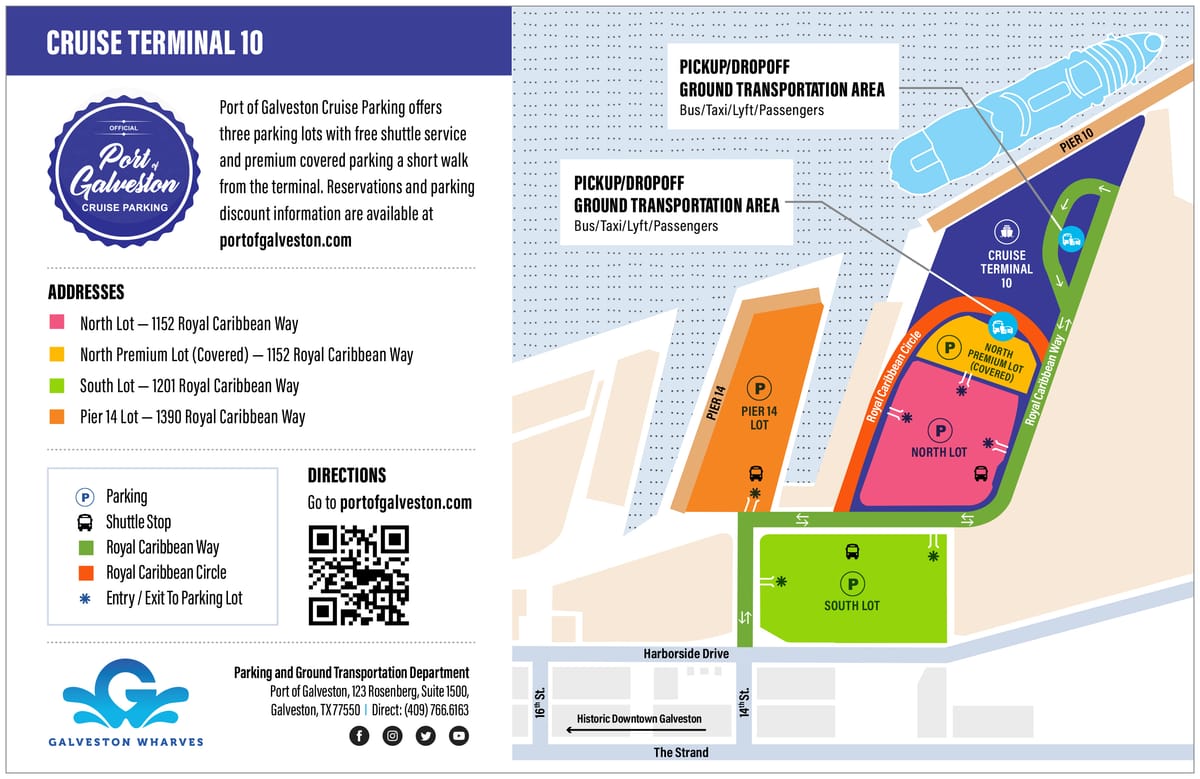
- A $1.6 million TxDOT grant will design and install consistent traffic signage across three cruise terminals, modeled after signage already in place at Cruise Terminal 10, to improve navigation and traffic flow in terminal approaches and internal routes.
- Funding for flyover feasibility work, including support tied to Houston-Galveston Area Council (H-GAC) grants and a $3 million award for flyover studies managed by TxDOT, will evaluate whether a direct connection from Interstate 45 to the port’s internal roads could reduce congestion on surface streets such as Harborside Drive.
Harborside Drive upgrades target key intersections between downtown and the port
A central piece of the near-term work is the TxDOT-funded project at eight intersections on Harborside Drive between 14th Street and 25th Street. The corridor is a primary connector between the waterfront and downtown Galveston and ties into Interstate 45, the main highway route to and from the island.
Rees framed the intersection improvements as a quality-of-life and visitor-experience upgrade as well as an operational priority, saying the port is “excited to be able to take steps to more safely connect the waterfront with downtown Galveston for the enjoyment of island residents, visitors and cruise guests.”
Safety planning work expands beyond roadway fixes
The Comprehensive Safety Action Plan focuses on roadway safety issues on and near port property and outlines possible responses involving intersections, traffic signals, and pedestrian crossings. The additional U.S. Department of Transportation funding will support a deeper look at further measures the port says could strengthen safety and navigation.
Concepts identified for evaluation include traffic-calming features, wayfinding improvements, bike lanes and sidewalk options, and additional intersection upgrades on nearby access roads and within the port area.
Terminal signage is intended to streamline arrivals and internal circulation
Another component is new terminal-area signage planned for three cruise terminals, designed to mirror the approach used at Cruise Terminal 10. The port has said the goal is to improve wayfinding and support smoother traffic movement through terminal approaches and internal routes used by cruise guests and port traffic.
Flyover feasibility studies focus on Interstate 45 access and congestion relief
Galveston Wharves is also advancing feasibility studies to examine whether a flyover connection from Interstate 45 to the port’s internal roadway network could improve traffic flow for cruise and cargo operations while reducing congestion on Harborside Drive. The studies are intended to assess whether a more direct connection into the port could change traffic patterns on surface streets that currently handle a significant share of port-bound vehicles.
Growth context: traffic pressure rises as cruise volumes expand
Galveston Wharves has become one of the busiest cruise gateways in North America and is currently the continent’s fourth-busiest cruise port by arrivals, behind Port Canaveral, PortMiami, and Port Everglades. Cruise lines operating from Galveston include Royal Caribbean, Carnival Cruise Line, MSC Cruises, Norwegian Cruise Line, Disney Cruise Line, and Princess Cruises.
The port has forecast that 2026 will bring nearly 2 million passengers across almost 450 sailings, which it has also described as roughly 4 million passenger transits when counting embarkation and debarkation movements. With about two-thirds of cruise passenger arrivals driving to the port, roadway capacity, intersection performance, pedestrian safety, and clear wayfinding have become central operational considerations.
Separately from the new grant-funded mobility projects, the port has pointed to major terminal investments that have increased capacity, including the $53 million renovation of Carnival Cruise Line’s Terminal 25 and the $156 million completion of MSC Cruises’ Terminal 16, supporting the port’s role as a hub for Western Caribbean itineraries.
Frequently Asked Questions (FAQs)
What are the goals of the Comprehensive Safety Action Plan?
The plan targets roadway safety concerns on and near port property. It identifies issues and outlines potential improvements such as traffic signal upgrades, intersection changes, roadway adjustments, and enhanced pedestrian crossings.
How will the TxDOT grants improve Harborside Drive?
The $2.83 million TxDOT grant supports a first wave of physical improvements at eight intersections along Harborside Drive between 14th Street and 25th Street. The scope includes accessibility ramps, lighting, traffic controls, pavement markings, and signs where needed to strengthen safety and access between downtown Galveston and the port.
What feasibility studies are being conducted to reduce congestion?
Studies supported through H-GAC grant funding, along with a $3 million flyover-study award managed by TxDOT, are evaluating whether a flyover connection from Interstate 45 to the port’s internal roadway system could improve traffic flow for cruise and cargo activity and reduce congestion on surface streets such as Harborside Drive.
Which cruise lines currently use the Galveston Wharves?
Lines operating from Galveston include Royal Caribbean, Carnival Cruise Line, MSC Cruises, Norwegian Cruise Line, Disney Cruise Line, and Princess Cruises. Ships such as Harmony of the Seas, MSC Seascape, and Carnival Jubilee have been among those sailing from the port on Caribbean itineraries.
Rees credited public-sector partners for the funding, saying, “We greatly appreciate the support of our state and federal elected officials, as well as transportation staff, who have made this funding for public safety and mobility improvements possible.” With intersection work and expanded safety evaluation funded, Galveston Wharves has said it plans to move from planning into additional design and implementation while prioritizing future recommendations as new funding opportunities emerge.