EcoNavis Plans Wind Tunnel Tests for New Rotor Sail Design
Wind-assisted propulsion is moving from niche retrofit to practical decarbonization tool, and broader rotor sail performance could make it more viable for deep-sea fleets.
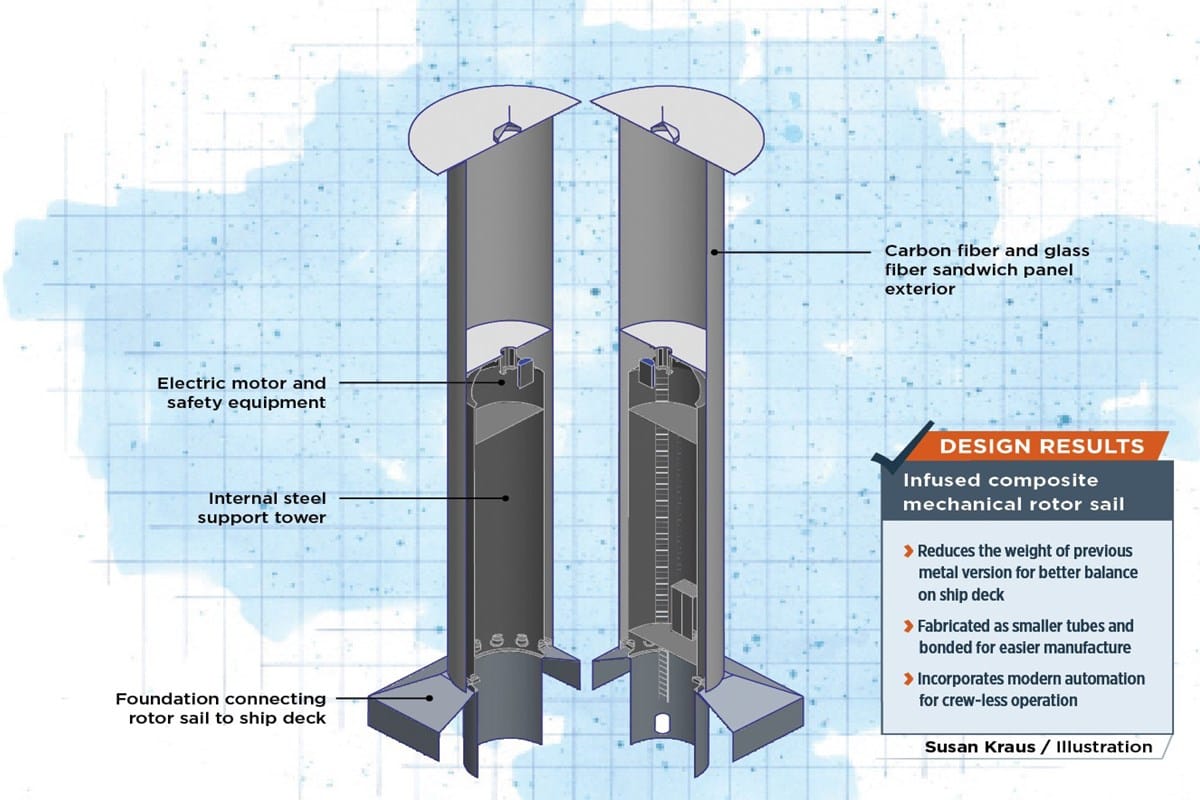
EcoNavis Solutions is developing a wind-assisted propulsion system intended to improve Flettner-type rotor sails for deep-sea ships. The Glasgow-based company said its Eco Rotor Sail uses a patented tail appendage. Early simulations show as much as 10% more thrust and a 5% reduction in torque.
The project targets a known operating limitation for rotor sails: they work efficiently across a relatively narrow set of wind angles. EcoNavis plans wind tunnel testing at Politecnico di Milano in Italy before moving toward a possible full-scale prototype later this year.
Dr. Batuhan Aktas, chief executive officer and founder of EcoNavis, said Flettner rotors already deliver strong aerodynamic performance but are constrained by their effective operating range.
“The main drawback has been the narrow band of wind angles,” Aktas said, citing beam and stern-quarter winds as typical examples. “The Eco Rotor Sail expands the range of wind angles over which the rotor can operate efficiently.”
The system keeps the rotating cylinder used in conventional rotor sail designs and adds a fixed aerodynamic appendage behind it. EcoNavis said the appendage is designed to stabilize airflow downstream of the rotor, increasing thrust while lowering the power required to operate the system.
EcoNavis described the design as a next-generation approach to improving the commercial case for Flettner-type rotor sails. The company did not identify a customer, vessel, shipyard or installation location for the technology.
The next step is testing.
EcoNavis plans a scale model for wind tunnel trials at Politecnico di Milano. Those tests are intended to validate the simulation results and align physical test data with the company’s performance modeling.
If validation is successful, EcoNavis said it could build a full-scale prototype later this year for shipboard trials as part of an integrated power system. The company has not announced a specific trial vessel or deployment date.