CDC Logs 22 Cruise Ship GI Outbreaks in 2025, Up From 2024
As cruise demand climbs, the Centers for Disease Control and Prevention’s public outbreak list is a key transparency tool, even as staffing cuts test oversight at sea.
Cruise ship gastrointestinal outbreaks tracked by the US Centers for Disease Control and Prevention (CDC) increased in 2025, with 22 incidents monitored through the agency’s Vessel Sanitation Program (VSP), up from 18 in 2024 and 14 in 2023.
The higher count came during a year of record cruising volume, with 37.7 million people taking cruises in 2025, and with 2026 passenger volume forecast at 39.6 million. Norovirus remained the most frequent driver of shipboard gastrointestinal events, while some outbreaks ended without a confirmed cause.
How CDC outbreak reporting works, and why it matters to travelers
The VSP’s public outbreak list captures voyages that meet the program’s reporting threshold: US-based cruise ships must notify the CDC when gastrointestinal illness symptoms affect at least 3% of passengers and crew on a voyage. Once reported, cases are listed and monitored by the VSP.
Even with the year-over-year increase, the number of affected sailings remained small relative to the thousands of cruises operating in 2025. Still, highly visible outbreaks, especially those linked to norovirus, have kept onboard illness prevention in focus for both operators and passengers.
In 2025, the CDC’s tracking and inspection work faced added strain after mass layoffs reduced the VSP team, even though required inspections and outbreak monitoring continued.
What stood out in 2025: early cases, late-year uncertainty, and brands most affected
Multiple ships experienced gastrointestinal outbreaks on January 4, 2025 sailings, including Sea Cloud Cruises’ Sea Cloud Spirit, Silversea Cruises’ Silver Ray, and Holland America Line’s Volendam.
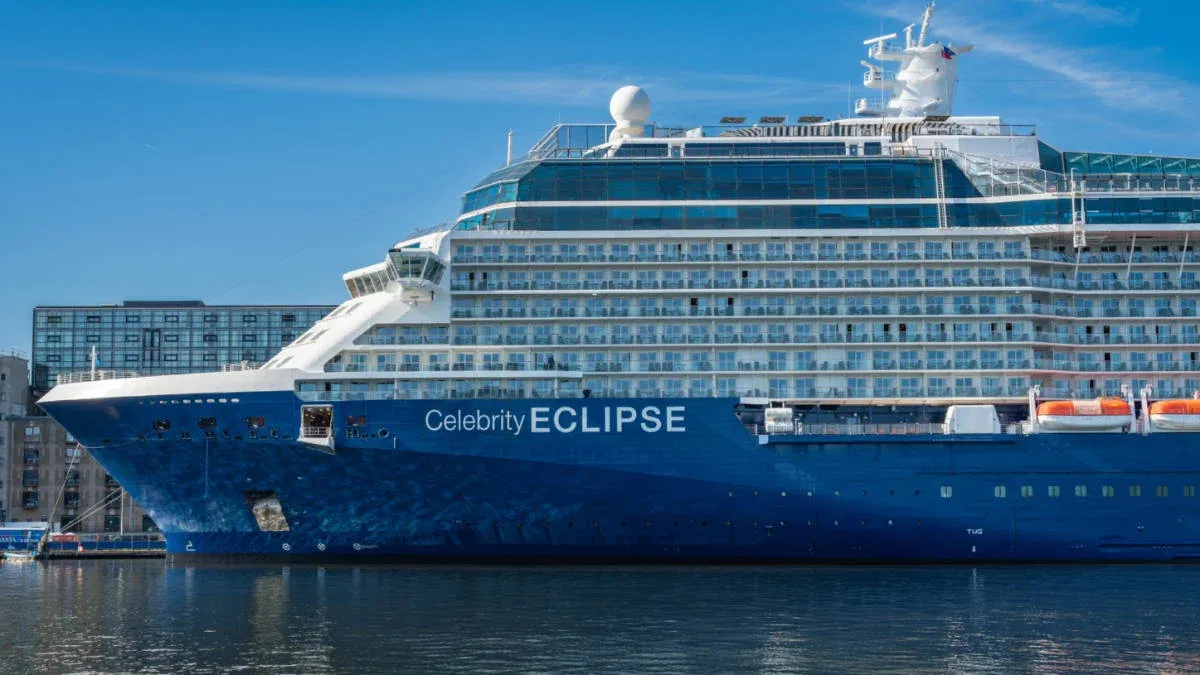
The last monitored outbreak of the year occurred on Celebrity Cruises’ Celebrity Eclipse during a Christmas sailing that embarked December 20, 2025. More than 100 people reported gastrointestinal symptoms, and the cause remained unknown at the end of the year.
Holland America Line recorded the most VSP-listed outbreaks in 2025, with six separate notifications. Within that total, Eurodam and Rotterdam each had two outbreaks, while Volendam and Zuiderdam had one apiece. Princess Cruises appeared on the VSP outbreak list twice, and Royal Caribbean had three outbreaks on three different ships.
Several major brands did not appear on the 2025 VSP outbreak list, including Carnival Cruise Line, Norwegian Cruise Line, and Disney Cruise Line.
- CDC VSP-tracked outbreaks: The VSP monitored 22 outbreaks in 2025, compared with 18 in 2024 and 14 in 2023.
- Most notifications by brand: Holland America Line accounted for six VSP-listed outbreaks in 2025, the highest total cited for any line in the CDC-monitored tally.
- Most prominent unresolved episode: Celebrity Eclipse’s December 20, 2025 sailing ended the year with more than 100 reported illnesses and no confirmed cause as of year-end.
Why norovirus remains the central onboard concern
Norovirus is the most frequent cause of diarrheal outbreaks on cruise ships, according to the CDC. The agency notes that the cause of an outbreak is not always known, which can happen when testing does not identify a specific pathogen or when results are pending or inconclusive.
The virus can spread quickly through contaminated surfaces, food, water, or person-to-person transmission, and the risk is amplified by close-contact settings. During suspected norovirus outbreaks, passengers whose symptoms match the case definition may be asked to provide stool or vomitus samples so testing can identify the causative agent.
One factor raised for 2025’s higher outbreak count was the circulation of an ultra-contagious norovirus strain, GII.17, which has been increasing in the United States. With more passengers sailing overall, operators and public health officials have also pointed to the increased opportunities for an illness to be introduced onboard and transmitted during a voyage.
What passengers can do to reduce risk, especially around dining
Industry groups and food-safety specialists emphasize that illness can still spread even with shipboard sanitation programs, particularly when an infected traveler boards while contagious or becomes ill during a sailing. Martin Bucknavage, a Penn State food scientist who specializes in industrial food safety, said passengers often assume ship food is the primary driver, but “passengers bringing illnesses on board is the most common cause of outbreaks.”
Bucknavage added: “Without question, the biggest risk is norovirus infection.” He noted that a single case can escalate because a very small exposure can make someone sick and because viral particles can persist on surfaces.
CLIA has said foodborne illnesses on cruise ships are statistically rare, estimating a one in 5,500 chance of contracting one onboard, compared with one in 15 on land. Even so, Bucknavage and other experts recommend practical steps that target the most common transmission routes.
- Prioritize handwashing: Wash hands with soap and water after using the restroom and before eating, since norovirus can spread via contaminated hands and surfaces.
- Choose staff-served dining when possible: Individually served meals in sit-down settings can reduce exposure compared with self-service buffet lines, where more hands and shared utensils increase contact points.
- Be strategic if you use buffets: Consider going early when areas may be less crowded, and avoid food that looks or smells off or appears to be held at unsafe temperatures.
- Be cautious with high-risk raw items: Bucknavage noted that travelers who are especially cautious may want to avoid raw oysters and other raw shellfish, which can be linked to norovirus when harvesting waters are contaminated.
Some travelers also review CDC inspection reports and a ship’s outbreak history before sailing, particularly during high-demand periods.
Travelers’ diarrhea adds another layer, with antibiotic resistance highlighted in new research
Travelers’ diarrhea (TD) and norovirus infections are not clinically identical, even though both can cause gastrointestinal distress. TD is often associated with bacterial pathogens, while norovirus is a viral illness known for rapid spread in crowded environments.
A study published in JAMA Network Open on December 20, 2025 analyzed GeoSentinel network data from April 2015 through December 2022, focusing on four common TD pathogens: Campylobacter, Shigella, nontyphoidal Salmonella, and diarrheagenic Escherichia coli. Among 859 cases evaluated, the study found antimicrobial resistance rates of 75% for Campylobacter, 32% for nontyphphoidal Salmonella, 22% for Shigella, and 18% for diarrheagenic E. coli, with the highest resistance levels seen among travelers in South Central Asia, Southeast Asia, and sub-Saharan Africa.
The report also highlighted macrolide nonsusceptibility, including 12% in Campylobacter and 35% in Shigella. The findings underscored the value of antimicrobial susceptibility testing to inform treatment options for moderate-to-severe TD cases, which are often treated with fluoroquinolones or macrolides such as azithromycin.
As of December 30, 2025, neither TD nor norovirus had a US Food and Drug Administration-approved vaccine available, according to the CDC, though norovirus vaccine candidates have been under study for years.
Calls for stronger decontamination tools as cruise volume rises
As cruise lines prepare for continued high demand, some suppliers are pushing for expanded use of advanced disinfection systems. TOMI Environmental Solutions, Inc. has urged cruise lines to adopt hospital-grade decontamination technology, including its SteraMist product, framing it as a way to reduce operational disruption and better contain outbreaks.
“The question should no longer be if cruise lines can prevent health outbreaks, but how often and how comprehensively they are utilizing hospital-grade disinfection technology like SteraMist to safeguard passengers and crew,” said Dr. Halden Shane, CEO of TOMI Environmental Solutions.
Shane also argued that proactive decontamination should extend beyond public areas, pointing to dining venues, children’s areas, and shipboard clinics as locations that can require heightened attention during an illness response.
With cruise volume expected to remain high in 2026, the CDC’s outbreak list and basic prevention practices are likely to remain key reference points for travelers and operators, particularly as ships manage surveillance, cleaning protocols, and operational responses when symptoms spread onboard.
Frequently Asked Questions (FAQs)
What triggers a cruise ship to report an outbreak to the CDC’s VSP?
US-based cruise ships must notify the CDC’s Vessel Sanitation Program when gastrointestinal illness symptoms affect at least 3% of passengers and crew on a voyage.
Was norovirus responsible for every 2025 cruise ship outbreak?
No. The CDC says norovirus is the most frequent cause of cruise ship diarrheal outbreaks, but the cause of an outbreak is not always identified, including cases where testing is inconclusive or results are pending. The CDC-monitored outbreak on Celebrity Eclipse that began on December 20, 2025 was listed with the cause still unknown at the end of the year.
Is there a vaccine for norovirus or travelers’ diarrhea?
No. As of December 30, 2025, the CDC said there was no US Food and Drug Administration-approved vaccine for norovirus or travelers’ diarrhea, though norovirus vaccine candidates have been studied for years.
How is travelers’ diarrhea different from a typical cruise ship norovirus outbreak?
Travelers’ diarrhea is often linked to bacterial pathogens and can involve antibiotic treatment decisions, while norovirus is a viral illness known for rapid person-to-person and surface-driven spread in crowded environments.
What measures are cruise lines taking to address outbreaks?
Outbreaks reported to the CDC’s VSP are monitored under the program’s inspection and surveillance framework. Some suppliers, including TOMI Environmental Solutions, have also pushed for broader use of hospital-grade decontamination technology such as SteraMist to better contain outbreaks and reduce operational disruption.