
Blue Origin Scrubs New Glenn Launch After Weather and Cruise Ship Issue
The scrub underscores how hard it is to run a high-cadence launch business on Florida’s crowded coast as Blue Origin races to prove reusability against SpaceX.
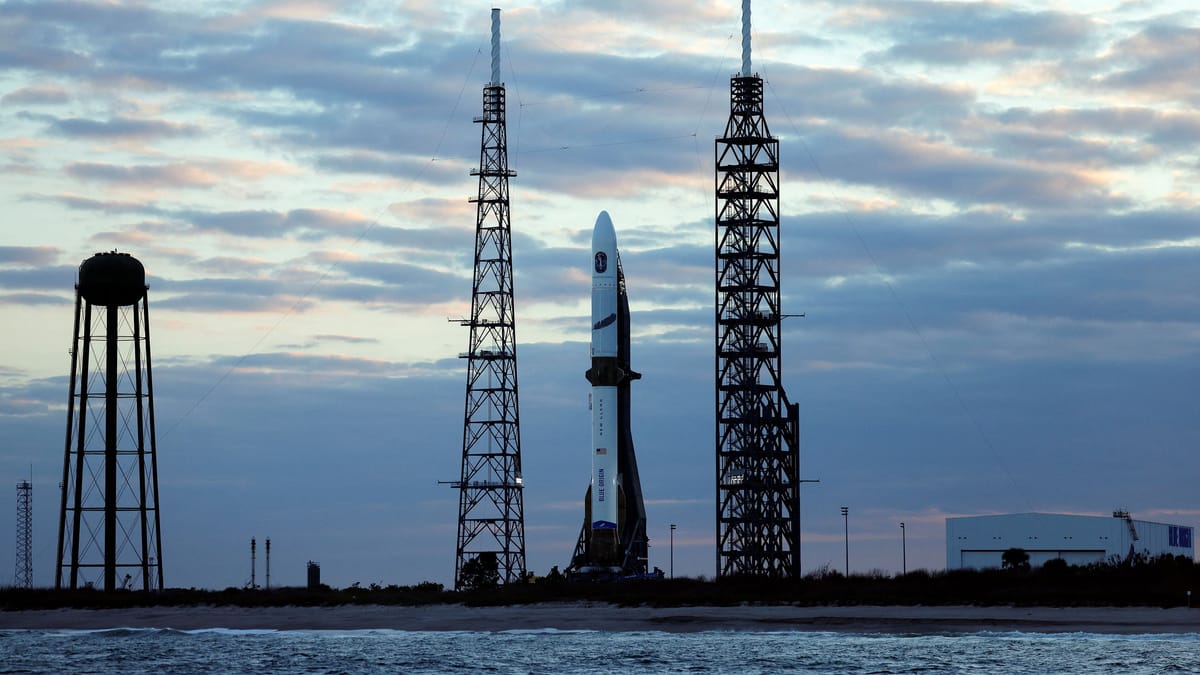
Blue Origin scrubbed a planned Sunday afternoon launch of its New Glenn rocket after a mix of unfavorable weather, minor launchpad equipment issues, and a cruise ship moving into an area tied to the vehicle’s flight path near Cape Canaveral, Florida. The company said on X that it is now targeting Wednesday, November 12, with a launch window running from 2:50 p.m. to 4:17 p.m. ET.
What forced Blue Origin to stand down on Sunday
New Glenn’s countdown was marked by delays as teams worked through weather concerns and pad-related issues. During the attempt, Blue Origin’s live webcast showed at least one cruise ship entering an area associated with the rocket’s downrange safety corridor, adding another constraint as time in the launch window narrowed.
- Weather: Conditions remained a concern as the window progressed, limiting the team’s flexibility late in the attempt.
- Pad equipment: Minor issues at the launch pad contributed to schedule slips during the countdown.
- Maritime traffic: A cruise ship moved too close to the flight safety corridor tied to the rocket’s planned path, prompting additional range-safety concerns.
Why a cruise ship can stop a Florida rocket launch
Launch safety planning in Florida extends well beyond the pad, including downrange corridors where a vehicle, debris, or other hazards could travel if something goes wrong. If a vessel enters or approaches a protected area during the countdown, a launch provider may pause or halt operations to ensure the corridor is clear.
Cape Canaveral’s proximity to busy coastal waters means maritime traffic can become a real-time range-safety variable. Large passenger ships can be visible from shore and on launch broadcasts, particularly during peak cruise periods when traffic is frequent along the Space Coast.
Next attempt is set for Wednesday, November 12
Blue Origin’s next launch opportunity is scheduled for Wednesday, November 12, with the window opening at 2:50 p.m. ET and closing at 4:17 p.m. ET from Cape Canaveral.
The timing comes as the Federal Aviation Administration has announced restrictions affecting space launches amid the government shutdown. Blue Origin said it worked with the FAA to enable the rescheduled attempt.
What’s at stake on New Glenn’s second mission
The upcoming flight is a key test for Blue Origin as it works to demonstrate New Glenn’s reusability, a capability it views as critical to competing in the commercial space sector against rivals like SpaceX. New Glenn’s first launch in January reached orbit, but the booster was not recovered after it exploded before touchdown on a drone ship.
On this second mission, Blue Origin is aiming to land the booster for the first time, a step the company expects to be central to its cost-saving plans and to proving operational reliability for future customers.
First commercial payloads: NASA’s ESCAPADE and a Viasat demonstrator
This flight is also described as New Glenn’s first commercial mission. The rocket is set to deploy NASA’s ESCAPADE spacecraft for a Mars science mission, designed to study the Martian magnetosphere, along with a technology demonstrator for communications company Viasat tied to another NASA project.
Blue Origin has positioned the mission as a benchmark: delivering the payloads while also attempting its first booster recovery would strengthen confidence in New Glenn as the company pursues more routine commercial operations.
Delays and launch-day timing pressure
Blue Origin’s planning for the launch has faced setbacks throughout 2023 due to technical issues and external factors. On Sunday, the mid-afternoon window left limited room to absorb delays, and as the remaining minutes narrowed, any additional constraint, including maritime traffic near the safety corridor, reduced options for a safe liftoff.
With the next attempt now set for Wednesday, the company’s focus turns to clearing the range and executing the mission objectives, including the booster landing attempt.
Frequently Asked Questions (FAQs)
Why was Sunday’s New Glenn launch scrubbed?
Blue Origin called off the attempt due to unfavorable weather, minor launchpad equipment issues, and a cruise ship moving too close to an area associated with the rocket’s flight safety corridor near Cape Canaveral.
When is Blue Origin’s next New Glenn launch attempt?
Blue Origin said it is targeting Wednesday, November 12, with a launch window from 2:50 p.m. to 4:17 p.m. ET from Cape Canaveral, Florida.
What payloads will New Glenn carry on this mission?
The payload includes NASA’s ESCAPADE spacecraft for a Mars mission, along with a Viasat technology demonstrator connected to another NASA project.
Did New Glenn reach orbit on its first launch?
Yes. Blue Origin’s first New Glenn flight in January reached orbit, but the booster was not recovered after it exploded before touchdown on a drone ship.
Why is reusability important for New Glenn?
Blue Origin is trying to validate booster recovery and reuse as a way to lower costs and improve operational reliability, a key factor in competing with SpaceX, whose Falcon rockets have already demonstrated reusable flight.