Bar Harbor Cruise Forum to Examine Disputed Passenger Landings
At Jesup Memorial Library, the free forum will cover tender operations, downtown pedestrian traffic and infrastructure needs alongside 2027 schedule projections.
Bar Harbor’s cruise forum needs to separate booked calls from permitted landings
A cruise ship can have a confirmed anchorage in Bar Harbor without permission to put its passengers ashore. That distinction deserves top billing at the town’s upcoming cruise tourism forum. A schedule is a weak basis for hiring staff or ordering stock if the right to land passengers remains disputed.
I’d put clarity on disembarkation ahead of any forecast of future ship calls. Businesses need usable information, and residents deserve to know what waterfront activity the town has actually authorized.
The Bar Harbor Chamber of Commerce will host the free, in-person forum on November 18, 2026, from 5:30 to 7 p.m. at Jesup Memorial Library, 34 Mt Desert St. Its agenda includes the 2026 season’s passenger numbers, tender operations, downtown pedestrian traffic and economic results, along with schedule projections for 2027 and beyond, regulatory changes and infrastructure needs.
Chamber executive director Everal Eaton said uncertainty about future visitation has left some businesses unsure how to plan staffing and inventory. That is a practical problem, not simply a complaint about fewer cruise passengers. But a public meeting cannot supply certainty that unresolved court cases have yet to provide.
The landing rules are still in court
Chief U.S. District Judge Lance Walker ruled in May that Bar Harbor’s daily cap of 1,000 disembarking cruise passengers is constitutional and enforceable only during July and August. A motion asking him to reconsider remains pending, alongside separate state-court disputes over enforcement.
The town adopted a two-permit regulatory framework in 2024. Golden Anchor, which receives cruise passengers at the Harborside property, has received violation notices for operating without the required permit. The company and town disagree over whether the permitting system is constitutional under Walker’s ruling. Two related appeals await action by the Maine Supreme Judicial Court.
Town Manager James Smith said permits coordinate shoreside activity, municipal services and operational accountability. He also made the distinction that should govern how anyone reads a future schedule.
“Confirmation of anchorage requests does not constitute authorization for disembarkation,” Smith said.
That does not settle the legal challenge to the town’s permit system.
Bar Harbor has also reached an agreement with American Cruise Lines and obtained the permits needed for regular passenger disembarkation at a public pier. Smith said those vessels carry no more than 250 passengers. That is a different scale from the large ships tendering passengers ashore, but it gives the forum something concrete to discuss alongside the disputes.
The economic losses deserve attention, and so does the vote
Bar Harbor’s restrictions were not imposed without public backing. Voters adopted the passenger limit through a citizens’ initiative in 2022, approving it 1,780 to 1,273. An attempt to repeal it and let the Town Council introduce an alternative management approach failed in 2024. The recount recorded 1,779 votes against repeal and 1,714 in favor.
That second result was close. It was still a decision to retain the restriction. I would not treat business losses as grounds to skip past the crowding and safety concerns that helped produce it.
Supporters cited downtown congestion and residents’ quality of life. Bar Harbor has approximately 5,000 year-round residents, borders Acadia National Park and depends partly on tourism for its business economy.
Charles Sidman, a resident and gallery operator who championed the ordinance and intervened in the federal lawsuit, said of peak cruise traffic: “It was aesthetically unpleasant, it was dangerous and it was detrimental to business.”
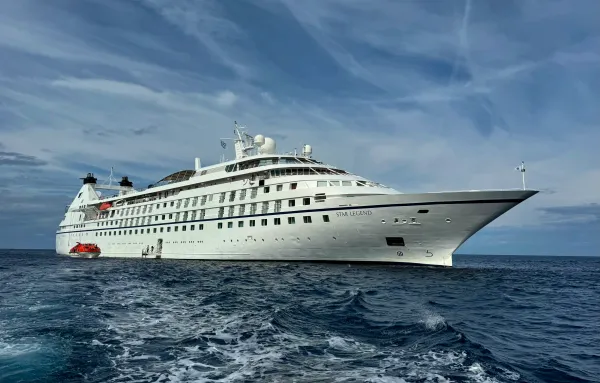
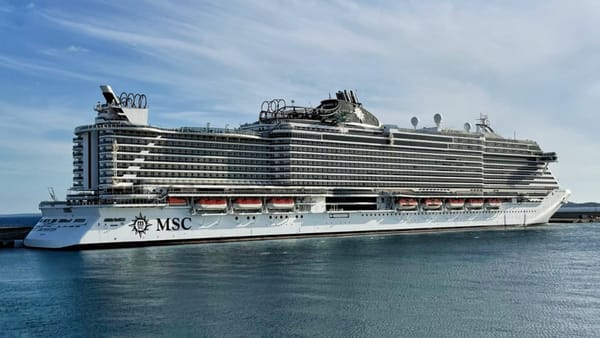
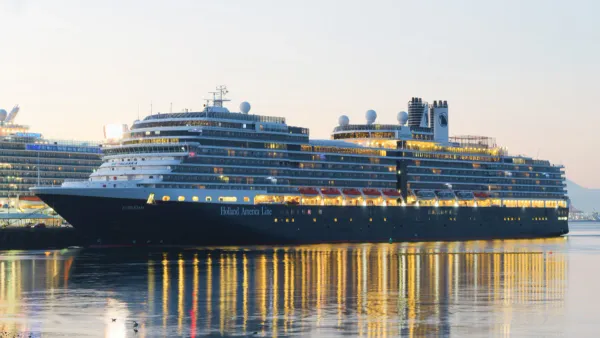
The physical setup matters. Large ships anchor in Frenchman Bay because Bar Harbor has no berth capable of accommodating them. Tenders deliver passengers close to downtown shops and restaurants, while excursion-bus queuing is concentrated on West Street.
In a court affidavit, CruiseMaine’s Sarah Flink cited 174 scheduled ship visits with 292,212 lower berths at the start of the 2022 season. That fell to 134 visits and 258,157 berths in 2023, then 100 visits and 181,926 berths in 2024. Approved requests for 2025 covered 18 ships with capacity for 57,482 passengers.
Those are schedules and capacity figures, not counts of passengers who actually landed.
West Street Cafe owner Kevin DesVeaux said lunch sales had fallen 30% since 2022 and that the restaurant had not been profitable since that year. He said he was using savings to keep it operating while deciding whether to sell or wait for cruise traffic to return.
Spending and street pressure belong in the same discussion
CruiseMaine’s 2025 visitor study, commissioned with the Maine Office of Tourism, drew on responses from 3,391 passengers across different ship sizes and cruise lines, collected from April 17 through November 5.
The study put average passenger spending at approximately $80 per port visit statewide, with an average shore stay of three hours. About three-quarters explored port communities on foot, while half shopped. Those activities help explain why cruise visitors matter to downtown businesses and why their arrival patterns matter to the people sharing those streets.
Passengers and crew spent an estimated $22 million across Maine in 2025, including shore visits and stays before or after cruises. Cruise lines spent another $12 million, including $5.4 million in port fees and municipal taxes and $3.8 million on marine services.
The study estimated that cruise visitor and cruise line spending contributed almost $28 million to Maine’s GDP, supported 460 jobs and generated $3 million in state tax revenue. These are statewide estimates, not a measure of Bar Harbor’s own economic gains or costs.
Locally, the town’s Sustainable Tourism Task Force draft identifies passenger clustering near the foot of Main Street. Proposed responses include encouraging excursions outside the town center, increasing the presence of ambassadors and police on cruise days, and considering an alternative landing location such as the ferry terminal.
Those operational questions deserve serious time at the forum. A daily passenger total cannot, by itself, describe what happens at a particular landing point or on a crowded stretch of pavement.
The chamber was formerly a member of APPLL, an organization involved in litigation against the town, but is no longer. The forum is open to Mount Desert Island residents, business owners and employees, with no registration required. Questions or proposed topics can be emailed to events@visitbarharbor.com by Monday, November 16. The chamber plans to share participants’ feedback with town committees and council members.
The most useful outcome would be a clear account of which future landings are authorized, which remain contested and what shoreside arrangements they require. Until that is clear, putting more calls on a forecast will not give Bar Harbor businesses the certainty they are asking for.