Anti-Slavery Chief Urges Australian Standards for Cruise Crews
Introduced as a temporary measure in 1998, the section 11 exemption lets qualifying cruise ships sail between Australian ports without a coastal-trading license.
Australia’s Anti-Slavery Commissioner Chris Evans has called for foreign-flagged cruise ships operating between Australian ports to provide employment conditions comparable with Australian standards, as the federal government considers whether to renew a coastal-trading exemption due to expire at the end of December. His intervention follows allegations from crew on Carnival’s Australian ships involving daily pay of AU$33, 12-hour shifts, poor food and medical neglect.
Carnival has rejected allegations about its treatment of crew. The exemption at the center of the dispute was introduced as a temporary measure in 1998 and has since been renewed every few years, allowing qualifying cruise ships to operate without the license that would bring them under the Fair Work Act.
“Fundamentally, the situation ought to be that ships that are working through Australian ports ought to be applying conditions that are on a par with Australian conditions,” Evans said. Asked whether the exemption should be withdrawn, he said change was “long overdue.”
A temporary exemption under review
The section 11 exemption generally covers passenger ships exceeding 5,000 gross tonnes that can carry at least 100 passengers and operate at 15 knots or more. It applies to qualifying services between Australian ports, except Victoria-Tasmania routes.
Without the exemption, a foreign-flagged vessel may require a coastal-trading license to carry passengers domestically. That licensing requirement means Australian workplace law applies.
Evans said cruise operators should not be able to reduce labor costs through the exemption while using Australian ports. Ships working from the country should meet Australian employment conditions as well as applicable international standards, he said.
A review of the Coastal Trading Act was delivered to the government at the end of last year, but its findings have not been released. A spokesperson for Transport Minister Catherine King called the crew allegations “horrifying” but said the exemption reduces costs and administrative requirements while supporting passengers and tourism businesses. The policy recognizes both the cruise sector’s economic importance and the different labor systems used in international shipping, while maintaining Australia’s international labor-rights commitments, the spokesperson said.
Crew accounts focus on pay, food and medical care
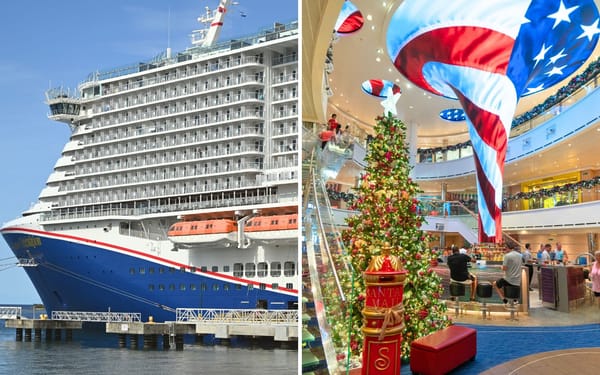
Carnival Corporation operates more than 90 ships globally, with approximately 100,000 crew members working aboard them at any time. Carnival Adventure, Carnival Encounter and Carnival Splendor operate full-time in Australia.
Crew members on those ships alleged that they worked 12 hours a day, seven days a week, for most of their nine-month contracts. A 2025 employment contract showed pay of US$23.26, or about AU$33, per day. Based on a 12-hour shift, that equates to AU$2.75 an hour before occasional passenger tips.
The Maritime Union of Australia said most crew members are contractors recruited from Africa and Southeast Asia. The union has received hundreds of complaints about working and living conditions during the past year.
Queen Onuoha, a Nigerian beauty specialist who worked aboard Carnival Adventure and Carnival Encounter, said her shifts sometimes lasted 14 hours and that she used caffeine tablets to remain awake. She also said she spent about AU$50 a week on food because of concerns about meals provided to crew.
Several current and former workers alleged that surplus passenger food was repeatedly refrigerated, reheated and served to crew. Other crew members said they bought bottled water because they did not trust the onboard supply, adding another expense to their contracts.
Under the Maritime Labour Convention, safe food and drinking water must be provided to seafarers without charge. The convention also covers wages, work and rest hours, accommodation, medical care, complaint procedures and collective bargaining.
Carnival said its onboard water is treated, routinely monitored and tested, including through third-party laboratory analysis. The company did not answer specific questions about crew food, bottled-water limits, alleged medical neglect or one worker’s claim that security prevented her from leaving a ship while it was in Brisbane.
Crew members also alleged that four people commonly shared a cabin and that sick or injured employees were pressured to return to work. One housekeeper said she received no medical leave and was directed back to her duties when unwell.
Inspections clear Carnival as complaints continue
Carnival said the Australian Maritime Safety Authority had conducted unannounced inspections of all three of its locally based ships in recent weeks and cleared the company each time. It also said it complies with the Maritime Labour Convention and has “nothing to hide.”
An earlier AMSA investigation into health, safety and welfare complaints aboard Carnival Encounter found no breaches. As Australia’s port-state regulator, AMSA can inspect ships and take enforcement action under the convention, including vessel detention and financial penalties.
Labor Senator Tony Sheldon visited a Carnival ship last month and spoke with dozens of crew members. He said those discussions supported allegations involving pay below AU$3 an hour, long working days and crew having to purchase bottled water.
The Maritime Union of Australia submitted a formal complaint to AMSA in June alleging that Carnival was not meeting crew members’ collective-bargaining rights. Carnival accused the union of using workers to increase its membership.
The union and SafeWork NSW were denied access to a Carnival ship in March, the third such refusal cited by the union. Carnival said AMSA was the applicable regulator and that SafeWork NSW had no authority over international seafarers. SafeWork NSW is considering its options and has not ruled out legal action.