Wärtsilä Introduces Modular Grease Separator for Ship Galleys
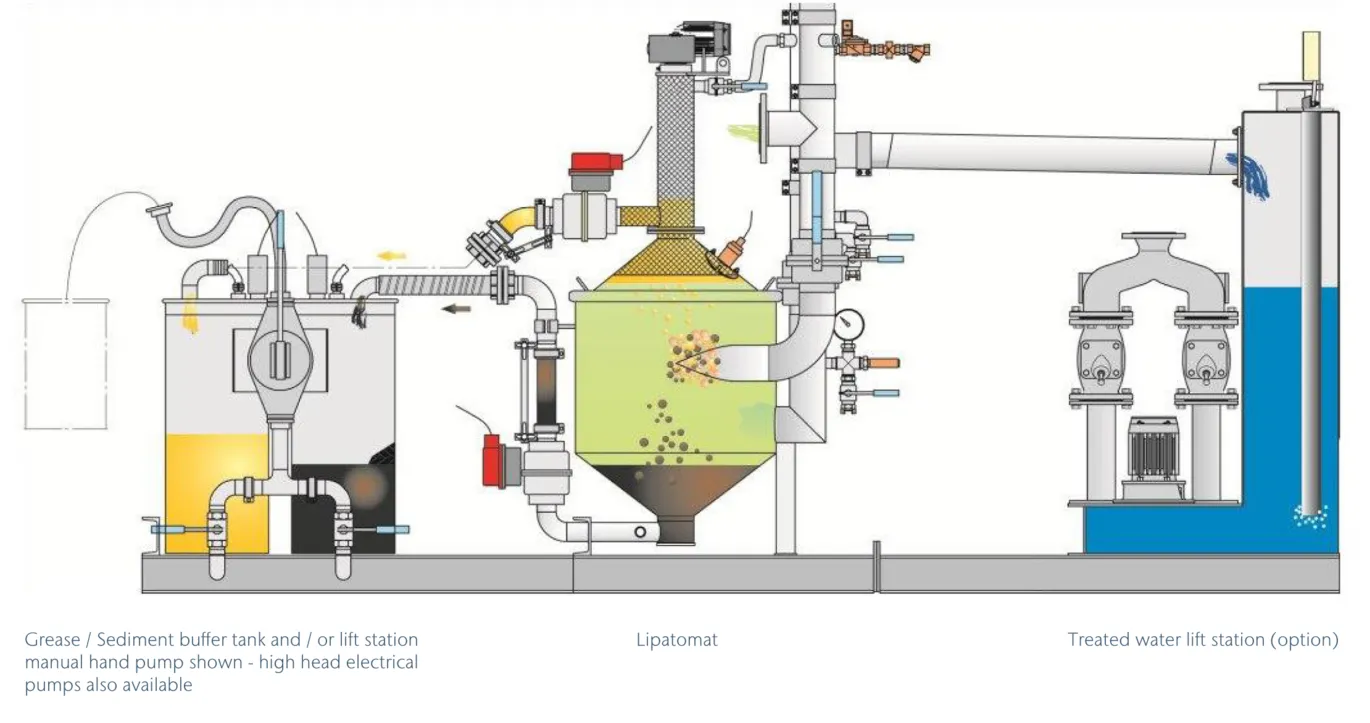
The system uses gravity to settle solids and lift grease into a collection chamber, and is designed in accordance with the European grease-separator standard.
Wärtsilä Water & Waste has introduced the Grease Trap GM Series, a modular grease-separation system for galley wastewater on cruise ships, merchant vessels and offshore platforms. Available from May 2026, the product is offered in four sizes for both newbuild projects and retrofit installations.
The system targets fats, oils and grease before they move farther into onboard wastewater systems, a routine galley stream that can affect downstream treatment and maintenance. For cruise operators, the product fits into a wider wastewater-management regime that includes greywater, sewage and oily bilge handling across itineraries with varying discharge controls.
“Separating grease at source is essential for maintaining reliable wastewater system performance onboard,” said Fraser Scott, managing director of Wärtsilä Water & Waste. He said the system is intended to reduce blockage risk, limit unplanned maintenance and support consistent downstream treatment.
How the GM Series works onboard
The GM Series relies on a gravity-based separation process. Incoming wastewater enters the unit, solids settle, grease rises into a dedicated collection chamber, and clarified water continues through the vessel’s discharge system.
The line is designed in accordance with BS EN 1825, the European standard for grease separators. Wärtsilä also lists manual and automated options for grease handling and disposal.
Galley wastewater forms part of a cruise ship’s greywater stream, alongside water from showers, wash basins, laundries, spas and dishwashing areas. That stream can contain detergents, food residue, grease, cleaning chemicals, metals and fibres shed during laundry operations; wastewater management also covers blackwater from toilets and medical spaces and oily bilge water from machinery areas.
Regulatory context for cruise wastewater
International sewage rules under MARPOL Annex IV generally apply to ships on international voyages of 400 gross tonnage and above, or ships certified to carry more than 15 people, and require approved treatment, disinfection and comminution equipment, or holding capacity. Untreated sewage can be discharged only more than 12 nautical miles from land while a ship is en route at at least 4 knots; comminuted and disinfected sewage has a 3-nautical-mile threshold.
The GM Series is an upstream separator for galley wastewater, while Annex IV governs sewage-treatment and retention requirements. Passenger ships in MARPOL Special Areas face tighter sewage restrictions; the Baltic Sea has enhanced controls tied to eutrophication concerns, and Alaska imposes stringent monitoring and discharge requirements on cruise operations.
The product adds to a Wärtsilä Water & Waste portfolio that includes membrane-bioreactor wastewater treatment, sewage-treatment systems, oily-water treatment units and related lifecycle services for maritime customers.
Wärtsilä has not named a launch customer, first vessel installation or model-by-model capacities for the GM Series. The company expects to complete the planned sale of Water & Waste to Solix Group AB in the third quarter of 2026 if approvals are received.