USCG Polar Star Escorts Scenic Eclipse II From Antarctic Pack Ice
As Antarctic expedition cruising expands, even routine ice shifts can require military-grade icebreaking support, underscoring how thin the region’s safety net can be.
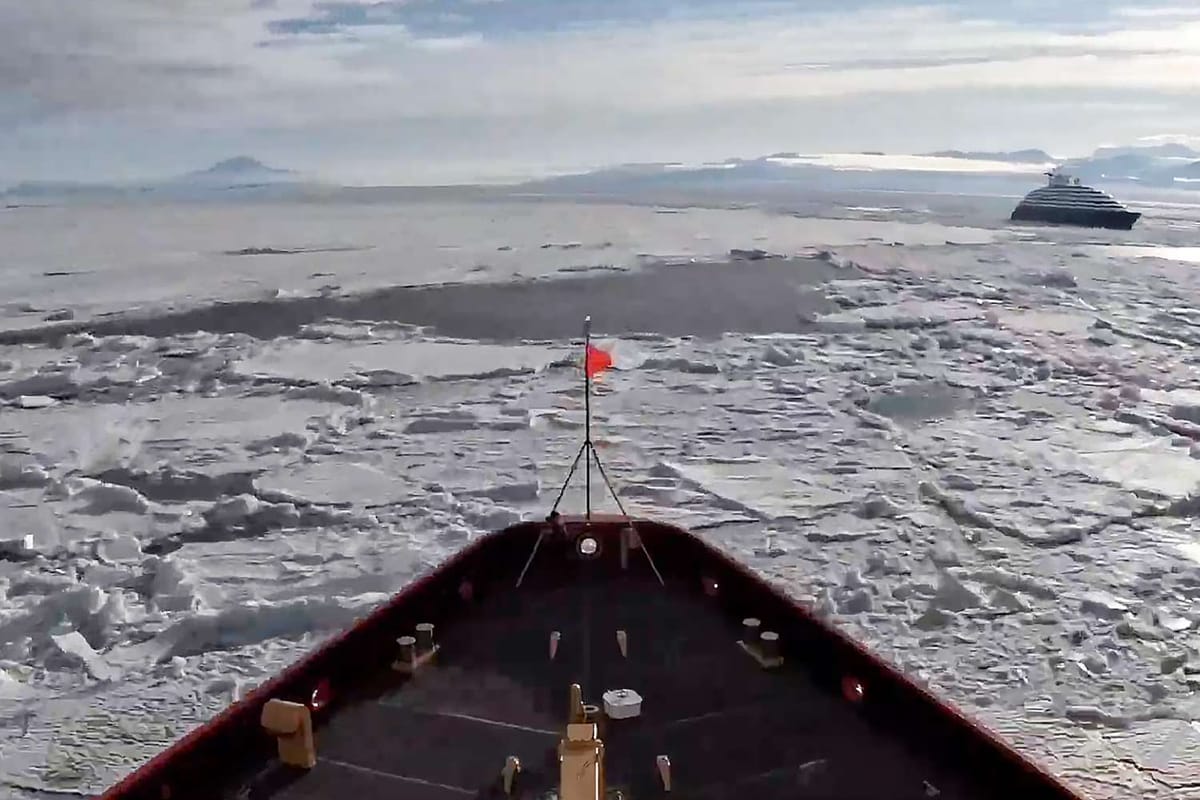
USCGC Polar Star helped the luxury expedition cruise ship Scenic Eclipse II reach open water on Jan. 17, 2026, after shifting pack ice slowed the ship’s departure from Antarctica’s Ross Sea near McMurdo Sound, according to the U.S. Coast Guard and Scenic Group.
The Coast Guard reported no injuries. Scenic said the vessel was not in distress and that the assistance was requested to navigate changing ice conditions safely and avoid an extended period of slow-speed sailing.
Pack ice slows Scenic Eclipse II near McMurdo Sound
The incident unfolded as Scenic Eclipse II operated in the Ross Sea on a long itinerary that included East Antarctica. The Coast Guard said the ship became “beset” in ice about 8 nautical miles from McMurdo Sound.
In an emailed statement, Scenic said changing pack-ice conditions slowed the ship’s progress as it worked to depart the area, prompting the ship’s captain to ask the nearby Polar Star for help “to clear the area together and avoid a longer sailing period at reduced speed.”
- Date and location: The assistance took place on Jan. 17, 2026, in the Ross Sea near McMurdo Sound, Antarctica.
- How the Coast Guard described the situation: Polar Star responded after the cruise ship was reported “beset” in ice about 8 nautical miles from McMurdo Sound.
- Outcome: The Coast Guard said the icebreaker cleared ice around the ship and escorted it to open water, and no injuries were reported.
How Polar Star cleared a route to open water
The Coast Guard said Scenic Eclipse II contacted Polar Star at about 11 p.m. local time. Polar Star then made two close passes to break up ice around the cruise ship before escorting it approximately four nautical miles to open water.
Scenic emphasized the operation was coordinated assistance rather than a rescue. Captain James Griffiths, Scenic Group’s General Manager Ocean Operations, said, “While Scenic Eclipse II was never in need of rescue services, the coordination between both vessels ensured we could navigate the changing pack ice safely and efficiently.”
Griffiths added, “This is a great example of the practical, respectful co-operation that exists in the polar regions, where safety, seamanship, and shared responsibility always come first.”
Onboard response and a brief operational delay
Scenic described the icebreaking operation as an unexpected highlight for guests, saying champagne was served on the Observation Deck so passengers could watch the two vessels working in proximity.
The company also said the ship had been operating helicopter flights to the Dry Valleys around the time the pack ice shifted, as part of its expedition itinerary in the Ross Sea region.
By the following day, Scenic said natural ice movement had opened conditions again and operations normalized.
Polar Star’s Deep Freeze deployment and 50-year milestone
Polar Star was operating in Antarctica as part of Operation Deep Freeze 2026, supporting U.S. scientific and logistical operations, including maintaining sea access for missions connected to McMurdo Station and broader U.S. Antarctic activities. Scenic and the Coast Guard described the ship’s work in the region as central to keeping routes navigable for fuel and cargo deliveries to U.S. research stations in McMurdo Sound.
The assistance to Scenic Eclipse II also coincided with a notable date for the Coast Guard icebreaker. Polar Star was commissioned on Jan. 17, 1976, meaning the operation took place on its 50th commissioning anniversary. Scenic said the icebreaker had departed Seattle on Thanksgiving for its 29th Antarctic deployment.
Capt. Jeff Rasnake, commanding officer of USCGC Polar Star, credited the crew’s persistence in keeping the ship on task. “I am constantly amazed at this crew’s tremendous energy and enthusiasm,” Rasnake said, adding that the team remains committed to deployment standards despite operational challenges.
Cmdr. Samuel Blase, Polar Star’s executive officer, said, “At 50 years old, Polar Star remains the world’s most capable non-nuclear icebreaker. That’s a testament to the crews that have maintained it over the decades.”
Voyage details for Scenic Eclipse II
Scenic Eclipse II, operated by Scenic Luxury Cruises and Tours, is typically configured to accommodate 227 passengers and 176 crew members. Scenic said the ship departed Hobart, Tasmania, on Jan. 6, 2026, and is scheduled to conclude the voyage in Dunedin, New Zealand, on Jan. 29.
Scenic said the ship continued its itinerary after the brief delay, while the Coast Guard indicated Polar Star would remain engaged in Antarctic support work during the Deep Freeze season.
Frequently Asked Questions (FAQs)
Where was Scenic Eclipse II when it became “beset” in ice?
The U.S. Coast Guard said Scenic Eclipse II was in the Ross Sea near McMurdo Sound, about 8 nautical miles from McMurdo Sound at the time of the Jan. 17, 2026 incident.
Did Scenic Eclipse II issue a distress call or require a rescue?
Scenic Group said the ship was not in distress and “was never in need of rescue services,” describing the request as assistance to clear the area and avoid extended slow-speed sailing. The Coast Guard reported no injuries.
What did USCGC Polar Star do to assist the cruise ship?
The Coast Guard said Polar Star made two close passes to break up ice around Scenic Eclipse II and then escorted it approximately four nautical miles to open water.
Why was Polar Star operating in Antarctica at the time?
Polar Star was deployed in support of Operation Deep Freeze 2026, which supports U.S. scientific and logistical operations in Antarctica, including helping keep sea access open for missions tied to McMurdo Station and related U.S. Antarctic operations.