Spain Takes In Hantavirus-Hit Hondius After Cape Verde Ruled Out
Oceanwide said 122 people were repatriated from Tenerife, with passengers grouped by nationality and taken ashore only when their evacuation flights were ready.
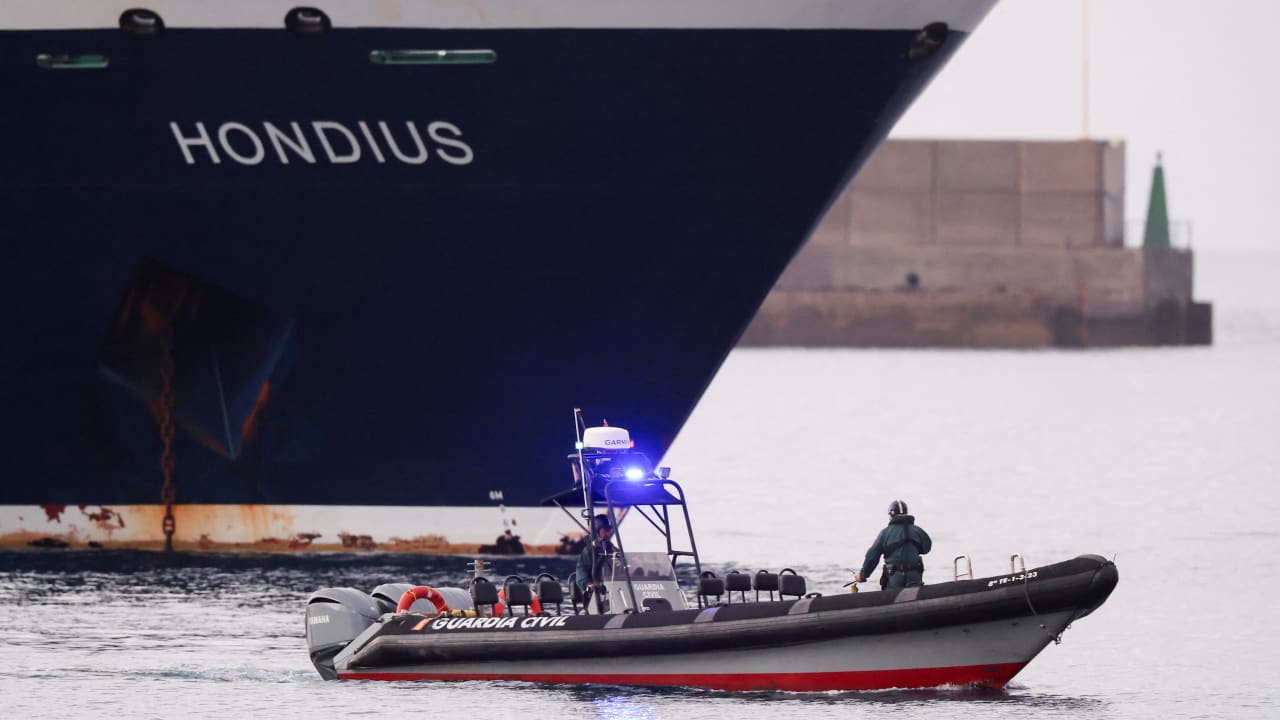
Spain's Health Ministry agreed on May 5 to receive the Dutch-flagged MV Hondius in the Canary Islands after the World Health Organization determined that Cape Verde could not manage the medical disembarkation of the hantavirus-hit expedition ship. Spanish medical teams were assigned to assess and treat passengers and crew before repatriation, following an outbreak that had killed three passengers.
Spain, the WHO, Dutch authorities and Oceanwide Expeditions coordinated the response. The 5,590-gross-ton Hondius was carrying about 150 passengers and crew from 23 nationalities during the South Atlantic voyage.
Spain steps in after Cape Verde is ruled out
The Health Ministry said Spain would receive the ship "in accordance with international law and humanitarian principles," citing the WHO's assessment that Cape Verde lacked the required capacity for the operation. "The Canary Islands are the closest location with the necessary capabilities," the ministry said. "Spain has a moral and legal obligation to assist these people."
Oceanwide Expeditions said two symptomatic people requiring urgent care and one close contact of a passenger who died on May 2 were to be transferred from the vessel by specialized aircraft before Hondius repositioned toward the Canary Islands. The company initially said the transit would take about three days and that Gran Canaria or Tenerife were under consideration.
The decision drew opposition from the Canary Islands' regional government. Fernando Clavijo, the regional president, told COPE radio that the move was "not based on any technical criteria," and said the public had not been given sufficient information about the safety plan. Madrid proceeded with the operation under national health authority coordination.
Tenerife evacuation keeps passengers separated from local population
Hondius later reached the industrial port area of Granadilla in southern Tenerife, where passengers were taken ashore under protective protocols and transferred directly to evacuation flights. Spanish officials said passengers and crew would have no contact with the local population, with movement through controlled areas and transport tied to each country's repatriation arrangements.
Oceanwide said 122 people were ultimately repatriated from Tenerife, including 87 passengers and 35 crew members. Passengers were grouped by nationality and ferried ashore only when their flights were ready; luggage remained aboard for later return.
Countries set their own post-arrival health measures, though the WHO recommended active monitoring because of the virus's long incubation period. U.S. passengers were sent to specialized medical facilities in Nebraska and Georgia for assessment and monitoring, while several European countries placed returning passengers in quarantine or isolation facilities.
Health authorities assess risk and possible transmission
Hantavirus is usually linked to exposure to rodent urine, droppings or saliva, but the Andes strain involved in the Hondius outbreak can spread between people in rare circumstances. Maria Van Kerkhove, the WHO's top epidemic expert, said there may have been transmission among "really close contacts," while stressing that wider exposure risk remained limited.
WHO Director-General Tedros Adhanom Ghebreyesus commented during the Tenerife response. "This is not another COVID," he said. "And the risk to the public is low."
The outbreak investigation has focused in part on possible exposure before boarding in Argentina, where the voyage began in Ushuaia on April 1. Oceanwide has said it had no indication of rodents aboard the vessel, and health authorities continued contact tracing for passengers who disembarked earlier in the itinerary.
The case count later rose to at least 11, with nine confirmed by the WHO. Andreas Hoefer, who coordinates European Union reference laboratory operations for public health, said there was "no reason to suspect that this is a new virus."
Hondius proceeds to Rotterdam for disinfection
After the Tenerife operation, Hondius departed Granadilla for Rotterdam with 25 crew members, two Dutch public health medical professionals and the body of the German passenger who died onboard. Oceanwide said the remaining people aboard were asymptomatic during the voyage to the Netherlands.
Rotterdam public health officials said crew members would be tested on arrival and then weekly during quarantine. Yvonne van Duijnhoven, Rotterdam's director of public health, said the ship would be decontaminated under Dutch guidelines after everyone aboard had disembarked, a process expected to take about three days.
Public health officials are to inspect Hondius before it can sail again. Oceanwide has a May 29 Arctic departure listed from Keflavik, Iceland.