SmartSea Launches FacePod Biometrics to Speed Cruise Embarkation
With bigger ships and tighter turnarounds, cruise operators are adopting aviation-style biometrics and real-time safety intelligence to stay competitive.
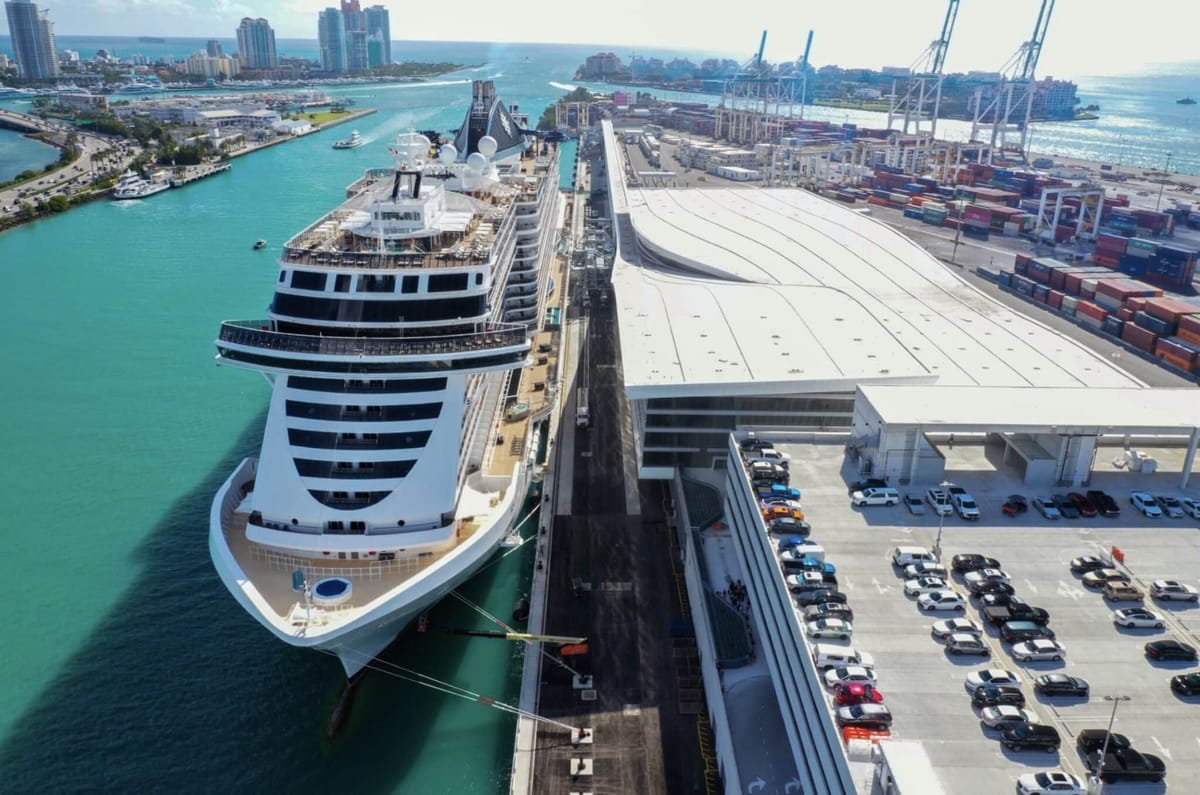
SmartSea, a maritime technology provider powered by SITA, has launched two new digital products aimed at updating how cruise operators manage passenger and crew processing and how they run safety workflows onboard and ashore.
Announced this week, the rollout pairs FacePod, a biometric identity and mobility platform, with an artificial intelligence-powered Health, Safety, and Environment (HSE) system that SmartSea says can help operators spot and manage operational risks in real time.
Two products built to reduce friction in processing and safety workflows
SmartSea is positioning the two tools as complementary, with FacePod focused on how people move through terminals and ship entry points, and the HSE platform focused on consolidating safety management and improving early hazard detection. The approach draws on technology patterns more commonly associated with aviation and applies them to cruise operations and offshore environments.
Kris Vedat, CEO of SmartSea, said the intent is to bring proven travel technology into maritime operations. “These platforms give cruise operators the same technological edge that has transformed aviation,” Vedat said.
FacePod: biometric processing designed to work from terminal to ship
FacePod is designed to support a biometric-based journey for both passengers and crew, reducing reliance on manual checks and repetitive document handling. SmartSea says the platform uses a single digital identity that can be verified at multiple points, with the goal of easing bottlenecks on embarkation and turnaround days.
Inspired by SITA’s SmartPath technology, FacePod is intended to enable biometrically verified processing “from the terminal to the ship,” SmartSea said, and the company also linked the concept to smoother logistics that can extend beyond the terminal into offshore operations.
- Passenger flow and queue reduction: SmartSea links FacePod to faster embarkation and fewer queues by replacing repetitive checks with biometric verification across multiple stages of the journey.
- Contactless, lower-paperwork processing: The platform is designed to minimize manual processes and paperwork while maintaining security standards during identity checks.
- Coverage for crew as well as guests: SmartSea says the biometric journey concept applies to both passengers and crew, using the same digital identity approach across processing points.
Vedat framed the platform as a shift toward individualized processing. “FacePod delivers a seamless, biometric-based passenger and crew journey, efficient, secure and built around the individual,” he said.
AI-powered HSE platform: consolidating compliance, reporting, and hazard detection
Alongside FacePod, SmartSea unveiled an AI-powered HSE system built to centralize safety, compliance, and risk management. SmartSea said the platform combines observations, digital risk assessments, and automated image analysis to detect hazards earlier and support faster responses to operational risks.
The company also says the platform is meant to reduce the administrative load on crew members by consolidating compliance, reporting, and safety processes into a single environment, shifting safety management from after-the-fact documentation toward earlier identification of potential risks.
- Real-time risk visibility: SmartSea says the system is designed to identify and manage operational risks in real time by combining multiple safety inputs in one place.
- Automated image analysis: The platform uses automated image analysis that SmartSea says is intended to help flag hazards sooner, enabling more proactive responses.
- Centralized safety workflows: SmartSea says consolidating compliance, reporting, and safety processes can simplify how teams manage HSE tasks across onboard and shoreside operations.
SmartSea Vision: positioning identity and safety tools as an integrated layer
SmartSea said both products sit under SmartSea Vision, a platform the company describes as connecting people, data, operations, and safety. The company’s positioning emphasizes an integrated approach, rather than standalone deployments of identity management on one side and safety intelligence on the other.
Vedat said the combination is intended to address both operational efficiency and risk management. “Combined with our predictive HSE technology, cruise operators can enhance safety, reduce bottlenecks and elevate the onboard experience,” he said.
Cruise operators expand AI use for marketing, guest engagement, and automation
SmartSea’s announcement comes as cruise brands broaden their use of AI across commercial and operational functions, including personalization, automation, and data integration. Recent examples highlighted across the sector range from marketing assistants to back-end process automation and digital guest spending.
Virgin Voyages has partnered with Google Cloud to deploy 50 AI agents on its Gemini Enterprise platform, including Email Ellie, an AI-driven marketing assistant designed to create hyper-personalized campaigns based on the company’s brand guidelines. Virgin Voyages said the initiative cut campaign preparation time by 40% and increased sales by 28% year-over-year in July. Nirmal Saverimuttu, CEO of Virgin Voyages, said, “What excites me most about this partnership with Google Cloud is how it gives our teams back time to do what they do best—create joy, build connections, and bring our brand to life.”
Royal Caribbean Group has also pointed to AI as a core part of its business transformation. On a recent earnings call, CEO Jason Liberty said the company is using AI to enhance guest experiences, engage customers, and boost pre-cruise revenue, adding that nearly 90% of onboard purchases are now made through digital channels. “Our technology, our AI tools are getting smarter and smarter so that we’re able to curate what is relevant to that consumer,” Liberty said. Independent analysis from Klover.ai credited Royal Caribbean’s AI strategy with removing historical operational friction points and supporting personalized experiences.
Automation and integration: AI used to bridge system limitations
AI is also being applied to integration challenges where older systems limit straightforward data transfer. HX Expeditions worked with Versori to integrate AI into its data management processes after its Seaware booking platform lacked an API for seamless data movement. Versori used AI-powered robotic process automation to support the migration of operational and customer data, a step HX Expeditions said avoided manual entry that would have required an estimated five or six staff members over six months.
Oliver Pirozek, program director of digital and IT at HX Expeditions, said, “This set of integration flows is a testament to what’s possible when teams align around a shared vision.” Versori COO Will Jackson said AI played a key role in simplifying the process while keeping strict error control mechanisms to prevent inaccuracies.
Where AI may go next onboard, and why human oversight remains a theme
Sefton Monk, CEO of My Kind of Cruise, said AI-assisted experiences onboard could expand into tools such as cabin assistants that provide itinerary updates, dining directions, and event schedules. At the same time, Monk warned that some tasks, including booking shore excursions, still call for human involvement because AI systems can “hallucinate” and provide incorrect information.
“Cruise lines are successfully applying AI,” Monk said, “but to ensure a steady course, human hands will still need to guide the wheel.”
Frequently Asked Questions (FAQs)
How does the FacePod platform benefit passengers?
SmartSea says FacePod is designed to streamline embarkation by replacing manual identity verification with biometric checks, reducing queues and paperwork and supporting a faster, contactless journey from terminal processing through ship entry points.
What does SmartSea’s AI-powered HSE platform focus on?
SmartSea says the platform is aimed at identifying and managing operational risks in real time by combining observations, digital risk assessments, and automated image analysis, while also centralizing compliance, reporting, and safety workflows.
How are FacePod and the HSE platform connected?
SmartSea said both products are part of SmartSea Vision, which the company describes as a broader platform intended to connect people, data, operations, and safety into a unified digital approach for cruise and offshore environments.
What is Virgin Voyages’ Email Ellie, and how does it work?
Email Ellie is an AI-powered marketing assistant that creates hyper-personalized campaigns based on Virgin Voyages’ brand guidelines. Virgin Voyages said it reduced campaign preparation time by 40% and helped drive a 28% year-over-year sales increase in July.
What challenges might arise from AI in cruise operations?
Industry observers point to the risk of AI hallucinations, in which systems provide incorrect or misleading information. Sefton Monk of My Kind of Cruise said human oversight remains important, particularly for tasks like booking shore excursions where accuracy is critical.
SmartSea is positioning FacePod and its AI-powered HSE system as tools cruise operators can use to modernize identity verification and safety management with aviation-derived technology and data-driven workflows, as the sector continues to test where automation can remove friction without sacrificing control and accuracy.