Royal Caribbean Limits Smart Glasses Use in Sensitive Onboard Areas
As camera-equipped wearables spread, cruise lines are drawing clearer boundaries to protect passenger privacy, signaling how travel brands may police always-on tech.
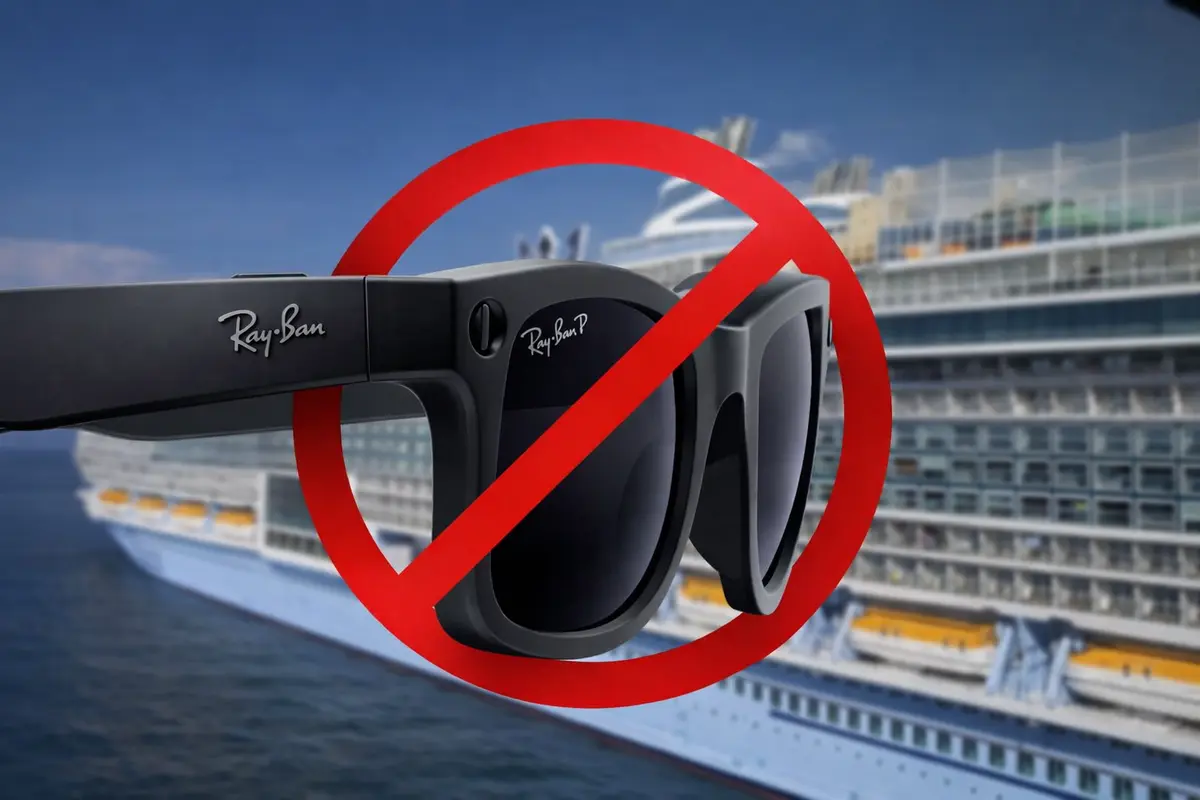
Royal Caribbean has updated its prohibited-items guidance to restrict where recording-capable smart glasses can be used onboard, a change the cruise line ties to guest privacy and shipboard security.
The revised guidance also reorganizes the broader prohibited-items list with clearer subheadings and more detailed explanations aimed at helping guests make packing decisions, including clarifications on everyday questions such as snacks, pets, and hair tools.
What changed in Royal Caribbean’s prohibited-items guidance
Royal Caribbean’s refreshed prohibited-items information is presented in a more scannable format, with added detail on when certain items are allowed, not only when they are banned. The intent, according to the updated presentation, is to reduce uncertainty at embarkation screening and onboard, particularly for newer consumer technology and borderline items.
Royal Caribbean also emphasizes that policies can evolve. The cruise line says the prohibited-items list is “fluid and always under review,” and adds that “the ship’s security team may prohibit or confiscate any item they determine is not permissible onboard.”
Smart glasses: allowed onboard, but restricted in sensitive areas
Royal Caribbean’s updated guidance addresses “smart” glasses that can record audio and video, a category that can include products from major manufacturers such as Meta and others. While guests may bring smart glasses onboard, Royal Caribbean restricts their use in certain venues.
In its guidance, Royal Caribbean lists several areas where recording-capable smart glasses are not permitted to be used, and indicates the list is not exhaustive.
- Public restrooms
- Youth Program areas
- Medical areas
- The casino
Royal Caribbean warns that enforcement can include confiscation. One notice states: “If a guest fails to abide by this policy, the chief security officer and captain are authorized to confiscate the smart glasses.” Another version of the policy language indicates confiscation may be carried out by the chief security officer or other onboard staff.
Guidance for guests with prescription smart glasses
For guests whose smart glasses also function as prescription eyewear, Royal Caribbean advises bringing a backup pair of non-smart glasses. The cruise line’s guidance is designed to ensure guests still have suitable eyewear available if smart glasses cannot be used in restricted areas.
How Royal Caribbean and other lines are approaching privacy concerns
The rise of smart glasses with discreet recording capability has prompted broader discussion in travel and hospitality about balancing new technology with guest privacy, particularly in environments where other passengers may be unaware they are being recorded.
Royal Caribbean’s approach is not an outright ban on carrying the devices, but a restriction on where they can be used, backed by the possibility of confiscation for violations.
MSC Cruises has implemented a similar posture focused on privacy. Its website specifies that devices capable of covertly recording or transmitting data, including smart glasses, are strictly banned in public areas of its ships. Like Royal Caribbean, MSC reserves the right to confiscate items if used in prohibited spaces.
Elsewhere in the travel sector, Disney has partnered with Meta to explore potential uses of smart glasses in its theme parks, though it has not outlined a comparable cruise-style restriction tied to onboard privacy concerns.
Cybersecurity language broadened to cover networking and interference risks
Alongside the smart-glasses update, Royal Caribbean has refined language tied to “cybersecurity and deliberate electronic crime equipment.” The updated wording more explicitly includes “satellite dishes, routers, and other networking equipment,” as well as “any other deliberate electronic interference which would constitute criminal activity.”
Royal Caribbean has, over time, updated its prohibited-items list to include equipment such as portable routers, signal jammers, and other devices that could interfere with a ship’s critical systems. While some travelers have historically carried travel routers to extend a single internet connection across multiple devices, the clarified wording underscores concern about unauthorized networks and the potential for disruption of onboard systems.
Royal Caribbean also frames the issue as extending beyond privacy alone. Recording-capable devices could, in theory, be used to capture security protocols or map a ship’s layout, adding to broader security considerations as ships rely on digital infrastructure for navigation, communication, and onboard services.
Consulting firm Protiviti, in commentary cited alongside the broader cybersecurity discussion, said: “This widespread prioritization underscores the almost universal recognition that cybersecurity is no longer a siloed IT issue but rather a strategic enterprise risk with implications for brand reputation, operational continuity, and regulatory compliance.”
Everyday packing questions: snacks, pets, and hair tools
Royal Caribbean’s reorganized guidance also elevates common, practical questions that can affect families and guests planning for formal nights or day-to-day convenience onboard.
Snacks
Royal Caribbean now explicitly states that guests may bring snacks under certain conditions. The cruise line says guests can bring “a sensible amount” of favorite snacks as long as they are pre-packaged and sealed, though it does not define an exact quantity.
Pets
The pet policy is unchanged, but easier to find in the reorganized layout: only service animals are allowed onboard, with Royal Caribbean directing guests to its accessibility information for details.
Irons, steamers, and other heat-producing appliances
Royal Caribbean’s prohibited-items rules do not allow certain heat-producing appliances, including items commonly asked about such as irons and garment steamers. The guidance also notes that some other commonly packed electrical items can be restricted, including certain extension cords.
Beyond those categories, Royal Caribbean’s reorganized sections also address a range of other packing topics, including baby-related items, sporting goods, luggage sizing, and hair tools.
Destination-specific restrictions Royal Caribbean highlights
Royal Caribbean’s guidance also flags that some restrictions may depend on local rules in destinations on an itinerary, and that consequences can extend beyond shipboard enforcement. Examples referenced in the guidance include Mexico’s restrictions involving public smoking and vapes, Barbados’ restriction on camouflage clothing, and handling requirements for ulu knives that guests may purchase as souvenirs on Alaska itineraries.
What to do before embarkation day
Royal Caribbean’s revised guidance underscores two practical realities for travelers: new products can prompt policy changes, and onboard enforcement may rely on security judgment. Guests traveling with wearable tech, recording tools, or connectivity gear may want to pack backup options, and review the most current prohibited-items guidance close to sailing to reduce the risk of delays, confiscation, or onboard disruption.
Frequently Asked Questions (FAQs)
Are smart glasses completely banned on Royal Caribbean ships?
No. Guests are allowed to bring smart glasses onboard, but Royal Caribbean restricts the use of smart glasses that can record audio and video in certain areas, including public restrooms, Youth Program areas, medical areas, and the casino.
What happens if a guest uses smart glasses in a restricted area?
Royal Caribbean warns that enforcement can include confiscation. The cruise line states: “If a guest fails to abide by this policy, the chief security officer and captain are authorized to confiscate the smart glasses.”
Why does Royal Caribbean restrict smart glasses in some areas?
Royal Caribbean links the restrictions to privacy and security concerns. Smart glasses can capture audio and video discreetly, which can create privacy issues in sensitive areas such as restrooms and medical facilities, and the technology could theoretically be used to record security procedures or other shipboard operations.
Can I bring snacks on a Royal Caribbean cruise?
Yes. Royal Caribbean says guests can bring “a sensible amount” of favorite snacks as long as they are pre-packaged and sealed.
Does Royal Caribbean allow pets onboard?
Only service animals are permitted. Royal Caribbean directs guests to its accessibility information for additional details.