Port of Cleveland Projects Record 2026 Cruise Season With 55 Calls
Cleveland’s outlook shows Great Lakes cruising is no longer niche, but ports still win or lose itineraries on docks, labor deals, and the visitor experience onshore.
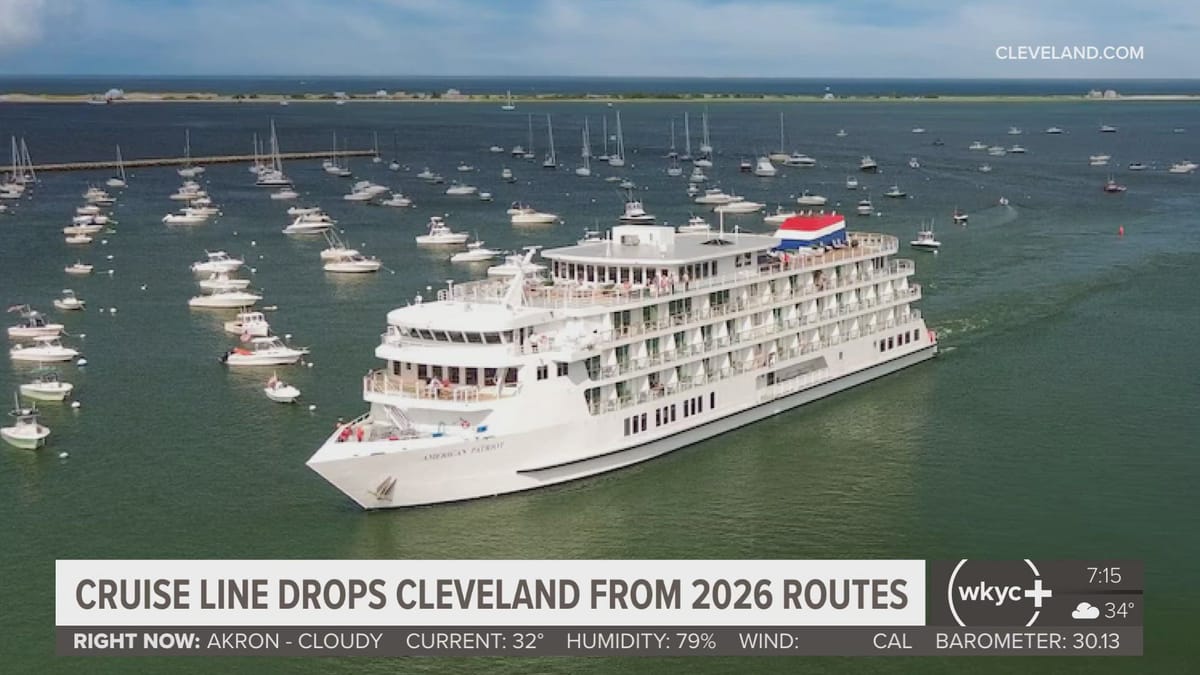
The Port of Cleveland is projecting a record 2026 cruise season with 55 ship calls expected to bring more than 9,000 passengers. The milestone comes even as Cleveland loses a prominent new vessel, American Cruise Lines’ 130-passenger American Patriot, after the company removed the city from its Lake Erie plans.
Cleveland’s 2026 cruise season: more calls, more passengers
Port officials say 2026 is on track to be Cleveland’s busiest cruise year since the city welcomed its first cruise ship in 2017. The port estimates cruise passengers spend about $150 per person while visiting Cleveland, adding up to roughly $1.3 million a year in direct visitor spending, with total economic impact exceeding $2 million annually when dock operations, transportation, and other indirect spending are included.
The 2026 schedule will reach a new high in calls even without American Patriot, which had been positioned as a Cleveland start-and-end itinerary that can generate additional hotel nights and related spending.
Why American Patriot dropped Cleveland
American Cruise Lines, based in Connecticut, first said in September 2023 that some Great Lakes itineraries would start and end in Cleveland, then revised its plan about a month later, shifting departures to Buffalo, adding a stop in Toledo, and removing Cleveland. The company has attributed the change to docking limitations.
Alexa Paolella, public relations manager for American Cruise Lines, said, “Unfortunately, we have been unable to find a suitable docking location in Cleveland for 2026 that meets American’s operational needs, but we look forward to ongoing discussions with the city.” Paolella later declined additional comment.
Local labor leaders pointed to a separate friction point around who handles line work at the dock. John D. Baker, president of International Longshoremen’s Association Local 1317 in Cleveland, said the company did not want to pay for dock labor to tie up at the Port of Cleveland. “They feel they can do it on their own,” Baker said, adding that the union still hopes to reach an arrangement that brings the ship to Cleveland. In an earlier account of the dispute, Baker also suggested the company was seeking to handle docking operations independently to bypass union fees, and that the approach could meet resistance in other ports, including Buffalo.
Docking costs, labor requirements, and what ports can accommodate
Cruise itineraries on the Great Lakes are shaped by practical constraints that include whether a dock can accommodate a vessel, the shore experience for passengers, and the overall cost of calling at a port, including labor arrangements.
Roger Blum, principal at Cruise & Port Advisors in Florida, said ports have different fee structures and that costs can include “ancillary costs,” including situations where private dock workers are required.
In Cleveland, cruise ships tie up at Dock 28, just west of Huntington Bank Field, adjacent to the port’s cargo operations. The port’s cruise charges include:
- Per-passenger dockage: Cruise ships are assessed $15 per passenger.
- Ship-size charge: The port also charges 7.5 cents per gross ton.
- Customs facility investment: Port leaders have said the passenger fee is partly intended to help recoup a 2019 cruise-related investment, an $800,000 U.S. Customs and Border Protection facility built to process cruise passengers arriving from Canada, with restrooms, air conditioning, and indoor waiting areas.
Beyond port-set fees, Cleveland’s cruise operations also rely on a shore-services structure that includes third-party support. Dave Gutheil, chief operating officer at the Port of Cleveland, said cruise lines calling in Cleveland contract with Logistec, which supports docking and other shore tasks and manages the union labor used to handle lines and some supply-related work. “All the cruise lines that come into Cleveland have an agreement with Logistec,” Gutheil said.
Cleveland will keep Dock 28 and focus on upgrades
Port leaders say Cleveland will continue using its current downtown dock rather than relocating it along the lakefront, and will pursue appearance and access improvements instead. For years, the city had discussed concepts that would move cruise docking east along the waterfront, including ideas near the Rock & Roll Hall of Fame or the East 9th Street Pier, but the current plan is to stay put.
Gutheil said the decision was influenced by changing redevelopment priorities along the waterfront, including the Cleveland Browns’ plan to leave the downtown waterfront area. “It makes more sense to keep things the way they are, and improve that space,” Gutheil said.
He described Dock 28 as an industrial setting next to cargo operations, with heavy equipment nearby. “Now that everybody knows the Browns are moving, that creates another opportunity to reimagine what the lakefront is going to look like and how we can make the experience better for passengers,” Gutheil said.
Gutheil said there is no set timeline or budget for dock improvements, and that the work is expected to be folded into broader waterfront redevelopment efforts.
Waterfront redevelopment planning and the “front door” to future cruises
Redevelopment planning is underway for a large area between the port and the Rock Hall. The nonprofit North Coast Waterfront Development Corp. has selected DiGeronimo Development as master developer for a 50-acre site currently dominated by the stadium and surface parking lots.
Early concepts include housing, retail, a hotel, walking paths, recreational areas, and an indoor-outdoor music venue designed for 8,000 to 10,000 seats, with a more detailed master plan expected later this year.
Scott Skinner, executive director of the North Coast Waterfront Development Corp., linked that work to the visitor experience for cruise traffic. “The port’s cruise business continues to grow,” Skinner said. “I’m excited to see how we can create a better front door for future cruises.”
Buffalo and Toledo position for a larger role on Lake Erie
American Patriot’s revised itinerary has helped elevate Buffalo and Toledo in Lake Erie cruise planning, as multiple cities pursue cruise-related visitor spending and work to improve docking options.
Buffalo is pursuing a permanent cruise terminal on the city’s Outer Harbor, expected to open in 2027, with plans that include restrooms and a customs area. Because the terminal is not expected to be ready for the 2026 season, Mark Wendel, president of the Erie Canal Harbor Development Corp., said American Cruise Lines is negotiating a temporary docking arrangement in Buffalo for 2026.
Wendel argued that multiple ports can benefit from rising interest in Great Lakes itineraries. “This is not a competition,” Wendel said. “There’s enough for everyone to have stops, and to assist in the growth of Great Lakes cruising.”
A 2024 study commissioned by the Erie Canal Harbor Development Corp. concluded that Buffalo could attract as many as 12,000 cruise guests by 2035 if the city makes the necessary investments. Local officials have also promoted Buffalo’s proximity to Niagara Falls and historic landmarks as potential draws for cruise passengers.
American Cruise Lines stands out in the Great Lakes market for planning itineraries entirely between U.S. ports, meaning guests do not need a passport or customs processing for international travel. In 2026, the company plans to sail its nine-day American Great Lakes Cruise from Buffalo to Milwaukee four times, with stops including Toledo and Detroit, Alpena, Mackinac Island, and Holland, Michigan.
Toledo, meanwhile, has been building its own modern cruising footprint. Victory Cruise Lines made its first call in Toledo in late May 2025, using the city as a substitute for a planned Detroit visit while Detroit prepared for the Grand Prix. The ships docked at the Amrize Cement Terminal on the Maumee River, according to Kayla Cunningham, communications manager for the Toledo Port Authority.
Cunningham said Amrize did not charge Victory to dock, while the cruise line covered security and other costs, and that it has not been decided whether the same dock will be used for cruise calls in 2026. In Toledo, attraction partners are also exploring how to host shore visits. Sara Smith, director of institutional advancement at the National Museum of the Great Lakes, said she has been working with both Victory and American Cruise Lines on itinerary concepts and docking possibilities near the museum. “We believe it’s a perfect fit for Great Lakes cruisers to have the opportunity to visit our one-and-only national museum,” Smith said.
Great Lakes cruise growth, and the competition for itineraries
Cleveland’s cruise business has expanded as Great Lakes itineraries have gained traction, with lines such as Viking, Pearl Seas, and Victory Cruise Lines offering trips that highlight regional history, museums, and cultural landmarks. As more ports enter or re-enter the market, Cleveland, Buffalo, Toledo, and other cities on the lakes are competing on infrastructure, cost structures, and the distinctiveness of the shore experience.
For Cleveland, the near-term picture is a record schedule in 2026 paired with renewed focus on the passenger arrival experience at Dock 28. With a broader lakefront redevelopment plan expected to take clearer shape later this year, port leaders say their next steps are to pursue upgrades that make the dock function better as the city’s “front door” for future cruise calls.
Frequently Asked Questions (FAQs)
Where do cruise ships dock in Cleveland?
Cruise ships tie up at Dock 28, just west of Huntington Bank Field, in an area adjacent to the Port of Cleveland’s working cargo facilities.
Why did American Cruise Lines remove Cleveland from American Patriot’s 2026 plans?
American Cruise Lines said it could not find a suitable docking location in Cleveland that met its operational needs for 2026. Local longshoremen said the dispute also centered on dock labor costs and whether the cruise line would use union labor to handle lines.
What fees does the Port of Cleveland charge cruise ships?
Cleveland assesses $15 per passenger plus 7.5 cents per gross ton. The port has said the passenger fee helps offset cruise-related investments, including its $800,000 U.S. Customs and Border Protection facility that opened in 2019 to process cruise passengers arriving from Canada.
When is Buffalo’s new cruise terminal expected to open?
Buffalo’s Outer Harbor cruise terminal is expected to open in 2027, and local officials say temporary docking arrangements are being pursued for the 2026 season.
What economic impact does cruise tourism have on Cleveland?
The port estimates cruise passengers spend about $150 per person while visiting Cleveland, translating to roughly $1.3 million annually in direct visitor spending. When indirect spending is included, the port puts total economic impact at more than $2 million per year.