NYCEDC Unveils Plan to Rebuild, Electrify Manhattan Cruise Terminal
New York is trying to prove a busy urban cruise port can plug into clean power without losing the waterfront, a bet that could shape how other cities modernize aging piers.
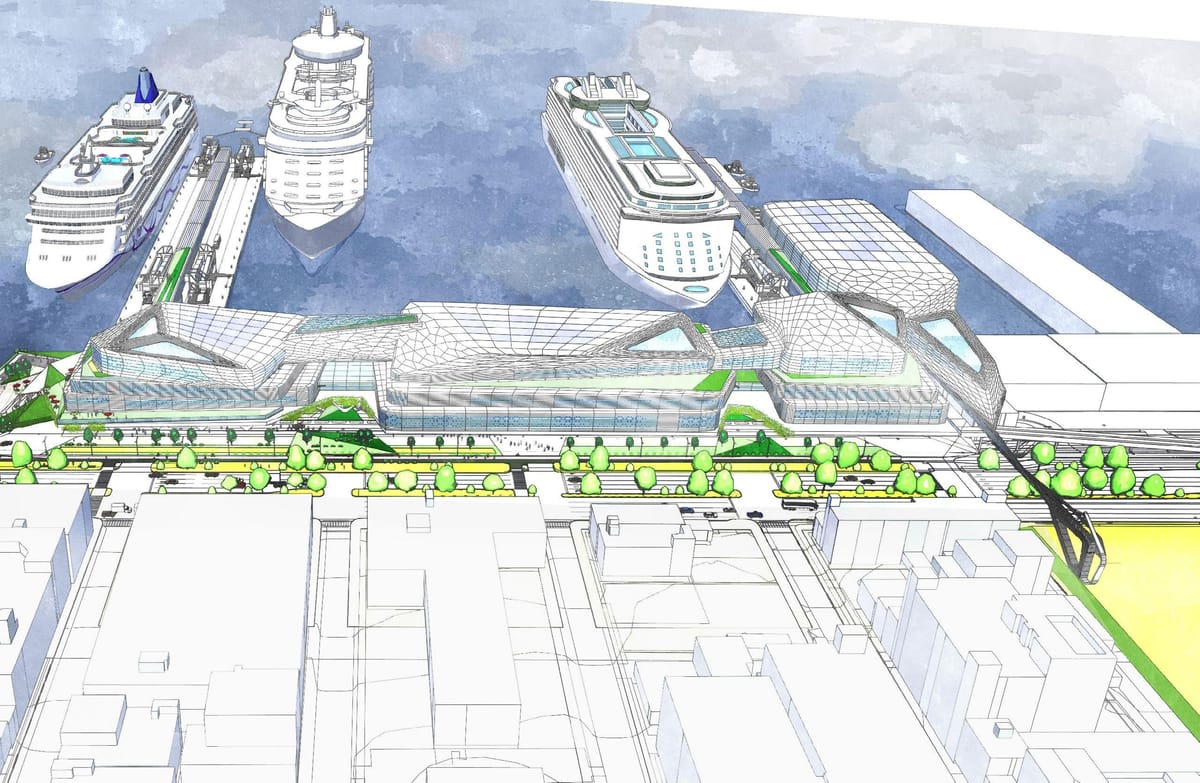
New York City Economic Development Corporation (NYCEDC) has rolled out a master plan to redevelop and modernize the Manhattan Cruise Terminal, pairing a rebuild of decades-old infrastructure with a push for full electrification through shore power.
What NYCEDC says the Manhattan terminal rebuild would deliver
NYCEDC’s concept would replace roughly 90-year-old piers and facilities with new, expanded piers and a consolidated terminal building intended to handle larger ships and improve operations. The agency says the redesigned terminal could berth up to two cruise ships carrying about 8,000 passengers each, plus a third ship carrying about 6,000 passengers, at the same time.
NYCEDC has framed the project as both a cruise-industry modernization effort and a package of “quality-of-life” improvements for nearby neighborhoods and visitors along Manhattan’s west side. The plan follows a 12-month community engagement process and is intended to improve how the site connects with Hudson River Park and surrounding streets.
Andrew Kimball, NYCEDC president and CEO, said the master plan is intended to “redefine the future of cruising in New York City” by modernizing and electrifying the facility while also expanding public access to the waterfront. In a separate statement on the broader vision for the project, Kimball called the redevelopment “a bold, forward-looking initiative that addresses the urgent demands of the cruise industry while fostering environmental stewardship and strengthening ties with the local community.”
Electrification plans center on shore power and a $20 million initial commitment
A central element of the master plan is a fully electrified port, including shore power infrastructure meant to reduce emissions while ships are docked by allowing them to connect to the local electrical grid instead of running onboard engines. NYCEDC said it has an initial $20 million commitment for shore power at the Manhattan Cruise Terminal.
NYCEDC also said shore power would extend beyond cruise operations, with harbor vessels such as tugs able to plug in to recharge onboard batteries. The agency described this as a pathway for tug operations to begin shifting toward hybrid and fully electric propulsion using onboard battery storage.
Public access and waterfront design priorities highlighted in the planning process
NYCEDC said community feedback helped shape the plan’s public-facing elements, including better access to the waterfront, more efficient passenger movement, and clearer community access to the site.
Design elements highlighted through the engagement process included landscaping, flexible public gathering areas, public restrooms, and pedestrian and cyclist improvements such as signals and wider sidewalks. NYCEDC has also described integrating the terminal more closely with Hudson River Park through features such as pedestrian plazas and improved cyclist pathways.
Federal approvals and the debate over extending the terminal into the Hudson River
As the planning discussion has advanced, NYCEDC has also begun steps tied to federal approvals that would be needed for any expansion into federally controlled waters. At a meeting of Manhattan Community Board 4’s Waterfront, Parks & Environment Committee, NYCEDC described seeking congressional authorization through the Water Resources Development Act process.
Tara Das, an NYCEDC project manager, told the board, “We need to build more out into the water.” Materials presented to the committee depicted a future complex shifted hundreds of feet westward, changing the terminal’s footprint in the river. The concept shown included removal of Pier 90 and reconstruction of adjacent pier infrastructure, along with a widened working apron extending into the Hudson.
NYCEDC has connected the broader rebuild to accommodating larger ships, improving security and logistics, and addressing climate and flood-resilience shortcomings in existing facilities. The agency also said the current piers do not meet FEMA flood standards and that the waterfront layout is constrained for modern cruise operations.
Environmental concerns have been a focal point of pushback from some community voices. Tom Fox, founding president of the Hudson River Park Conservancy, warned that creating new land for cruise terminal infrastructure would trigger significant environmental opposition, pointing to the Hudson’s status as an estuarine sanctuary. In an earlier critique of the approach, Fox argued that landfilling the river runs counter to environmental stewardship, saying, “The Hudson River has already given more than enough. Our focus should be on repairing existing piers and improving sustainability rather than further encroachment into the estuary.”
Community board members have also emphasized that they were not voting on final designs, but were being asked about supporting early steps in what NYCEDC has described as a longer process. Separately, local lawmakers have pushed for shore power at the Manhattan Cruise Terminal to be completed by 2030, regardless of whether the larger rebuild proceeds on a longer timeline.
A broader transportation role, including freight and ferry concepts
Beyond cruise calls, NYCEDC’s plan positions the Manhattan Cruise Terminal as part of a broader transportation network. The agency said the site could function as a multimodal hub supporting passenger movement and freight delivery.
One proposed element is a “Blue Highways” landing intended to facilitate marine freight distribution. NYCEDC said shifting some freight to water could reduce truck traffic and support zero-emission last-mile delivery. The plan also contemplates a ferry stop for potential Hudson River service, which would add another passenger access option.
Brooklyn shore power expansion as a near-term benchmark
While the Manhattan terminal plan remains in planning, NYCEDC has pointed to recent shore power expansion at the Brooklyn Cruise Terminal as evidence of near-term progress. NYCEDC said additional infrastructure and a Mobile Cable Positioning System helped enable more ships to connect along the berth.
- MSC Meraviglia connection: NYCEDC said MSC Cruises’ MSC Meraviglia connected to shore power at the Brooklyn Cruise Terminal for the first time on October 26.
- Enchanted Princess connection: Princess Cruises’ Enchanted Princess connected to shore power on Aug. 30, 2025, NYCEDC said.
- Regular use by multiple lines: NYCEDC said Cunard and Princess began connecting regularly as well, and the agency has cited the work as part of a broader effort to electrify New York’s waterfront.
Kimball said the MSC connection and recent Cunard and Princess connections “deliver on years of community feedback” and represent a step forward in electrifying the city’s waterfront.
Lynn Torrent, president of MSC Cruises North America, said MSC Cruises is committed to connecting to shore power when it is available as part of the company’s emissions-reduction efforts. Michele Francioni, MSC Cruises’ chief energy transition officer, called shore power availability at ports an important element in the company’s decarbonization efforts, and said, “The availability of shore power at ports like Brooklyn underscores our commitment to achieving net zero emissions.”
Katie McAlister, president of Cunard, said the company supports expansion of shore power at Brooklyn and is looking to plug in on more New York calls as it works toward its emissions goals.
NYCEDC has tied these projects to the scale of the city’s cruise business, saying Manhattan and Brooklyn terminals together handled nearly 1.5 million cruise passengers in 2024.
MSC Cruises has also outlined its fleet readiness for shore power, saying shore power capability has been standard on its newbuilds since 2017 and that the company is retrofitting other ships. MSC said 16 of its 23 ships are currently equipped, with that number expected to rise to 17 by the end of the year.
NYCEDC’s Manhattan Cruise Terminal plan now moves forward alongside the Water Resources Development Act authorization effort that would be required for any expansion into the Hudson River, with broader design, environmental review, and funding questions still ahead, even as shore power use continues to expand at Brooklyn and policymakers press for Manhattan shore power by 2030.
Frequently Asked Questions (FAQs)
What is the timeline for the Manhattan Cruise Terminal redevelopment?
NYCEDC has described the master plan as being in the planning and early-process stage, with broader design, environmental review, and funding questions still ahead. Separately, local lawmakers have pushed for shore power at the Manhattan Cruise Terminal to be completed by 2030, regardless of whether the larger terminal rebuild proceeds on a longer timeline.
Why is shore power important for cruise terminals?
NYCEDC and cruise operators have described shore power as a way to reduce emissions while ships are docked by allowing them to plug into the local electric grid and shut down onboard engines. NYCEDC has also said harbor vessels such as tugs could use shore power to recharge onboard batteries, supporting a shift toward hybrid and fully electric operations.
What federal process is NYCEDC pursuing for potential expansion into the Hudson River?
NYCEDC said it is seeking congressional authorization through the Water Resources Development Act process, which it has described as necessary to extend terminal infrastructure into federally controlled waters.
What progress has been made at the Brooklyn Cruise Terminal?
NYCEDC said shore power expansion at the Brooklyn Cruise Terminal, including additional infrastructure and a Mobile Cable Positioning System, has enabled more ships to connect along the berth. NYCEDC cited shore power connections by MSC Meraviglia and Enchanted Princess, and said Cunard and Princess have begun connecting regularly.
How many cruise passengers used New York City’s cruise terminals in 2024?
NYCEDC said nearly 1.5 million cruise passengers moved through the Manhattan and Brooklyn cruise terminals in 2024.