Norwegian Orders Third Regent Seven Seas Prestige-Class Ship for 2033
With another Prestige-Class build, Norwegian is doubling down on ultra-luxury cruising’s growth, locking in scarce shipyard slots as brands compete on space and service rather than scale.
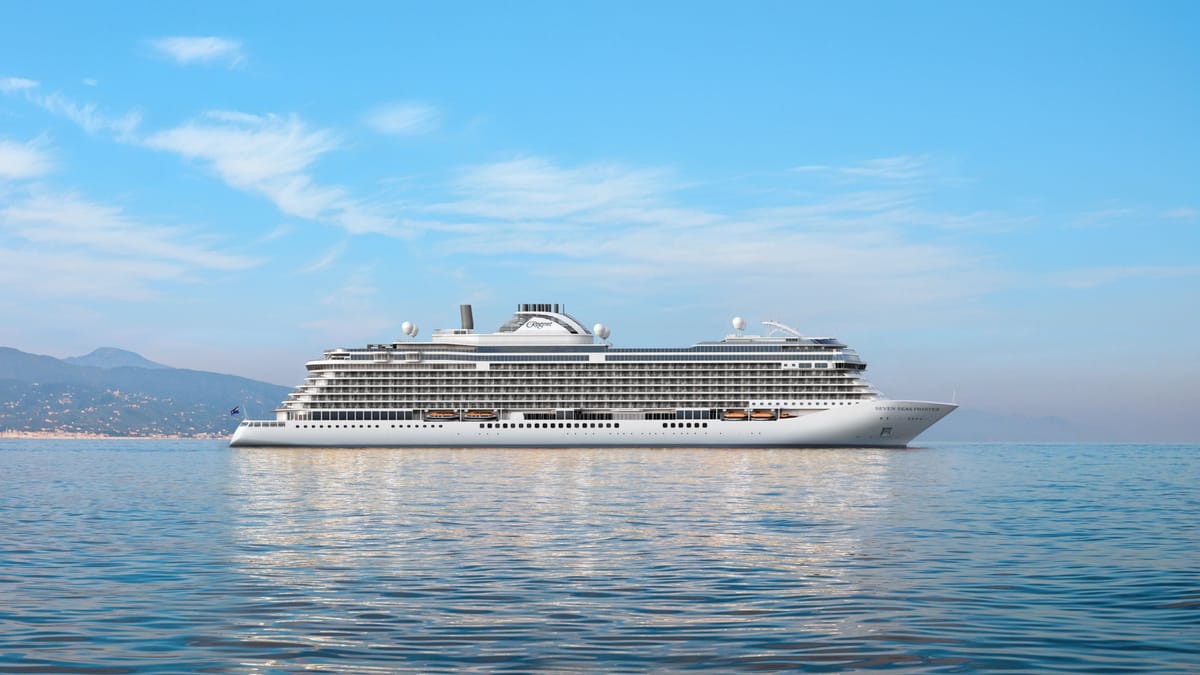
Norwegian Cruise Line Holdings (NCLH) has confirmed a new shipbuilding order with Italian yard Fincantieri for a third Prestige-Class vessel for Regent Seven Seas Cruises, with delivery scheduled for 2033. The agreement extends Regent’s pipeline of new ships in the ultra-luxury segment beyond the class’s first two deliveries planned for 2026 and 2030.
Project timing, yard, and what has been disclosed so far
NCLH said the third ship will be built by Fincantieri in Italy and will join Seven Seas Prestige, which is due to debut in 2026, and a second Prestige-Class ship slated for a 2030 launch. The companies have positioned the series as a next-generation platform for Regent’s all-inclusive ultra-luxury product, with ships designed to be larger than prior Regent vessels while keeping guest counts relatively restrained for the segment.
- Delivery schedule: Seven Seas Prestige is due in 2026, a second Prestige-Class ship is scheduled for 2030, and the newly ordered third ship is scheduled for 2033.
- Shipyard: Fincantieri will build the third ship in Italy, continuing its long-running construction relationship with NCLH across multiple brands.
- Size and capacity: The third ship is planned at 77,000 gross tons, about 257 meters long, with capacity for 822 guests.
The agreement is subject to financing and standard terms and conditions typical for newbuild contracts. Fincantieri described the order value as “large,” a category it uses for agreements in the range of 500 million to 1 billion euros (about $578 million to $1.16 billion).
How Regent is positioning the Prestige Class onboard experience
NCLH has described the Prestige Class as Regent’s first new ship class in roughly a decade, following the introduction of the Explorer-Class ships. For Seven Seas Prestige, the company has said the ship will be about 40 percent larger than prior Regent ships while carrying only around 10 percent more guests, a combination intended to support high space-per-guest levels.
NCLH has also detailed a 822-guest capacity supported by 630 crew members for Seven Seas Prestige, and has highlighted the emphasis on space-to-guest and crew-to-guest ratios as part of the onboard service model.
Suites, public spaces, and dining plans
Regent has outlined an all-balcony suite layout for the class, with 12 suite categories and four new suite types planned across the design. Named accommodations referenced for the class include the Skyview Regent Suite, along with two-level Skyview and Grand Loft Suites.
Regent has described the Skyview Regent Suite as a two-level accommodation offering 8,794 square feet of indoor living space plus an additional 3,700 square feet of outdoor balcony space. The company has characterized it as the largest suite in the history of ultra-luxury cruises, and said it includes amenities such as a private gym, an in-suite sauna, and skylights, at a rate of $25,000 per night.
Design elements disclosed to date for the Prestige-Class public areas include the Starlight Atrium and Galileo’s Bar. On the culinary side, Regent has said the ships will offer 11 dining experiences, including the Mediterranean-inspired Azure concept, as well as returning venues such as Chartreuse, Prime 7, and Pacific Rim; another new dining venue is planned to be announced closer to the ships’ debut.
Environmental technology and design priorities
NCLH has said the Prestige-Class ships will incorporate advanced environmental technologies. The company has described the focus as aligning with broader sustainable cruising efforts, including energy efficiency and emissions reduction, alongside the class’s emphasis on space-per-guest levels.
Executive comments and the NCLH-Fincantieri relationship
Jason Montague, Chief Luxury Officer at Norwegian Cruise Line Holdings Ltd., tied the third ship to Regent’s long-range planning in the category. “This newbuild order continues our measured, strategic expansion within the luxury space,” Montague said. He added, “It reflects our confidence in the growing demand for Regent’s best-in-class offering.”
From the shipbuilder side, Fincantieri CEO and Managing Director Pierroberto Folgiero described the order as another marker of the relationship between the two companies. “This latest contract confirms the trust” Norwegian Cruise Line Holdings places in Fincantieri, Folgiero said, while pointing to “innovative, sustainable, and exquisitely crafted ships” as part of the yard’s focus for the segment. In a separate statement, Folgiero also said, “Our collaboration with Norwegian Cruise Line Holdings is rooted in craftsmanship and shared pursuit of perfection.”
Fincantieri has delivered 10 ships across NCLH’s brands and, according to the shipbuilder, its current orderbook includes 13 additional vessels spanning Norwegian Cruise Line, Regent Seven Seas Cruises, and Oceania Cruises.
How the order fits NCLH’s broader luxury strategy and fleet activity
NCLH President and CEO Harry Sommer has described the luxury segment as a key opportunity area for the company, including its Regent and Oceania brands. On the company’s third-quarter earnings call, Sommer said both brands were positioned to capture demand, and he described Regent as the “pinnacle” of the all-inclusive ultra-luxury segment.
Sommer also said the company brought back Montague to lead both Regent and Oceania to support the next phase of growth, including involvement in a luxury fleet management program and a pipeline of six luxury ships that includes Oceania Allura and Seven Seas Prestige.
Alongside newbuild development, NCLH has pointed to near-term ship upgrades for Regent’s existing fleet. Seven Seas Mariner has entered drydock for what Sommer described as a full transformation, including refreshed public spaces and an enhanced pool grill with a wood-fired pizzeria concept, while Seven Seas Voyager is scheduled for a similar revitalization when it enters drydock next year. NCLH has also said Seven Seas Navigator will undergo a multi-million-dollar refurbishment in late 2026.
Separately, Oceania Allura has begun its first winter season of Mediterranean sailings, as NCLH highlights luxury travel demand across both brands. For Regent, the next major milestones remain the 2026 debut of Seven Seas Prestige, followed by the second Prestige-Class ship in 2030 and the newly ordered sister ship in 2033.
Frequently Asked Questions (FAQs)
When will Regent’s third Prestige-Class ship be delivered?
NCLH and Fincantieri have said the third Prestige-Class ship is scheduled for delivery in 2033. It follows Seven Seas Prestige, due to debut in 2026, and a second Prestige-Class ship scheduled for 2030.
How big will the third Prestige-Class ship be?
The ship is planned at 77,000 gross tons and about 257 meters long, with accommodations for 822 guests.
What is known about suites on the Prestige Class?
Regent has outlined an all-balcony suite design with 12 suite categories and four new suite types across the class. Named accommodations referenced include the Skyview Regent Suite, along with two-level Skyview and Grand Loft Suites; Regent has said the Skyview Regent Suite spans 8,794 square feet indoors plus 3,700 square feet of balcony space and carries a listed rate of $25,000 per night.
What public spaces and dining venues have been disclosed?
Regent has identified the Starlight Atrium and Galileo’s Bar among the public areas disclosed to date. The company has also said the ships will feature 11 dining experiences, including Azure and returning venues such as Chartreuse, Prime 7, and Pacific Rim, with another new dining venue to be announced closer to the ships’ debut.
What sustainability or environmental features have been mentioned for the new class?
NCLH has said the Prestige-Class ships will incorporate advanced environmental technologies, describing a focus on energy efficiency and emissions reduction as part of the design approach.