Norwegian Epic Rescues 63 Migrants, Diverts to Kalamata
As migrant crossings persist in the Mediterranean, even cruise vacations can turn into rescues, underscoring how maritime law and tourism now share the same sea lanes.
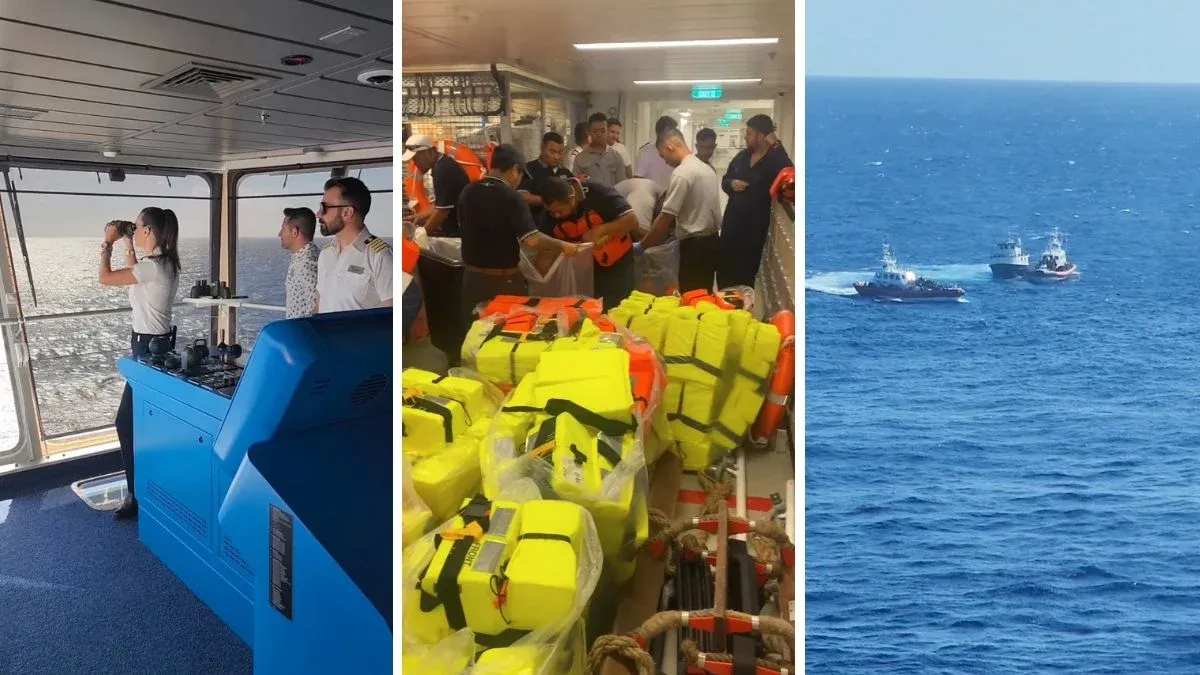
Norwegian Cruise Line’s Norwegian Epic rescued 63 people stranded at sea on Oct. 22 in the Ionian Sea while sailing in Greek waters, diverting during an 11-night Mediterranean itinerary to assist authorities.
The ship altered course after the Unified Search and Rescue Coordination Centre of the Hellenic Coast Guard requested help, according to passenger accounts and statements from Greek and cruise line officials. After the people were brought aboard, Norwegian Epic proceeded to Kalamata, Greece, where they were transferred to local authorities before the cruise continued.
Distress call in the Ionian Sea
Accounts from Greek officials and passengers described the group as migrants found on an overcrowded sailing boat. Several reports placed the rescue roughly 65 nautical miles southwest of Zakynthos, Greece, while other estimates put it farther offshore, with all locations described as in the Ionian Sea off Greece’s western side.
One version of events described the migrants as traveling on an overcrowded 30-foot sailboat. The rescue unfolded as Norwegian Epic was sailing from Civitavecchia, Italy, toward Santorini, Greece, early in its itinerary, which began on Oct. 21.
What passengers said they saw during the rescue
Passengers reported the ship slowed or stopped after the small boat was spotted and that the operation lasted several hours. Some accounts said one of the ship’s tenders was used to approach the vessel and bring people back to the cruise ship.
Diane Wieland, a passenger from New Jersey traveling with her husband, described seeing the crowded boat from Norwegian Epic. “My husband has binoculars, and we look there and we thought, there’s an awful lot of people on that boat,” Wieland told NBC10.
Care provided onboard and transfer in Kalamata
Norwegian Cruise Line said the crew provided immediate assistance once the individuals were on board. In a statement provided to USA TODAY, the cruise line said: “The individuals were brought on board and tended to by the ship’s crew, who provided a medical evaluation, food and other items for their comfort.”
Additional accounts said the group also received water and other care while coordination continued with Greek authorities. Norwegian Epic then sailed to Kalamata under direction from the Rescue Coordination Centre, with the cruise line describing the diversion and transfer as occurring after a “mandatory directive.” Greek authorities said the operation concluded successfully the following morning and without incident.
As of the published updates, neither the cruise line nor Greek officials had released the identities or nationalities of those rescued.
Santorini cancelled as the cruise resumed its route
The diversion disrupted Norwegian Epic’s planned schedule in Greece. The ship had been heading to Santorini for its first port call, but the Santorini stop scheduled for Oct. 23 was cancelled as the ship rerouted to Kalamata for the handover.
After the transfer, Norwegian Epic continued its itinerary, with the next scheduled port listed as Piraeus (Athens) on Oct. 24. Itinerary details associated with the sailing also listed calls in Mykonos, Valletta, Syracuse, Salerno, Livorno, and Cannes before returning to Civitavecchia on Nov. 1.
Norwegian Cruise Line thanked passengers for their cooperation, writing: “We appreciate our guests’ patience and understanding during this unexpected interruption to their journey.” In a letter to guests referenced by passengers, the cruise line also described the diversion as supporting “an important humanitarian mission.”
Maritime obligations and the wider context for rescues
International maritime safety rules, including the International Convention for the Safety of Life at Sea (SOLAS), require ships to assist people in distress at sea when it can be done safely. While cruise ships are not typically primary responders in the Mediterranean, commercial vessels may be asked to help when authorities determine assistance is needed.
The Mediterranean has also been a focal point for migrant and asylum-seeker crossings involving overcrowded and unsafe boats. Agencies including Frontex (the European Border and Coast Guard Agency) and national coast guards patrol parts of the region, sometimes coordinating with commercial vessels during rescue efforts.
Norwegian Epic at a glance
Norwegian Epic is a 155,873-gross-ton cruise ship registered in the Bahamas. The ship entered service in 2009 and can accommodate more than 4,000 guests, with published figures also placing the crew at more than 1,700.
Norwegian Epic continued its cruise after the Oct. 22 rescue and the stop in Kalamata, and no additional official details about the rescued individuals, including their nationalities or intended destination, had been released at the time of the updates.
Frequently Asked Questions (FAQs)
Where did Norwegian Epic rescue the 63 people?
The rescue was reported in the Ionian Sea off western Greece. Several accounts placed it about 65 nautical miles southwest of Zakynthos, though other estimates said it was farther offshore.
Why was Norwegian Epic redirected to Kalamata?
Norwegian Epic sailed to Kalamata under direction from the Rescue Coordination Centre so the rescued individuals could be transferred to Greek authorities. The cruise line said the transfer followed a “mandatory directive.”
Did the rescue affect the ship’s itinerary?
Yes. The planned stop in Santorini on Oct. 23 was cancelled during the diversion and subsequent handover in Kalamata. The ship later resumed its scheduled cruise.
How does maritime law regulate rescue operations at sea?
Under international maritime safety rules, including the International Convention for the Safety of Life at Sea (SOLAS), ships are required to assist people in distress at sea when it is safe to do so.
What care did the rescued individuals receive onboard?
Norwegian Cruise Line said the crew provided a medical evaluation, food, and other items for comfort, and additional accounts said water and other care were provided while the ship coordinated with Greek authorities.