Norwegian Cruise Line to Add Hawaii Accommodations Tax in 2026
Hawaii’s decision to tax cruise passengers like hotel guests signals a broader push to make tourism fund local services, and it could make inter-island cruising a tougher sell.
Norwegian Cruise Line (NCL) has begun notifying guests booked on Hawaii itineraries in 2026 and beyond that a new Hawaii tax will be added to cruise fares starting January 1, 2026, a change that can add tens to hundreds of dollars per traveler depending on the sailing.
What is changing in Hawaii, and when it starts
The change follows Hawaii’s decision to extend its Transient Accommodations Tax (TAT), historically charged on hotels and other lodging, to cruise ship passengers beginning in 2026. Norwegian’s guest notice describes it as a 14% assessment against cruise fare that is prorated based on how much time an itinerary spends in Hawaiian ports.
The combined rate referenced by the cruise line reflects an 11% state component and a 3% county component. In 2025, Hawaii enacted a 0.75% environmental “Green Tax” that is added to the existing 10.25% TAT, bringing the state rate to 11%, with major counties able to levy an additional 3% county lodging tax.
How the cruise fare tax is calculated, and what is excluded
Norwegian’s notice to guests emphasizes that the charge is not necessarily a flat 14% of the entire trip cost. Instead, it is calculated on cruise fare and prorated to the time a vessel spends in Hawaiian ports, a structure that can produce higher totals on itineraries with repeated calls across multiple islands.
The levy applies to base ticket prices only and excludes other spending. Norwegian has told guests the tax does not cover onboard purchases and related add-ons such as spa services, specialty dining, beverages, retail items, and excursions.
Because the charge is tied to fare and itinerary specifics, reported totals vary. Guests booked on 7-night Hawaii sailings have described added amounts of about $250 to $500 per person, with higher totals possible on more expensive bookings. By contrast, guests have cited lower amounts on longer itineraries that spend less time in Hawaii, including Norwegian Spirit’s October 24, 2026, 12-night one-way voyage from Tahiti to Honolulu with additional calls in Kona and Kauai, where travelers reported taxes of roughly $60 to $70 per person depending on fare.
Why Norwegian faces greater exposure than most lines
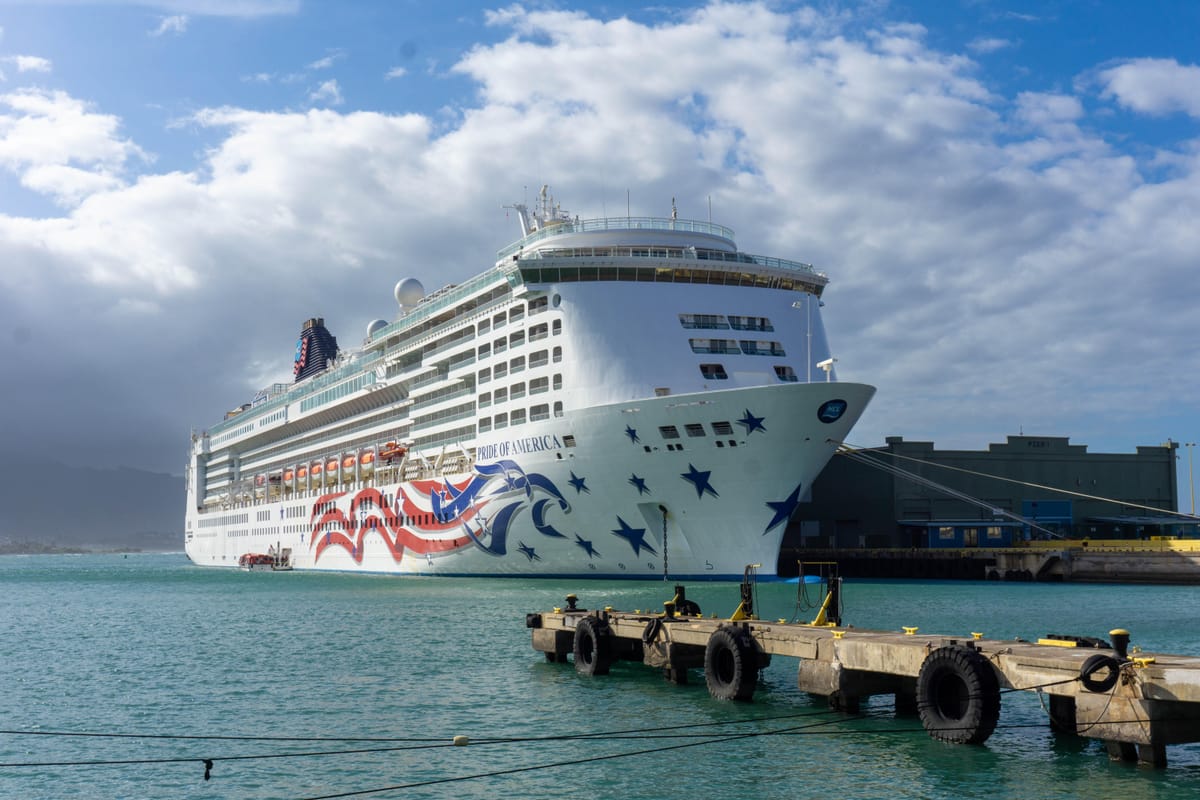
The expanded tax applies to cruise operators calling in Hawaiian waters, but Norwegian is positioned to feel the impact more acutely because it operates Pride of America, the only cruise ship homeported year-round in Hawaii with domestic inter-island sailings. Because the tax calculation is tied to time spent in Hawaii ports, itineraries built around repeated inter-island calls can accumulate higher totals than longer repositioning or transpacific itineraries that include fewer Hawaii port days.
Norwegian also sells itineraries that connect the islands with other destinations in the Pacific, which may produce different tax amounts based on the portion of the sailing spent in Hawaii.
What Norwegian is telling booked guests and how invoices are being handled
In its communication to travelers, Norwegian said Hawaii is expanding the TAT “to now include cruise ship passengers,” and linked the change to the state’s funding priorities. The cruise line also acknowledged the added expense, telling guests, “We understand this change may come as a surprise, and unexpected costs can be frustrating.”
For guests who are already booked, Norwegian has been adding the tax to reservation invoices, with payment due by the final payment date tied to each booking. The company has also said it is working to manage the transition while the law takes effect.
Legal challenge is underway, but the tax is still expected to begin in 2026
Norwegian has told guests it is participating in an industry challenge to the expanded tax while preparing to collect it as required. In its letter, the cruise line wrote, “We believe that this expansion of the TAT is unconstitutional,” and said it is working with Cruise Lines International Association (CLIA) on a legal review.
In a separate statement described to passengers, Norwegian said, “We are actively engaged in legal consultations in collaboration with the Cruise Lines International Association (CLIA) to advocate for a fair resolution,” and that the tax would still be collected unless the legal process results in changes. CLIA, supported by Norwegian and other operators, has filed a lawsuit challenging the tax, arguing it conflicts with constitutional and federal-law limits and would unfairly affect cruise operators. Any decision may take months or longer, meaning the tax is expected to be implemented on January 1, 2026 unless a change is ordered or enacted before then.
Hawaii ties the tax shift to conservation, cultural preservation, and public services
Hawaii officials have linked the expanded tax structure to environmental protection, conservation, and cultural heritage programs. The environmental component has been framed as dedicated funding for climate resilience and sustainability efforts, with projections that the added “Green” fee could generate about $100 million annually.
Governor Josh Green has highlighted the importance of such measures in response to climate impacts, including the Maui wildfires of 2023. County-specific components have been described as supporting public services such as road maintenance, waste management, and emergency response capacity.
Other cruise lines are also alerting passengers
Norwegian is not the only brand contacting travelers about the new Hawaii charge. Disney Cruise Line has also notified passengers on select Disney Wonder sailings about additional taxes tied to Hawaii’s updated TAT rules.
Hawaii is expected to receive cruise calls from a wide range of brands in January 2026, including AIDA Cruises, Princess Cruises, Holland America Line, Carnival Cruise Line, Crystal Cruises, and Regent Seven Seas Cruises, among others. As the effective date approaches, more travelers may see invoice adjustments depending on itinerary and fare structure.
For travelers, the most immediate step is to review booking invoices for newly added government taxes tied to Hawaii, particularly for sailings embarking on or after January 1, 2026. Norwegian has told guests it “remain[s] committed to advocating for a fair and balanced outcome,” and has noted that if the legal challenge or rules change, amounts could be recalculated, potentially resulting in adjustments or refunds.
Frequently Asked Questions (FAQs)
When does the expanded Hawaii cruise tax take effect?
The expanded Transient Accommodations Tax applies to Hawaii cruise sailings embarking on or after January 1, 2026.
How can the total rate reach 14%?
The total referenced to guests combines an 11% state component and a 3% county component. The state portion reflects the existing 10.25% TAT plus a 0.75% environmental “Green Tax,” bringing the state rate to 11%, and some counties can add up to 3% more.
How is the tax calculated for a cruise itinerary?
Norwegian has described it as a 14% assessment against cruise fare that is prorated based on how much time an itinerary spends in Hawaiian ports, meaning sailings with more Hawaii port time can generate higher charges.
What does the Hawaii tax not cover?
The tax applies to base cruise fare and excludes onboard purchases and add-ons described by Norwegian, including spa services, specialty dining, beverages, retail items, and excursions.
Why is Norwegian likely to be affected more than many other lines?
Norwegian operates Pride of America, the only cruise ship homeported year-round in Hawaii offering inter-island cruises. Because the tax is tied to time spent in Hawaii ports, itineraries built around repeated inter-island calls can create proportionally higher exposure than itineraries that only visit Hawaii as part of longer routes.