Norway Clears $782 Million Stad Ship Tunnel for 2027 Start
Kystverket plans one-way transits through the one-point-seven-kilometer tunnel, with scheduled passage times and about ten minutes needed at eight knots.
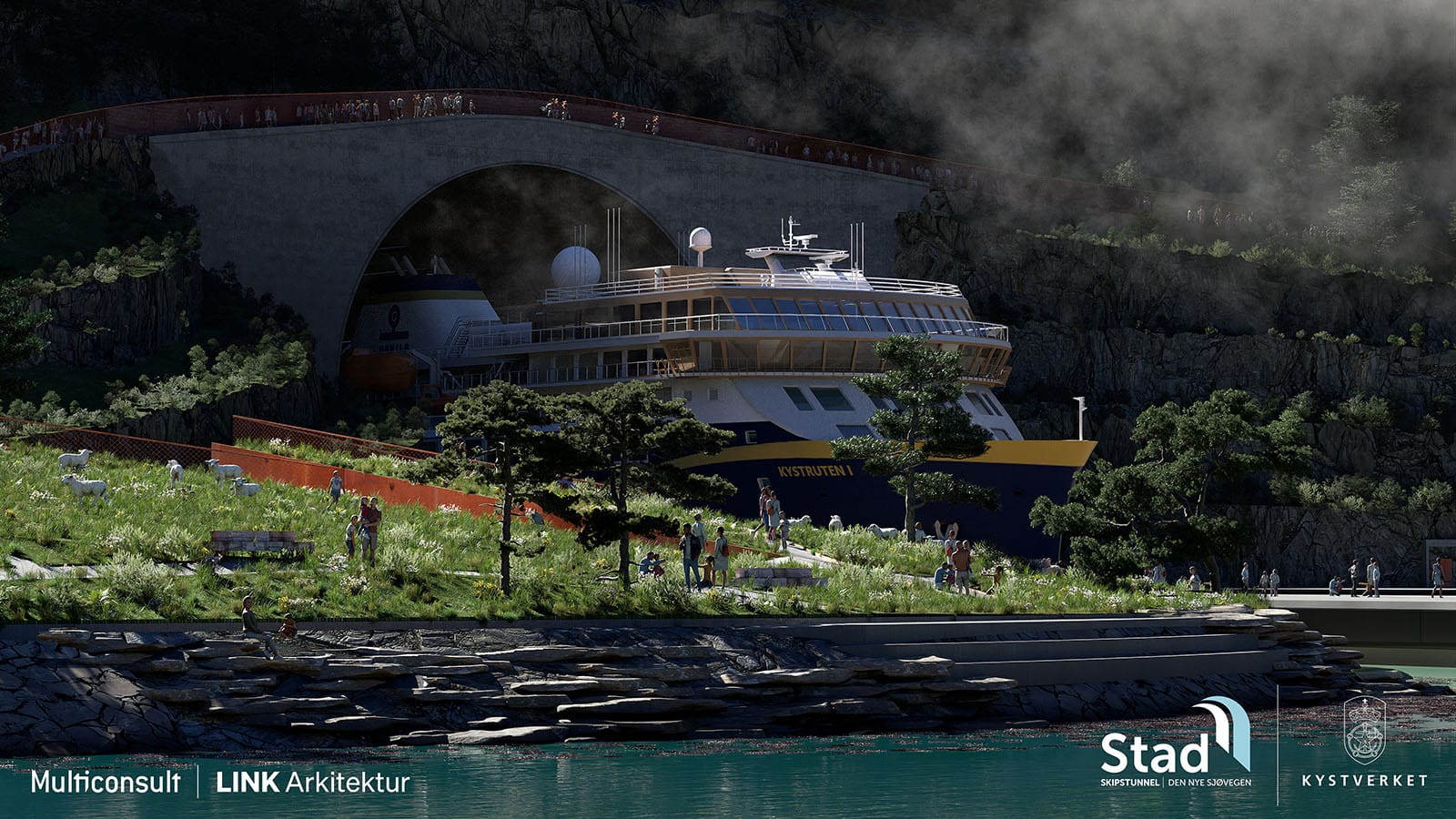
Norway has agreed to move ahead with the Stad Ship Tunnel on an NOK 8.6 billion, roughly $782 million, budget, clearing the main financial hurdle for a maritime passage designed for cruise ships and other large vessels on the country’s west coast. Construction is expected to start in early 2027. The project is still in the planning phase.
The tunnel would allow qualifying vessels to pass through the Stad Peninsula without rounding the exposed waters off Stadlandet, an area known for powerful winds, frequent storms and heavy seas. Norwegian authorities say no comparable structure for seagoing ships exists elsewhere.
Designed for a safer Stadlandet passage
Kystverket, Norway’s coastal agency responsible for maritime safety, has described the project primarily as a safety measure for passengers, crews and ships. Until the tunnel is built, vessels using the route must navigate around Cape Stad, one of the country’s most challenging coastal passages.
The planned tunnel will run about 1.7 kilometers, or 1.1 miles, through the mountain and will be about 36 to 37 meters wide. The design permits ships up to 140 meters long and 16,000 tons to transit, putting the tunnel within the operating range for ferries and cargo vessels, as well as some cruise ships covered by the commercial traffic plan.
Operations are planned around one-way traffic controlled by Kystverket, with scheduled passage times rather than open two-way navigation. At about 8 knots, a vessel would take roughly 10 minutes to pass through the tunnel, and the operating concept allows for about five ships per hour under spacing rules.
Budget settled after years of cost debate
The Norwegian Parliament endorsed the Stad Ship Tunnel in 2017, but construction did not proceed as cost estimates climbed. Early projections near NOK 5 billion later rose above NOK 9 billion. The government reassessed the project and considered directing the funding toward maintenance of existing transport infrastructure.
Lawmakers ultimately agreed on an NOK 8.6 billion budget, bringing the project back toward construction planning after the financing dispute. The construction phase will require excavation of about 3 million cubic meters of solid rock through the Stad Peninsula.