NCLH Signs Eight-Year Deal for Renewable Cruise Fuels at Barcelona
By securing renewable fuel supplies at Barcelona, NCLH aims to cut emissions fleetwide and demonstrates how cruise operators can adopt greener fuels without major ship alterations.
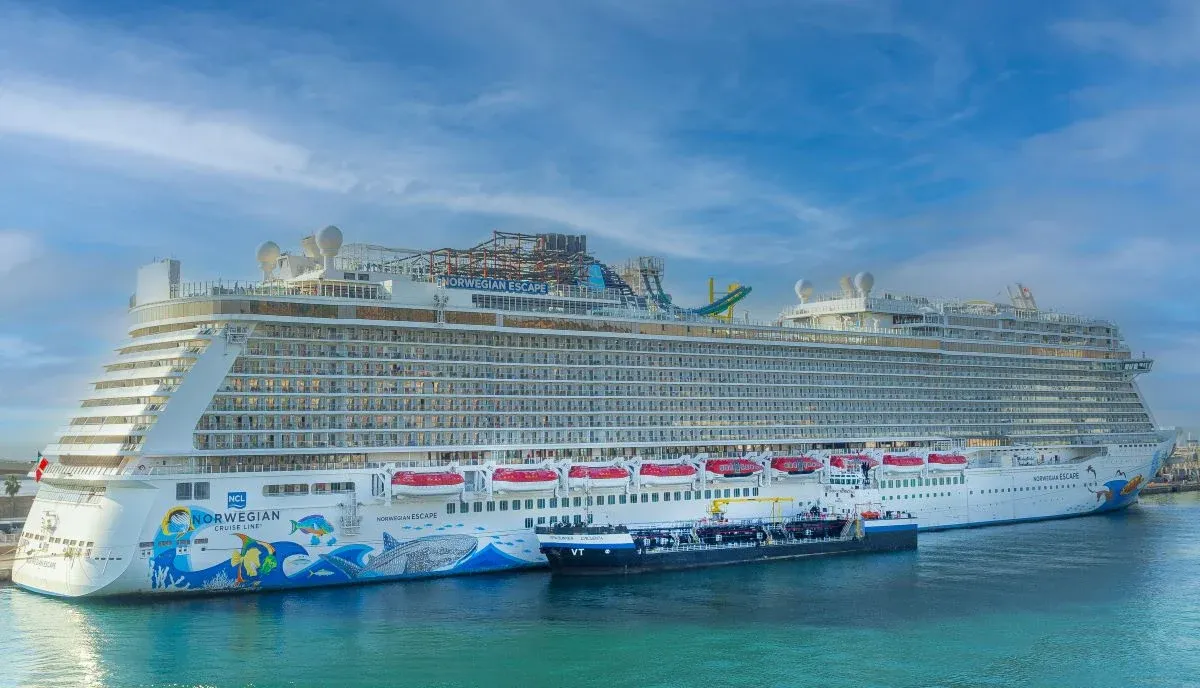
Norwegian Cruise Line Holdings Ltd. (NCLH) has entered into a landmark eight-year renewable marine fuel supply agreement with Repsol, marking a significant stride towards sustainability in the cruise industry. The arrangement will begin with the supply of biofuels in the 2026 European cruise season, followed by renewable methanol starting in 2029. The agreement aligns with both companies’ long-term decarbonization goals, including net-zero emissions by 2050.
Scope and Impact of the Agreement
The agreement covers the entire fleet across NCLH’s three brands, Norwegian Cruise Line, Oceania Cruises, and Regent Seven Seas Cruises, serving ships during calls at the Port of Barcelona. The renewable fuels provided under the deal will meet the ISCC EU certification standards, which ensure compliance with emissions accounting and sustainability regulations. By securing long-term access to renewable marine fuels in this key Mediterranean port, NCLH gains a predictable supply of low-carbon options for its itineraries, advancing its operational efficiency and environmental goals.
Harry Sommer, President and CEO of NCLH, hailed the partnership as a pivotal example of collaboration driving sustainable innovation. “Securing long-term access to renewable marine fuels at a key European port aligns directly with our Sail & Sustain program and demonstrates our commitment to advancing towards a more sustainable future,” Sommer said.
Renewable Methanol Production at Repsol’s Ecoplanta
The renewable methanol integral to this agreement will be sourced from Repsol’s Ecoplanta facility in Tarragona, Spain. Scheduled to begin operations in 2029, the facility will process 400,000 tons of municipal solid waste per year, converting it into approximately 240,000 tons of renewable fuels and circular products. The innovative process underpins Repsol’s commitment to the circular economy and low-carbon fuel production. NCLH is the first cruise company to finalize an offtake agreement for renewable methanol from this facility.
The scale and scope of Repsol’s investments further support the feasibility of this venture. The company is already operating a 250,000-ton-per-year renewable diesel and sustainable aviation fuel (SAF) plant in Cartagena and is constructing another 200,000-ton-per-year facility in Puertollano, targeted for completion in 2026. Repsol also runs one of Europe’s largest renewable diesel networks, with plans to expand its offerings to 1,500 service stations by year-end. Juan Abascal, Repsol’s Executive Managing Director for Industrial Transformation and Circular Economy, expressed optimism, stating, “Renewable fuels are already deployable at scale to immediately start reducing emissions at sea.”
Benefits Underpinning Sustainability Goals
The partnership epitomizes NCLH’s environmental commitment through its Sail & Sustain program, which targets a 10% reduction in greenhouse gas (GHG) intensity by 2026 and a 25% reduction by 2030. Coupled with its overall aim of achieving net-zero emissions by 2050, the renewable fuel supply agreement represents a practical step towards those targets.
In addition to lowering emissions, the collaboration supports itinerary planning and fuel strategy enhancements for cruise calls at Barcelona. Biofuel blends will offer immediate emission reductions for NCLH’s existing fleet, while renewable methanol adoption presents longer-term opportunities as industry compatibility and production scale mature.
Potential Challenges and Stakeholder Considerations
While the agreement is ambitious, certain challenges persist. Key among them is the reliance on the Ecoplanta facility, which will only become operational in 2029. Environmental groups and industry stakeholders may scrutinize the forward-looking nature of NCLH’s sustainability claims. There is also the broader uncertainty surrounding long-term implementation amidst evolving regulatory landscapes.
Nonetheless, the agreement sets an encouraging precedent for the maritime sector, showcasing how multi-industry partnerships can advance decarbonization without requiring disruptive investments in ship or infrastructure modifications. Renewable fuels like biofuels and methanol are deployable at scale, providing an immediate, practical solution for lowering the carbon footprint of cruise operations.
Frequently Asked Questions (FAQs)
What does the NCLH–Repsol agreement entail?
The eight-year partnership secures a renewable marine fuel supply at the Port of Barcelona for NCLH’s cruise brands. It includes biofuels starting in 2026 and renewable methanol from 2029.
Which brands are included in the agreement?
The agreement covers Norwegian Cruise Line, Oceania Cruises, and Regent Seven Seas Cruises, applying to calls at the Port of Barcelona.
Where will the renewable methanol be produced?
The methanol will be sourced from Repsol’s Ecoplanta facility in Tarragona, Spain, which converts municipal solid waste into renewable fuels. Operations are slated to begin in 2029.
How does this partnership align with NCLH’s sustainability targets?
The initiative supports NCLH’s Sail & Sustain program, targeting reductions in greenhouse gas intensity by 10% by 2026 and 25% by 2030, while working towards net-zero emissions by 2050.
Will ships require modifications to use renewable fuels?
Repsol has stated that renewable fuels can be utilized without significant engine or infrastructure changes, ensuring compatibility with existing regulatory frameworks.