NCLH Expands Biofuel Trials to 76% of Fleet in 2025 Report
NCLH says it operates 35 ships with about 75,000 berths and expects 16 more vessels through 2037, adding about 43,000 berths.
Norwegian Cruise Line Holdings released its 2025 Sail & Sustain Report on June 8, reporting biofuel-blend trials on 76% of its fleet and shore-power equipment installed on 74% of its ships by the end of 2025. The update also covers alternative-fuel readiness for select newbuilds, biodiversity work, workforce training, donations and supplier reviews across Norwegian Cruise Line, Oceania Cruises and Regent Seven Seas Cruises.
NCLH operates 35 ships with about 75,000 berths and expects to add 16 more vessels through 2037, about 43,000 additional berths. Its Sail & Sustain targets include net-zero greenhouse-gas emissions by 2050 and carbon-intensity reductions of 10% by 2026 and 25% by 2030.
“Our Sail & Sustain program is designed to support resilience, discipline and long-term value creation,” John W. Chidsey, NCLH’s chief executive officer, said.
Biofuel trials and shore-power equipment
The biofuel result exceeded NCLH’s goal. The company had targeted blends on 60% of the fleet in 2025. The trials included hydrotreated vegetable oil, a renewable diesel produced from vegetable oils, waste oils or animal fats, and biodiesel blends across multiple vessels.
The shore-power figure compares with the 50% fleet-equipment goal NCLH reached by the end of 2023. NCLH also cited biofuel offtakes and progress toward methanol and liquefied natural gas capabilities for select newbuilds.
The environmental work also included environmental DNA monitoring and marine conservation partnerships, including Pacific Whale Foundation. NCLH placed those initiatives alongside operational-efficiency investments under the nature-focused portion of the report.
Training, donations and supplier checks
NCLH’s shoreside and shipboard employees completed more than 395,700 training and development hours in 2025. The workforce spans more than 120 nationalities, and the company tied its people initiatives to leadership development, mentorship and wellness programs.
Community programs included $2 million in cash, cruise and other in-kind donations. Under integrity and accountability, NCLH reported more than 30 business reviews and more than 83 third-party food-safety audits as part of its supplier-engagement work, along with expanded due diligence and traceability in procurement.
For safety, NCLH cited public health programs, compliance measures, training and fleet oversight covering guests and crew.
Seattle lease adds port-level commitments
In Seattle, a long-term lease amendment approved by the Port of Seattle Commission on May 26 includes environmental and community commitments that NCLH links to Sail & Sustain. The agreement keeps NCLH’s homeport presence in Seattle through 2035, with options through 2045 tied to decarbonization progress and sustainability performance.
“This agreement allows us to continue to invest in Seattle as a homeport,” said Dan Farkas, NCLH’s executive vice president, general counsel and chief development officer. He said the deal also supports local jobs and work with the port on sustainability initiatives through Sail & Sustain.
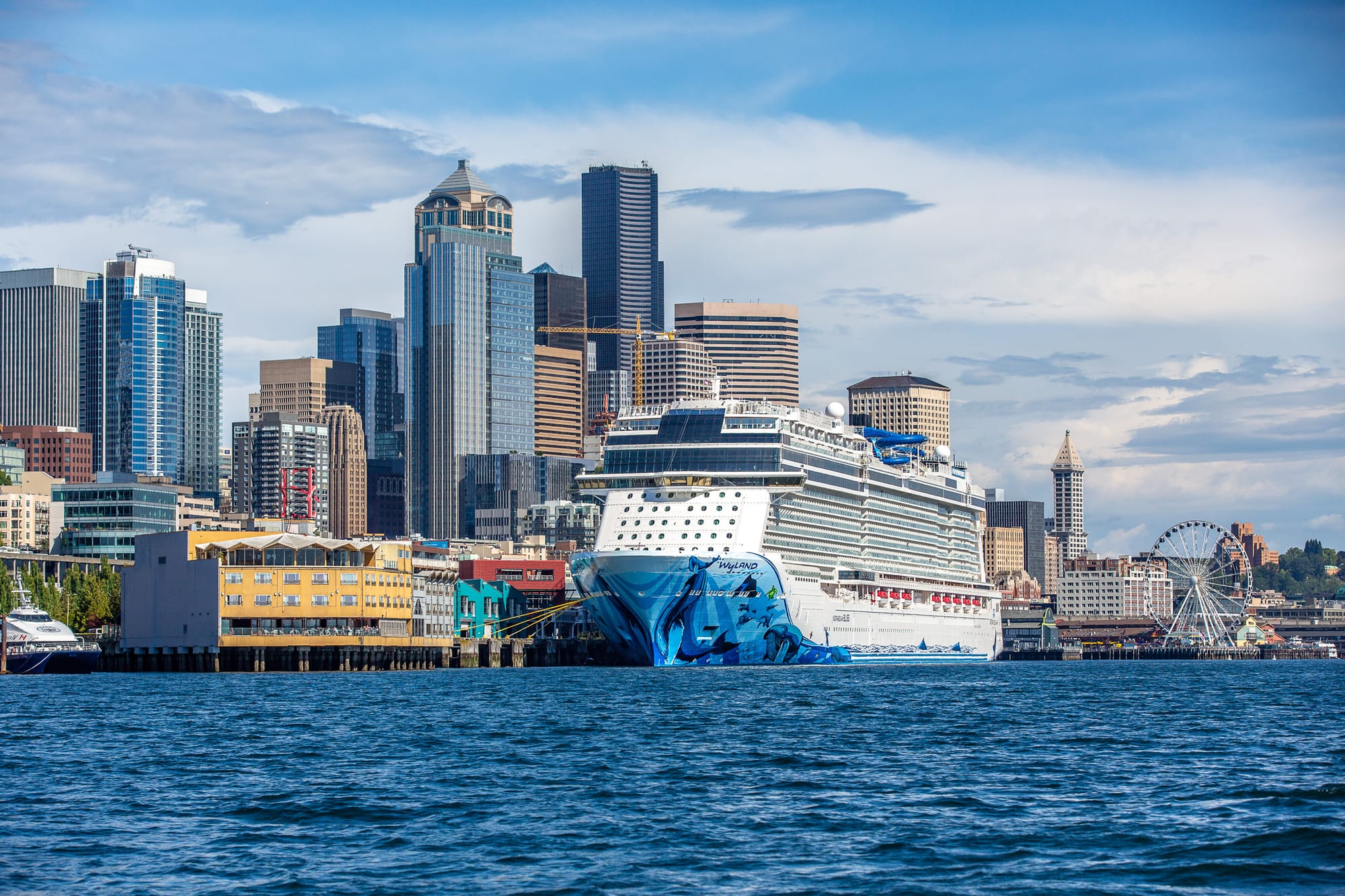
The lease guarantees at least 325,000 revenue passengers annually, worth an estimated $116 million for the port over 10 years and up to $316 million if extension options are used. For the 2026 season, NCLH is homeporting Norwegian Bliss, Norwegian Encore, Norwegian Joy and Oceania Riviera from Pier 66, with more than 70 calls scheduled.
Its environmental terms include a sustainable, non-fossil maritime-fuel demonstration project in Seattle, continued participation in the ECHO and Quiet Sound underwater-noise programs, incentives for ground handlers using lower-greenhouse-gas transport, and a 2030 goal for zero-emission shoreside operations. The lease also includes local provisioning commitments, maritime-education support and participation in the port’s Allies Against Human Trafficking Pledge.
NCLH posted the full 2025 Sail & Sustain Report on its corporate sustainability site. In Seattle, NCLH and the port are due to agree on a decarbonization methodology by Dec. 31, 2026.