MSC Poesia Makes Le Havre’s First Cruise Ship Shore Power Hookup
As European ports race to electrify cruise berths, Le Havre’s shore power debut signals a shift toward quieter, cleaner port calls and raises expectations for French terminals.
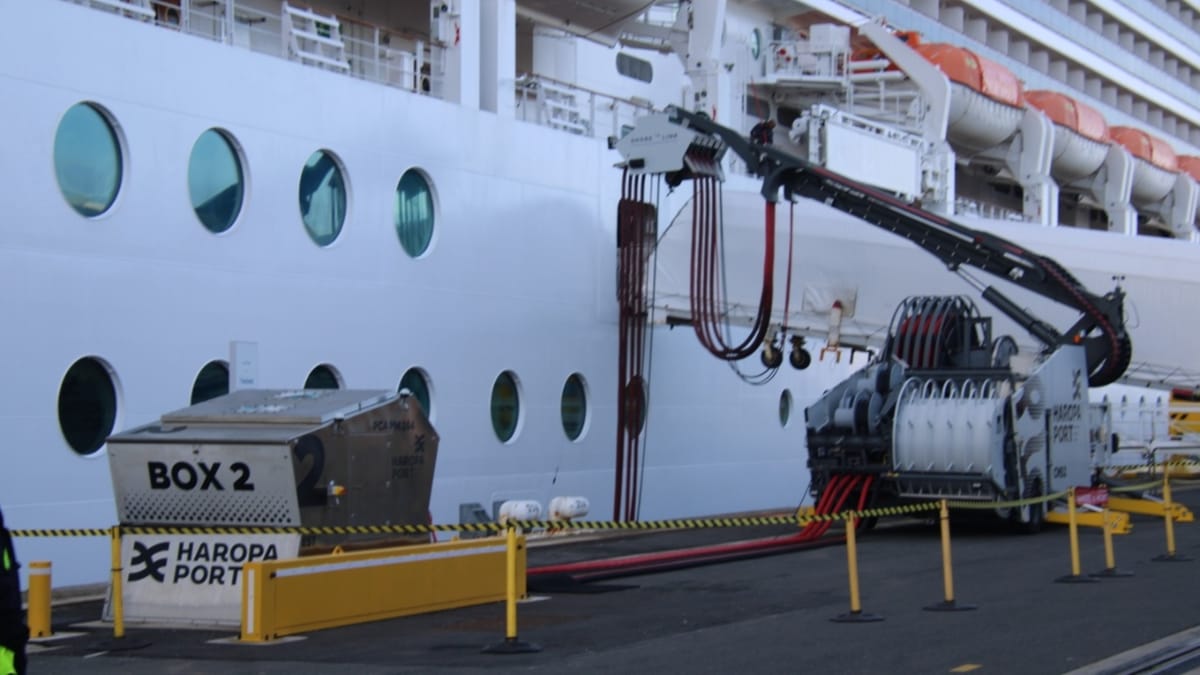
MSC Poesia has completed the first cruise-ship connection to shore power at Le Havre, plugging into the new electrification system at the Pointe de Floride cruise terminal on Oct. 30.
The connection, completed at the Pierre Callet quay during a call with 2,550 passengers on board, allows the ship to shut down its onboard diesel generators while alongside, reducing local air emissions and typically cutting noise and vibration around the terminal area.
A milestone for Haropa Port and Le Havre’s cruise terminal
The first connection was marked with a ceremony attended by Edouard Philippe, Mayor of Le Havre and President of Le Havre Seine Métropole; Benoit Rochet, CEO and Chairman of the Executive Board of Haropa Port; and Erminio Eschena, Director of International Affairs and Industrial Relations for MSC Group France.
Philippe described the moment as a signal about the port’s direction, saying, “With this first shore power connection, Le Havre demonstrates that a major port can be both efficient, welcoming, and exemplary.” He added that it is “a strong signal for the future of the French coastline.”
How the Pointe de Floride project was funded
The shore power system entered its operational phase following a €32 million joint investment by Haropa Port, the French State, and the Normandy Region. GIP Le Havre Croisières, the port operator, has described the first connection as a significant step in a broader development project tied to the cruise terminal.
What was built to supply ships from the grid
The shore power capability at Pointe de Floride is the result of a multi-part construction program carried out by VINCI Énergies/Actemium in partnership with Enedis, including high-voltage routing from the public network, on-site conversion and distribution equipment, and specialized connection equipment to safely link ship and shore.
- About 3 kilometres of underground high-voltage cabling at 20,000 volts, linking the terminal area to the public electricity distribution network.
- A 1,200 square metre facility housing conversion and distribution equipment.
- Two cable management system vehicles equipped with articulated arms to support ship-to-quay connections, with delivery scheduled in 2025.
The Oct. 30 connection used a cable management system vehicle to establish the ship-to-quay link and enable MSC Poesia to switch off its generators while docked.
Expansion plans and the port’s expected emissions impact
Le Havre’s shore power network is planned to expand beyond the initial quay. By 2026, the system is expected to extend to the Roger Meunier and Joannes Couvert quays, creating a three-quay setup supplied by the electrified terminal infrastructure.
Once power is available to all three quays, the port estimates the system could prevent 15,000 to 20,000 tons of CO2 emissions each year, while also reducing noise and vibration pollution in the port area.
GIP Le Havre Croisières Managing Director Alexandra Ruiz linked the project to the port’s longer-term positioning, stating: “This first connection embodies the vision of a modern, attractive and sustainable port.” She added that Le Havre is “investing for cruise lines, for their passengers and for more sustainable cruises.”
What comes next for shore power operations at Le Havre
With the first plug-in completed, the port plans additional ship connections with cruise lines to refine procedures and establish reliable, repeatable operations so shore power becomes a routine part of a ship call.
Le Havre is also preparing for a busy schedule in 2025, expecting 138 cruise calls spread across 142 days, including ships from contemporary, premium, and luxury brands, along with newer LNG-powered and hybrid vessels.
MSC’s wider shore power rollout
MSC Group has positioned the Le Havre connection as part of a broader push to support shore power adoption and related port infrastructure. Across the MSC Group’s Cruise Division, 18 of the 25 ships are equipped to connect to shore power, and the division completed 142 shore power connections across 13 European ports in 2024.
MSC Group’s Cruise Division also plans to use the Le Havre facility regularly during 2026 with MSC Poesia, MSC Preziosa, and MSC Virtuosa. Elsewhere, recent activity cited by the group includes MSC World Europa reaching a total of 300 hours connected to shore power over the past 12 months in Malta, Explora Journeys’ Explora I connecting in Malta for the first time, and MSC Seaview completing a successful test of a new shore power facility at the Port of La Spezia in Italy.
Further connections at Le Havre are expected as the port and cruise lines validate processes and expand the system ahead of the planned 2026 extension.
Frequently Asked Questions (FAQs)
What is shore power for cruise ships?
Shore power, also known as cold ironing, allows a ship to plug into the local electricity grid while docked so it can switch off diesel generators during its port stay, reducing emissions and typically lowering noise and vibration around the terminal.
Where did MSC Poesia connect to shore power in Le Havre?
MSC Poesia connected at Le Havre’s Pointe de Floride cruise terminal, at the Pierre Callet quay.
How much was invested in the Pointe de Floride shore power project, and who funded it?
The project represents a €32 million joint investment by Haropa Port, the French State, and the Normandy Region.
What infrastructure was installed to deliver shore power at Pointe de Floride?
The build included about 3 kilometres of underground high-voltage cabling at 20,000 volts, a 1,200 square metre conversion and distribution facility, and cable management system vehicles with articulated arms to support ship-to-quay connections.
When will shore power expand to additional quays in Le Havre, and what impact does the port expect?
The system is planned to extend by 2026 to the Roger Meunier and Joannes Couvert quays. Once power is available to all three quays, the port estimates it could prevent 15,000 to 20,000 tons of CO2 emissions annually.