Iceland’s Cruise Passenger Tax Triggers Sharp Decline in Rural Port Visits
Iceland’s passenger tax is prompting cruise lines to reconsider routes, putting smaller regional ports and businesses at risk as bookings and economic activity sharply decline.
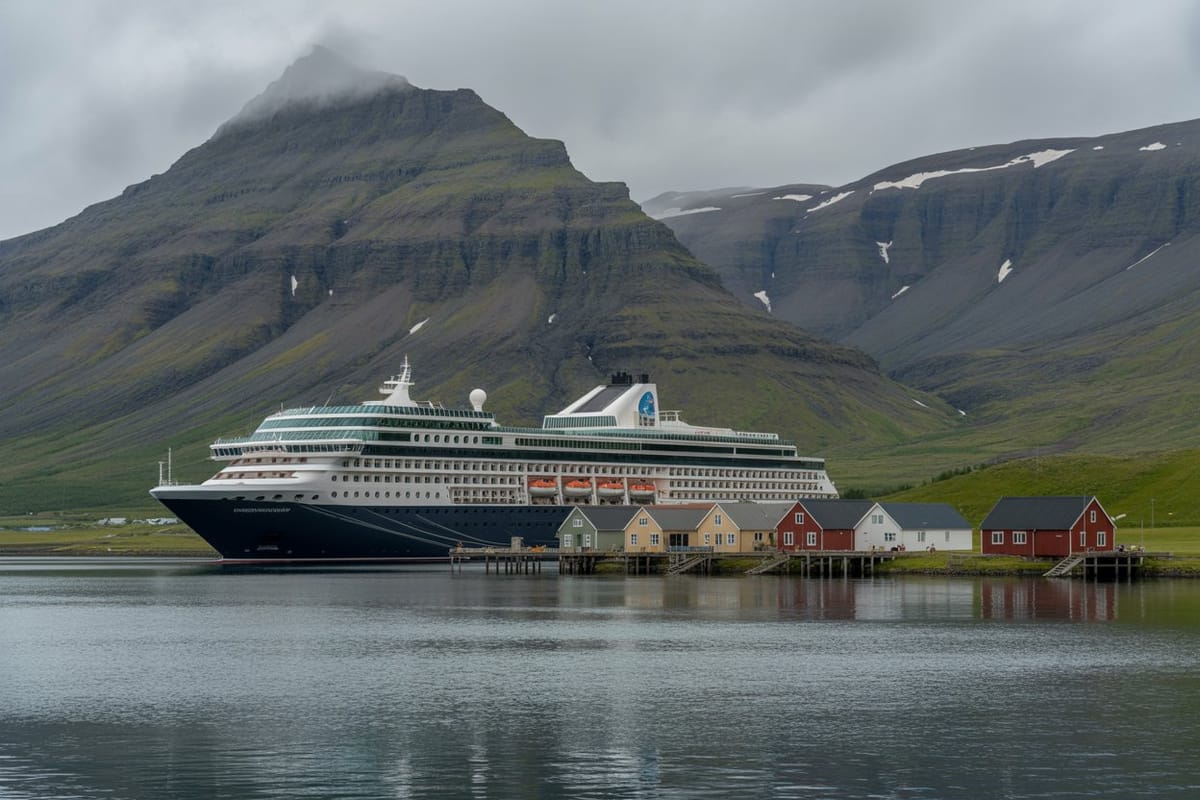
Cruise tourism in Iceland is undergoing substantial challenges following the introduction of a new passenger head tax that critics argue could reshape the industry's future in the region. Effective January 1, 2025, the Icelandic government imposed a tax of 2,500 ISK (approximately $18 to $20 USD) per passenger per day while ships are in Icelandic waters. This fee applies universally, regardless of passenger age or whether they disembark, and cruise lines are passing the cost directly to travelers as agents collecting the funds for the government.
Sharp Declines in Cruise Ship Arrivals
Since announcing the tax in late 2024, Iceland has experienced a significant reduction in advance cruise bookings. Cruise Iceland, a promotional group dedicated to supporting the sector, notes that total ship arrivals are projected to drop 17% in 2026 and 37% in 2027 compared to record levels in 2024. Gross tonnage is also expected to decline by 12% in 2026 and 23% in 2027, highlighting reduced interest from both large-scale cruise ships and expedition vessels primarily operating in the Arctic.
- 2024 (record year): 104 ships; 1,248 port calls
- 2026: 17% decline in total calls; 12% in gross tonnage
- 2027: 37% decline in total calls; 23% in gross tonnage
Rural ports have reported disproportionately steep losses in bookings. Borgarfjörður Eystri is an illustrative example, with projected ship calls falling from 28 in 2024 to only one by 2027. Overall, smaller communities are anticipating financial challenges, potentially losing a significant portion of their annual tourism revenue.
Economic Pressure on Rural Ports
Data indicates that rural areas relying heavily on summer cruise tourism will be most affected by the downturn. Cruise ship visits to ports such as Akureyri, Ísafjörður, Vestmannaeyjar, and Borgarfjörður Eystri play a pivotal role in regional economies. Cruise Iceland estimates that a 30% drop in ship calls could result in annual losses exceeding $14 million USD, with local businesses, particularly restaurants, tour operators, and excursion companies, bearing the brunt of the impact.
Reykjavik, which accounts for around 20% of cruise ship arrivals, may see milder effects as it benefits from a more diverse economy. In contrast, smaller ports with limited infrastructure appear ill-equipped to offset losses stemming from reduced visitation.
Industry Pushback and Limited Government Response
Responding to pressure from industry stakeholders, the Icelandic government agreed in early 2025 to adjust the tax for 2026, lowering it to approximately 2,300 ISK ($16.50 USD). However, Cruise Iceland remains critical of the revised rate, arguing that it continues to be significantly higher than hotel taxes in Iceland and comparable fees imposed by neighboring countries. These discrepancies have reportedly made Iceland a less competitive destination for both mainstream and expedition cruise operators.
Francesco de Curtis, Port Operations Director for MSC Cruises, commented, "This fee is at a level where it could affect our assessment of the viability of Iceland in our future itineraries and plans." Cruise Iceland has presented its findings to the Parliamentary Committee on Economic Affairs and Trade, urging further revisions to prevent long-term damage to the sector.
Expedition Cruises and Arctic Exploration Declining
Iceland’s tax policy has also affected expedition cruise operators focused on Arctic exploration. Historically a gateway to Arctic destinations, Iceland saw its peak year for cruise tourism in 2024 with 104 ships visiting during the season. However, trade show data presented by Cruise Iceland indicates waning interest from buyers, signaling a shift toward alternative Arctic destinations offering lower passenger taxes and port fees.
With itineraries planned two to four years in advance, the full impact will likely be felt by 2027. Neighboring destinations with more competitive fee structures may stand to benefit, while the Icelandic government risks losing crucial tourism traffic that forms the backbone of infrastructure investments for smaller ports.
Despite officials’ initial projections that the tax would generate over $10 million annually for tourism-related infrastructure, stakeholders caution that the current policy may erode future revenues as cruise operators evaluate alternative routes.
Frequently Asked Questions (FAQs)
What is Iceland’s cruise passenger head tax?
The tax is a daily levy of 2,500 ISK (approximately $18–$20 USD) per passenger, imposed while ships are within Icelandic waters. Cruise lines collect the fee from travelers and remit it to the government.
Why was the tax introduced?
The Icelandic government implemented the policy in 2025 to fund tourism infrastructure and address environmental concerns related to cruise ship operations. Officials initially projected that the tax would generate over $10 million annually.
How have cruise lines responded to the tax?
Major cruise operators, including MSC Cruises, have expressed dissatisfaction, citing concerns over the tax’s impact on itinerary planning and Iceland’s long-term viability as a destination. Reduced bookings reflect industry reluctance to accommodate the added costs.
Which areas are most affected by the decline in cruise tourism?
Rural areas such as Borgarfjörður Eystri, Akureyri, Ísafjörður, and Vestmannaeyjar, which heavily depend on summer cruise traffic, face economic challenges. Reykjavik, representing roughly 20% of cruise arrivals, may experience less severe impacts due to a more robust economic base.
What adjustments has the Icelandic government made?
Under industry pressure, the government agreed in 2025 to lower the tax for 2026 to 2,300 ISK ($16.50 USD). Critics argue this adjustment still leaves Iceland uncompetitive compared to nearby destinations and fails to address deeper concerns regarding declining cruise arrivals.
What is the future outlook for Iceland’s cruise industry?
Advance bookings through 2027 suggest continued contraction, with Cruise Iceland warning that without additional policy changes, ship arrivals could drop by 37% by that year. Stakeholders are seeking modifications to stabilize the sector while addressing infrastructure and revenue needs.