Global Cruise Passengers Hit Record 37.2 Million in 2025, CLIA Says
Cruising is cementing itself as a year-round mainstream vacation, forcing ports and cities to plan for bigger waves of visitors even as the industry races to decarbonize.
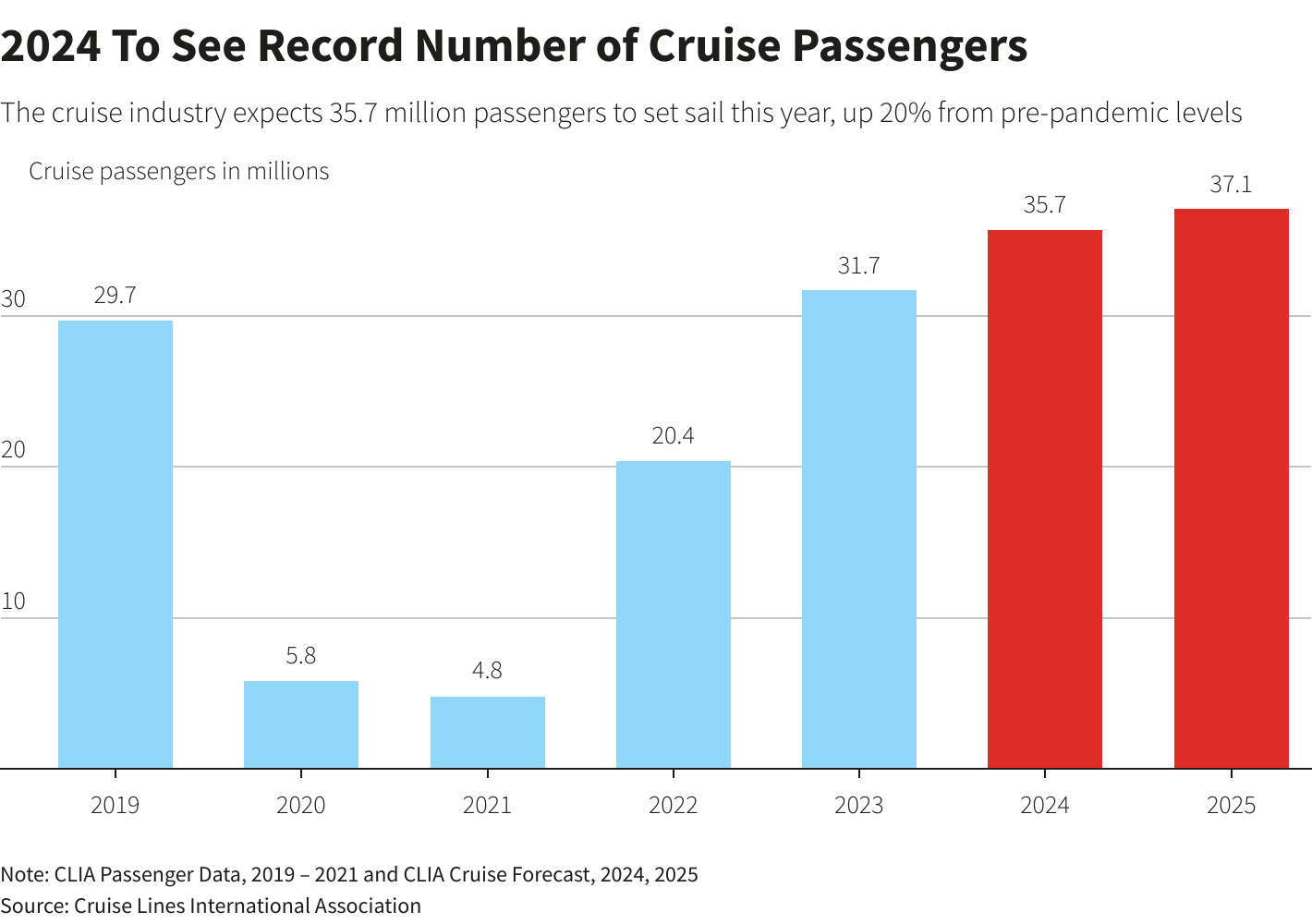
Global cruise passenger volume climbed to a record 37.2 million in 2025, Cruise Lines International Association (CLIA) said in its newly released 2026 State of the Cruise Industry report. CLIA also reported that nearly 90% of cruisers surveyed plan to sail again, a level the group described as the highest it has recorded.
Record demand, repeat intent, and what capacity looks like in 2026
CLIA’s report frames 2025 as a milestone year for demand and sets out what cruise capacity looks like heading into 2026. The trade group expects its member lines to operate 325 ocean-going ships in 2026, representing about 690,000 lower berths worldwide.
- 2025 passenger volume: CLIA reported 37.2 million cruise passengers globally, a record for the industry.
- Repeat demand signals: Nearly 90% of cruisers surveyed said they intend to cruise again, which CLIA said is the highest level it has recorded.
- New-to-cruise growth: First-time cruisers accounted for 31% of passengers, indicating the category is still expanding beyond repeat guests.
- 2026 fleet and berths: CLIA expects 325 member ocean-going ships in 2026, representing about 690,000 lower berths globally.
Bud Darr, President and CEO of CLIA, tied the record numbers to investment and product development across the sector. “Cruising is sailing toward the future with exceptional momentum and strength,” Darr said.
Who is cruising: first-timers, younger travelers, and multigenerational groups
CLIA’s data points to a passenger mix that includes both repeat cruisers and a large share of new-to-cruise travelers. With 31% of guests cruising for the first time, CLIA positioned the category as continuing to broaden its reach.
The report also describes shifts in who is cruising and how groups are traveling. About one-third of cruise guests are under 40, and roughly one-third of cruise trips are multigenerational, bringing multiple age groups onboard in the same travel party.
Source markets: the U.S. leads, and China posts the fastest growth
CLIA identifies the United States as the largest source market, with 20.6 million passengers sailing in 2025. The association also highlights strong participation from Europe and Australia, with travelers departing from countries including Germany, Ireland, the United Kingdom, and Australia.
Among the markets CLIA tracks, China recorded the fastest growth in 2025, with passenger volume up 15.8% year over year.
Where ships are deploying: Caribbean share, and Europe’s top port
CLIA’s deployment figures continue to show the Caribbean as the industry’s largest regional market. The Caribbean, Bahamas, and Bermuda accounted for about 43% of global cruise deployments, followed by the Mediterranean at about 15% and Northern Europe at roughly 9%.
CLIA’s report also ranks major destinations and ports by passenger volume. The Bahamas led as the most-visited cruise destination, welcoming more than 7.6 million passengers, followed by Mexico’s Cozumel area with about 4.6 million passengers. Barcelona ranked as the top cruise port in Europe with approximately 3.5 million cruise guests, and CLIA also listed other high-traffic cruise ports including Nassau, Miami, Galveston, and Civitavecchia, the port serving Rome.
Economic footprint: what 2024 indicators show
Two industry assessments cited in the reports highlighted the cruise sector’s economic reach in 2024, using related but not identical measures.
In its latest report, Cruising for Impact, the World Travel & Tourism Council (WTTC) said the cruise industry accounted for $98.5 billion in global GDP in 2024, delivered $199 billion in total economic output, and supported 1.8 million jobs. WTTC also reported that $93 billion of cruise spending directly reached local economies worldwide, and that over 1.4 million onshore jobs were supported globally. WTTC added that for every 20 cruise passengers, one full-time job is created.
CLIA’s 2024 economic impact figures put cruise tourism at $198 billion in global economic impact, supporting 1.8 million jobs worldwide and about $60 billion in wages. In the United States, CLIA reported cruise contributed $75 billion in economic impact, supporting 333,000 jobs and more than $25 billion in wages, alongside $41.4 billion in gross domestic product.
CLIA linked much of the impact to shoreside activity spanning transportation, hotels, restaurants, port services, and the supply chains that support cruise operations and passenger visits, while WTTC emphasized the flow of spending to local economies and associated job creation.
Technology, sustainability, and the net-zero timeline
Both WTTC and CLIA pointed to investment in next-generation ships and onboard systems as cruise lines expand capacity and refresh fleets. WTTC said cruise lines are investing billions in ships equipped with energy-efficient engines, advanced recycling systems, and fuel-flexible technologies to reduce emissions.
CLIA said newer ships entering service are increasingly more energy efficient than older generations, and that nearly all new ships are being built with fuel-flexible engines. The association also cited continued investment in lower-emissions fuels, shore power connectivity, and energy-efficiency systems.
CLIA reiterated the industry’s stated aim of reaching net zero emissions by 2050, while emphasizing that achieving that target depends on factors beyond cruise lines alone, including the buildout of infrastructure and broader availability of alternative fuels at viable cost and scale.
Working with ports and cities: planning horizons and visitor management
As cruise calls intersect with broader tourism pressures in some destinations, CLIA and WTTC both highlighted collaboration with port communities and local authorities. Darr said cruise itineraries are commonly built two to three years in advance, which he argued can provide ports and communities with visibility into expected ship calls and passenger volumes.
He also said that in highly visited cities such as Barcelona and Venice, cruise represents less than 5% of total visitors, while still acknowledging the need for mitigation planning in places facing crowding pressure.
WTTC described initiatives such as staggered arrivals, expanded shore excursions beyond high-traffic areas, and local educational programs as ways operators are strengthening partnerships with destinations. CLIA pointed to a memorandum of understanding with Dubrovnik that includes measures such as staggered arrivals, promoting tours beyond the Old Town, and programs intended to encourage respectful visitor behavior.
Darr also underscored cost and regulatory considerations that can shape deployment decisions, describing port charges and related fees as a major operating expense for cruise lines. “Ongoing progress and sustained economic impact from the cruise industry requires collaboration across sectors,” Darr said, adding that continued infrastructure investment and advances in alternative fuels remain central to the industry’s trajectory.
Private destinations and experience-driven itineraries
Beyond onboard and operational investments, WTTC noted that cruise lines are reshaping how passengers interact with destinations through private islands and coastal developments, including Royal Caribbean’s Perfect Day at CocoCay. WTTC said these developments provide curated experiences while ensuring operational control, and they can also create job opportunities for local residents and stimulate regional economies.
WTTC and CLIA also pointed to continued growth in experience-led segments such as luxury and expedition cruising, where smaller ships often visit more remote regions and offer more destination-focused programming. WTTC cited remote destinations such as Antarctica as examples where environmental stewardship and education are key components of the experience.
What the industry is projecting next
CLIA’s leadership has projected passenger volume could reach 42 million by 2028, as member lines prepare for a 2026 global fleet of 325 ocean-going ships and demand signals remain strong. As Darr put it in a separate comment highlighted by WTTC, “The cruise industry is charting a course toward a future defined by opportunity, impact, and responsible growth.”
Frequently Asked Questions (FAQs)
How many cruise passengers sailed globally in 2025?
CLIA reported a record 37.2 million cruise passengers worldwide in 2025.
What economic impact did cruise tourism have in 2024?
WTTC said the cruise industry accounted for $98.5 billion in global GDP in 2024, delivered $199 billion in total economic output, and supported 1.8 million jobs, including $93 billion in direct cruise spending that reached local economies. CLIA separately reported $198 billion in global economic impact in 2024, also supporting 1.8 million jobs worldwide and about $60 billion in wages, and it reported $75 billion in economic impact in the United States.
How many CLIA-member ocean-going cruise ships are expected in 2026?
CLIA expects its member lines to operate 325 ocean-going ships in 2026, representing about 690,000 lower berths globally.
What emissions goal does CLIA cite for the cruise industry, and what is being built to support it?
CLIA reiterated the industry’s stated goal of reaching net zero emissions by 2050, while noting that alternative fuel supply and infrastructure development are essential to achieving it. CLIA also said nearly all new ships are being built with fuel-flexible engines, alongside investments in shore power connectivity and energy-efficiency systems.
What are the most visited cruise destinations and ports in CLIA’s report?
CLIA listed The Bahamas as the most-visited cruise destination (more than 7.6 million passengers), followed by Mexico’s Cozumel area (about 4.6 million). Barcelona ranked as Europe’s top cruise port with approximately 3.5 million cruise guests, and CLIA also cited other high-traffic cruise ports including Nassau, Miami, Galveston, and Civitavecchia.