California’s BWBS Program Adds Cruise Lines for 2026 Speed Cuts
Adding cruise ships signals California’s push to make slow steaming a mainstream expectation, using transparent tracking to link wildlife protection with measurable air-quality gains.
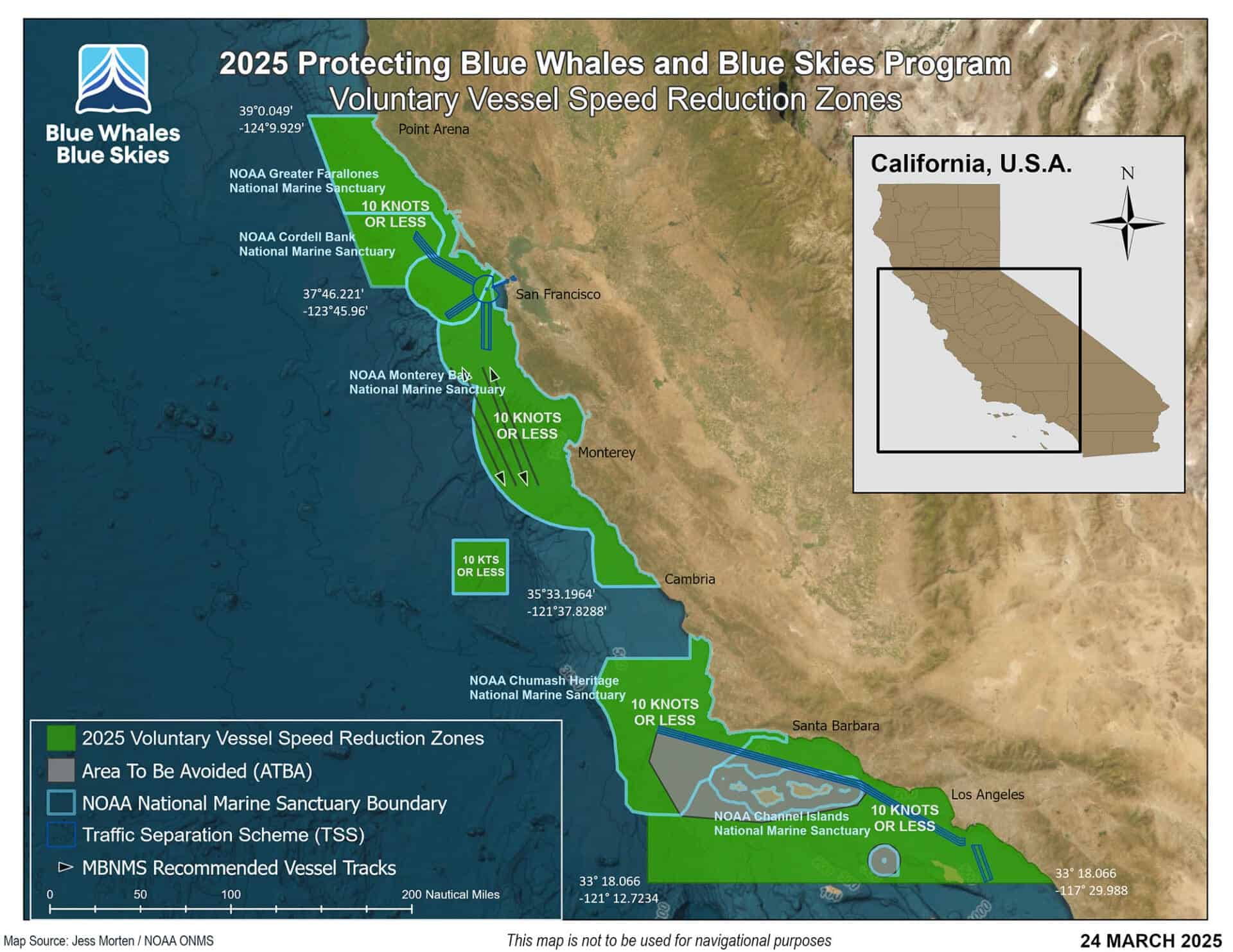
The Protecting Blue Whales and Blue Skies (BWBS) program will begin accepting cruise lines as participating companies for the 2026 season, expanding a voluntary vessel speed reduction effort that has operated along the California coast since 2014.
The coalition behind BWBS says the move is intended to further cut the risk of deadly whale strikes in sensitive habitat while also improving coastal air quality. Since launching, BWBS has partnered with more than 50 global cargo shipping lines, and it is now inviting cruise operators along the U.S. West Coast to join under the same verification and reporting model.
How the BWBS speed-reduction approach works
BWBS focuses on Vessel Speed Reduction (VSR) zones that overlap key habitat for endangered whales, including blue, fin, and humpback whales. Participating vessels are encouraged to slow to 10 knots or less while transiting those areas, a step BWBS cites as reducing the risk of a fatal ship strike by 50%.
Program performance is monitored using Automatic Identification System (AIS) vessel tracking data and independent analysis, which BWBS says allows both vessel activity and environmental outcomes to be verified.
What BWBS says it has achieved since 2014
Across the program’s history, BWBS credits participating vessels traveling at whale-safer speeds in VSR zones with measurable results that include air-quality improvements and reduced strike risk. The coalition has reported the following cumulative outcomes:
- 1,596,008 nautical miles of transits at whale-safer speeds.
- 5,900 tons of smog-forming NOx emissions avoided.
- 35 tons of total diesel particulate matter avoided.
- 200,000 metric tons of regional greenhouse gas emissions avoided.
- 4.1 decibels of reduction in participating vessels’ source noise levels.
- A 50% reduction in the risk of fatal ship strikes.
BWBS has said these results have been verified through AIS tracking and independent analyses.
Why the coalition is targeting cruise ships next
BWBS and its partners, which include regional coastal air districts, the California Marine Sanctuary Foundation, NOAA National Marine Sanctuaries, and the Benioff Ocean Science Laboratory, say cruise ships are a consequential next category partly because of how they operate and their typical speeds through coastal waters.
Jess Morten, Director of Marine Resource Protection at the California Marine Sanctuary Foundation, said cruise ships have historically been “some of the fastest-moving large vessels in our region.” Morten added, “Every year we see more and more cruise lines proactively reaching out to understand where and when they should reduce speeds to keep whales safe and for opportunities to get more involved.”
BWBS has also pointed to cruise ship power demand, noting that many vessels use diesel-electric systems that supply both propulsion and onboard electrical needs, with overall power requirements often described as five to ten times higher than other ocean-going vessels.
What the 2024 data showed in California’s VSR zones
To evaluate cruise operations against BWBS goals, the coalition worked with Starcrest Consulting Group to review cruise vessel data and baseline operating patterns. BWBS said the updated analysis found that incentivizing cruise ships to travel at 10 knots or less is expected to provide air-quality gains, including net reductions in smog-forming NOx emissions, while supporting safer whale habitat.
BWBS also provided a snapshot of cruise vessel activity during the 2024 season. In that period, 38 cruise ships from 17 companies traveled about 24,000 nautical miles through California’s VSR zones.
While those cruise voyages represented about 3% of total distance traveled by ocean-going vessels in the VSR areas, BWBS said cruise ships accounted for roughly 6% of emissions within those same zones, a gap the coalition described as an opportunity for additional reductions if more cruise sailings operate at slower speeds.
Typical cruise speeds vs. the 10-knot request
BWBS said average cruise ship speeds outside the VSR season are typically around 14 to 15 knots, and some vessels average as high as 20 knots. The program’s request is 10 knots or less while transiting VSR zones, aligning whale-protection goals with a change BWBS says can be measured through AIS-based tracking.
What cruise lines receive by participating
BWBS said cruise participation will follow the same voluntary framework used for cargo shipping, using the same analytical methods and transparency and verification standards. Participating cruise companies are expected to receive monthly performance reporting, third-party verified environmental benefits data that can be used for Environmental, Social, and Governance and sustainability reporting, and recognition through BWBS communications and events.
California policy backdrop: AB 14 and statewide expansion
BWBS received an additional boost in October 2025, when California Gov. Gavin Newsom signed Assembly Bill 14 into law. The bill, authored by Assemblymembers Gregg Hart, Steve Bennett, and Damon Connolly, establishes an expansion of BWBS into a statewide program.
As BWBS prepares for 2026, the coalition has said program zones and timing may change as part of California’s statewide VSR expansion under AB 14.
Enrollment timeline for the 2026 season
Cruise lines operating along the U.S. West Coast in 2026 are invited to participate, and BWBS has encouraged companies to enroll before the start of the season so they receive program updates and monthly reporting on fleet performance, although late enrollment may still be considered.
Morten said, “We look forward to welcoming them in for the 2026 season and are excited to see what we can accomplish together.”
Frequently Asked Questions (FAQs)
What does BWBS ask ships to do in VSR zones?
BWBS incentivizes participating vessels to slow to 10 knots or less while transiting designated Vessel Speed Reduction zones along the California coast.
How is performance verified in the BWBS program?
BWBS uses AIS vessel tracking data along with independent analysis to evaluate how vessels operated in VSR zones and to quantify environmental benefits.
Why are cruise ships being included in the program?
BWBS has cited cruise ships’ historically higher speeds in the region and the sector’s share of emissions within VSR zones relative to distance traveled. The coalition has said that encouraging cruise ships to transit at 10 knots is expected to provide air-quality gains while helping protect endangered whales.
Which whales are the VSR zones designed to protect?
BWBS says the VSR zones overlap habitat used by endangered blue, fin, and humpback whales.