California Air Guard Hoists 79-Year-Old off Ruby Princess in Fog
The rescue underscores how a medical crisis at sea can turn into an aviation mission, with West Coast responders bridging the gap when cruise ships are far beyond shore-based care.
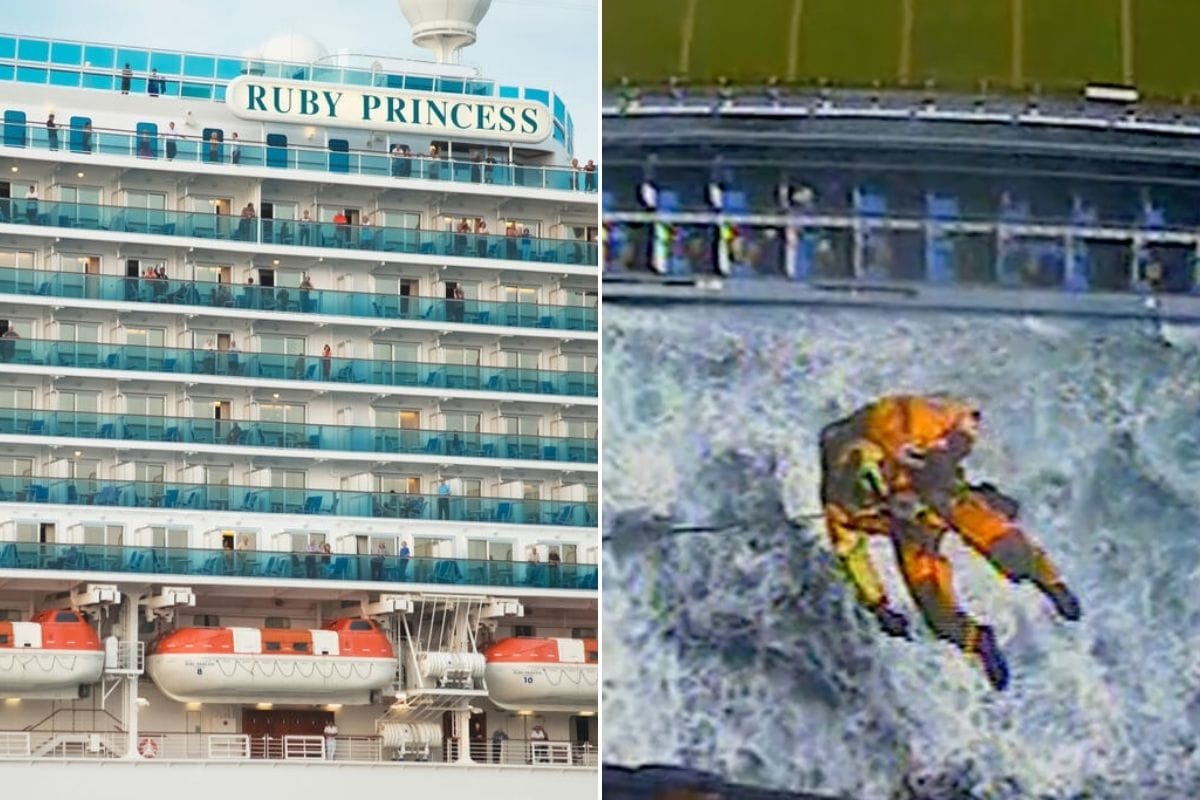
A California Air National Guard crew carried out a high-risk nighttime medical evacuation from the cruise ship Ruby Princess after a 79-year-old passenger was reported unresponsive more than 100 miles off the Northern California coast.
The mission began late Dec. 16 and continued into the early hours of Dec. 17, unfolding in strong winds and heavy fog that crews said reduced visibility to near zero and forced them to rely on night vision goggles to reach the ship and complete the hoist.
Call for help relayed through rescue coordination channels
The California Air National Guard’s 129th Rescue Wing received word late Dec. 16 that the passenger aboard Ruby Princess needed urgent medical evacuation while the ship was operating offshore. The Air Force Rescue Coordination Center relayed the request and tasked the wing to respond.
Air Force Lt. Col. Ben Copley, a helicopter pilot with the 129th Rescue Wing, said the sortie was treated as unusually dangerous from the outset. “The mission was approved as a high-risk mission going out the door,” Copley said, adding that the designation is not common for the unit.
Multiple aircraft and units supported the offshore response
An HC-130 Combat King II assigned to the 130th Rescue Squadron was already in the air on a training flight when the call came in, and it was redirected to the ship’s location to help establish contact and support the helicopter crew. The aircraft flew roughly 130 nautical miles south of San Francisco Bay to reach Ruby Princess.
At the same time, an HH-60W rescue helicopter launched from Moffett Federal Airfield near San Jose to carry out the hoist and patient transfer. The helicopter carried three pararescuemen from the 131st Rescue Squadron and medical equipment intended for advanced care during remote rescues at sea.
- HC-130 Combat King II (130th Rescue Squadron): Redirected from a training mission to locate Ruby Princess and support the operation roughly 130 nautical miles south of San Francisco Bay.
- HH-60W rescue helicopter (129th Rescue Wing): Dispatched from Moffett Federal Airfield near San Jose to insert pararescuemen onto the ship and conduct the hoist in low visibility and wind.
- Pararescuemen (131st Rescue Squadron): Boarded the vessel with advanced medical kits, treated the patient onboard, and prepared her for extraction to the hovering helicopter.
Why crews described the mission as “high risk”
Rescue teams regularly train for maritime emergencies, including night operations and hoists onto vessels, but this response combined multiple hazards at once: a dark ocean environment, strong winds, and a thick layer of fog that sharply reduced visibility during a nearly moonless night.
Even with the ship illuminated, aircrews had to maneuver and stabilize a hover over a moving deck. “We trained to do it all on night vision goggles, but not inside a fog bank,” Copley said.
Onboard treatment, then a controlled hoist to shore
After locating the vessel, the HH-60W maneuvered into position and lowered pararescuemen onto Ruby Princess. The helicopter maintained position as the rescue specialists reached the passenger and began stabilizing her condition.
The pararescuemen spent about an hour providing initial treatment and preparing the woman for extraction before she was hoisted from the ship to the helicopter. Once aboard, the crew flew her to San Jose, where she was taken to a hospital for further care.
Copley said the urgency of the call weighed heavily in the decision to launch despite the conditions. “This person was probably going to die today if they didn’t get picked up,” he said.
A second medical evacuation involving Ruby Princess in four months
The Dec. 16 to 17 response was the second recent offshore medical evacuation involving Ruby Princess. In late August, two passengers were evacuated from the same ship when it was more than 140 nautical miles off the coast of Washington state.
That earlier operation involved the U.S. Coast Guard working with Canadian authorities, including the Royal Canadian Air Force, underscoring the coordination that can be required when a life-threatening emergency occurs far from shore. Air National Guard crews involved in the Dec. 17 operation returned after delivering the passenger to a hospital in San Jose.
Frequently Asked Questions (FAQs)
What aircraft were used in the Ruby Princess medical evacuation?
The response used an HC-130 Combat King II from the 130th Rescue Squadron to support the operation offshore and an HH-60W rescue helicopter to insert pararescuemen, hoist the patient, and fly her to shore.
Where did the rescue helicopter launch from?
The HH-60W launched from Moffett Federal Airfield near San Jose before flying offshore to Ruby Princess.
How far offshore was Ruby Princess during the Dec. 16 to 17 rescue?
The passenger was reported unresponsive more than 100 miles off the California coast, and the HC-130 flew roughly 130 nautical miles south of San Francisco Bay to reach the ship’s area.
Why was the mission labeled “high risk”?
Crews cited the combination of strong winds, heavy fog, and a nearly moonless night, along with the technical challenge of holding a stable hover above a moving ship while deploying and retrieving rescue specialists by hoist.
Was this the first recent medical evacuation involving Ruby Princess?
No. In late August, two passengers were medically evacuated from Ruby Princess when it was more than 140 nautical miles off the Washington coast in an operation involving the U.S. Coast Guard and Canadian partners, including the Royal Canadian Air Force.