Boyd Amendment Would Tighten Dredging Limits in Terra Ceia Preserve
The move shows how Florida’s hottest growth fights are shifting to the water, where lawmakers are being asked to draw clearer lines between tourism megaprojects and protected bays.
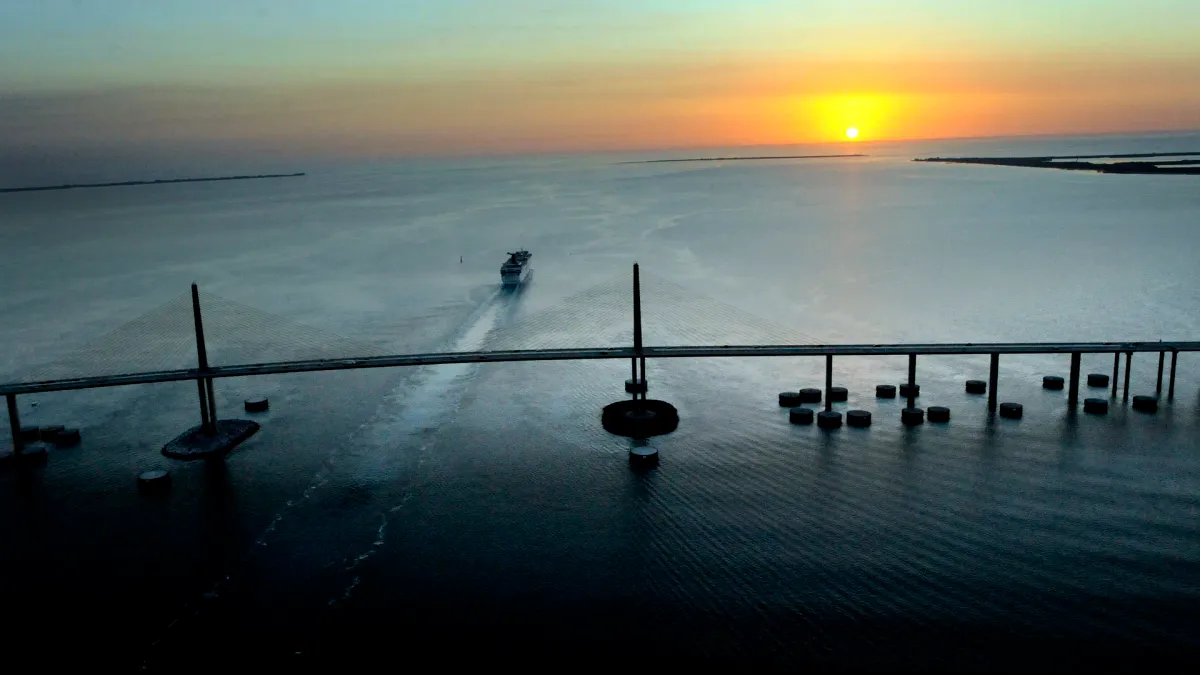
Florida State Sen. Jim Boyd, R-Bradenton, has filed an amendment to Senate Bill 302 that would tighten and clarify dredging limits inside the Terra Ceia Aquatic Preserve, a change that could complicate plans for a proposed private cruise terminal near the Sunshine Skyway Bridge in Manatee County.
The cruise port concept, backed by SSA Marine and landowner Slip Knott LLC, centers on the 328-acre Knott-Cowen Tract. Supporters say a new terminal could bring jobs and tax revenue, while opponents argue that dredging and large-ship traffic would damage one of Tampa Bay’s most sensitive coastal areas.
A cruise terminal concept tied to bridge limits and deep-water access
Supporters have framed the Knott-Cowen Tract proposal as a way to serve large cruise ships on the Gulf side of the Sunshine Skyway Bridge, avoiding the bridge height limitation that prevents some newer vessels from reaching Port Tampa Bay. Opponents counter that building a multi-berth cruise terminal near the aquatic preserve would require dredging and ongoing maintenance that are incompatible with the area’s environmental protections.
The Terra Ceia Aquatic Preserve is known for its biodiversity and is cited by environmental advocates as habitat for wildlife including manatees, Kemp’s ridley sea turtles, and blacktip sharks. Critics of the cruise concept say dredging and construction could harm seagrass, mangroves, and water quality across connected parts of Tampa Bay.
What Boyd’s SB 302 amendment would allow, and what it would restrict
Boyd’s proposal is written as an amendment to SB 302, part of a broader coastal resiliency measure moving through the Legislature. It is intended to spell out when dredging could occur in waters of the Terra Ceia Aquatic Preserve, which sits next to the Knott-Cowen Tract.
Boyd has described the measure as an added safeguard. In a statement to the Tampa Bay Times, he said: “If passed, this provides another tool in the toolbox to ensure the heart of our community is protected and maintained for generations to come.” In a separate statement, he also said, “This measure provides our community with another tool to ensure our natural environment is preserved for generations to come.”
As drafted, the amendment would limit dredging in the preserve to defined circumstances, including projects aimed at enhancing the preserve’s quality and efforts tied to public navigation and human health, including reducing stagnant water. The language also addresses smaller-scale waterfront work under standards intended to avoid harming the preserve.
- The amendment would narrow dredging in the preserve to specific purposes, rather than leaving it broadly available for new industrial development.
- It includes navigation- and health-related concepts, including efforts aimed at reducing stagnant water.
- It also addresses dredge-and-fill activity for smaller waterfront projects under a framework tied to avoiding adverse impacts on the preserve.
How marinas, ramps, docks, and piers factor into the proposal
Boyd’s amendment also allows dredging connected to creating and maintaining marinas, public boat ramps, piers, and docks, as long as those projects are determined not to adversely affect the preserve.
Manatee County Commissioner Tal Siddique, whose district includes Terra Ceia, said the language appears aimed at strengthening protections by formalizing how dredge-and-fill activity is handled in the aquatic preserve. Siddique also said county natural-resources staff have been working to obtain material from the U.S. Army Corps of Engineers to create land near the Skyway Bridge for a boat ramp, and that the amendment would clarify how such a project could be permitted.
Why dredging depth and long-term maintenance are central to the fight
Opponents have focused heavily on what it would take to accommodate deep-draft passenger ships. Peter Meylan, professor emeritus of natural sciences at Eckerd College, criticized the cruise terminal concept in a Tampa Bay Times column, writing that the idea of placing a cruise ship terminal there is “insane.” Meylan argued that accommodating larger ships would likely require a channel about 50 feet deep from Terra Ceia out to the Egmont Channel.
Marine geologist Patrick Schwing has also warned that dredging to depths of 50 feet could release harmful contaminants and trigger algal blooms, with long-term impacts on marine life and water-dependent economies.
Dr. Stephen Hesterberg, executive director of the Gulf Shellfish Institute, said large terminal construction would likely affect water quality in the preserve: “Construction of a really large cruise terminal will probably impact that water quality.” He also framed the broader debate as a cultural and economic tradeoff tied to water resources, saying, “So much of our culture is built around the water.”
Economic promises, and why critics say the location is incompatible
Project supporters have promoted the port concept as an economic boost, saying it could create more than 31,000 construction jobs, generate $1.6 billion in labor earnings, and deliver $40 million annually in tax revenue. Opponents and some lawmakers argue those figures do not resolve the central dispute over whether a large-scale cruise operation belongs next to a protected aquatic preserve.
Suncoast Waterkeeper Executive Director Abbey Tyrna said, “This port would significantly alter our ecosystems in a way that I don’t think anybody could understand. Tampa Bay’s undeveloped areas like Terra Ceia are irreplaceable, and this project isn’t compatible with our region’s environmental and economic needs.”
State Rep. Will Robinson has also rejected the premise that economic benefits outweigh the environmental and quality-of-life concerns, saying, “Economic benefits do not factor in when there is a fundamental incompatibility between the location and a large-scale cruise operation. This area is in no shape or measure compatible with cruise ships.”
In addition to ecosystem impacts, some local businesses and recreational groups have raised concerns about traffic congestion, strain on infrastructure, and disruptions tied to cruise tourism. While SSA Marine has promised economic benefits and environmental stewardship, skeptics have pointed to the company’s past environmental violations as a reason to question those assurances.
Developers cite historic dredging rights as the project enters early review
In early filings with Manatee County, Slip Knott LLC has stated it has dredge-and-fill rights dating back to the 1950s for submerged lands around the property. The Terra Ceia Aquatic Preserve was created decades later, and a key question in the debate is how earlier entitlements interact with current environmental protections.
Asked how Boyd’s amendment could affect those claimed rights, Honey Rand, a spokesperson for the landowner, told the Tampa Bay Times that “the legislation will move through the usual process” along with consideration of “the entitlements associated with Knott-Cowen, the proposed project, the zoning and many, many other factors.”
SSA Marine did not provide a response to the Tampa Bay Times when asked how Boyd’s legislative proposal would affect the company’s planning.
More broadly, the proposed port remains in an early conceptual stage and faces reviews by local, state, and federal agencies as well as questions about what environmental studies and permits would be required for dredging and waterfront construction in and around the aquatic preserve.
Petitions, rallies, and a growing push for stronger protections
Organized opposition has grown since the cruise port concept was first announced in January. Petitions opposing the terminal have drawn thousands of signatures, including drives that organizers say have reached into the tens of thousands, and rallies have brought residents, scientists, anglers, and clean-water advocates to Terra Ceia to speak against dredging and increased ship traffic.
At a recent rally, hundreds of residents and advocates carried signs including “Kayaks Not Cruise Ships.” Terra Ceia resident Neena Carouthers argued the impacts would not be confined to the construction site, saying: “Pollution doesn’t just stay in one spot. Our environment here is second to none, and I want it to stay that way.”
Environmental advocates say they have also been pressing lawmakers directly as SB 302 moves. Justin Tramble, executive director of Tampa Bay Waterkeeper, said: “This is the Terra Ceia Aquatic Preserve we should preserve it.” Tramble added that his organization has been working with lawmakers, saying, “We are in pretty constant communication with leaders up in Tallahassee trying to work through this.”
Some local officials have described the amendment as a direct response to the cruise terminal concept. Siddique said it “certainly seems to target the port proposal,” while also characterizing the language as a move to strengthen protections for the aquatic preserve. Manatee County Commissioner George Kruse supported the idea in a social media post, calling Boyd’s amendment “a substantial level of future protection.”
Legislative timing, and what to watch next
Boyd’s amendment is tied to SB 302, which was expected to be considered on the Senate floor in the days following its filing. A companion bill in the Florida House has also been moving through the process and has been headed to the floor.
If the Legislature approves the final bill and the governor signs it, the legislation would take effect July 1, creating a new legal framework for dredging decisions in the Terra Ceia Aquatic Preserve while the cruise terminal concept continues its early-stage review. Opponents have said they expect sustained public engagement as the permitting, legal, and legislative questions develop, with additional hearings and data-driven reviews anticipated in 2026.
Frequently Asked Questions (FAQs)
What is the Knott-Cowen cruise port proposal?
The concept calls for transforming the 328-acre Knott-Cowen Tract in Manatee County into a cruise terminal that could accommodate large ships on the Gulf side of the Sunshine Skyway Bridge. Opponents say the project would require dredging and major waterfront construction near the Terra Ceia Aquatic Preserve.
Does Sen. Jim Boyd’s amendment directly ban a cruise port in Terra Ceia?
No. The amendment does not name a specific project, but it would narrow when dredging can be approved in the Terra Ceia Aquatic Preserve, which critics describe as a key requirement for any deep-water cruise terminal concept in that location.
What types of dredging could still be allowed under the proposed language?
As drafted, the amendment would limit dredging in the preserve to defined conditions, including projects intended to enhance the preserve’s quality or improve navigation and human health, including reducing stagnant water. It also addresses dredging for marinas, public boat ramps, piers, and docks if they are determined not to adversely affect the preserve.
When could the new dredging restrictions take effect?
If the bill passes both chambers and is signed by the governor, the legislation would take effect July 1.
What legal and permitting issues are already part of the dispute?
Slip Knott LLC has said in early filings with Manatee County that it holds dredge-and-fill rights dating back to the 1950s for submerged lands around the property, while the Terra Ceia Aquatic Preserve was created decades later. How those claimed rights interact with current environmental protections, along with local, state, and federal approvals for dredging and construction, remains a central issue as the proposal undergoes early review.